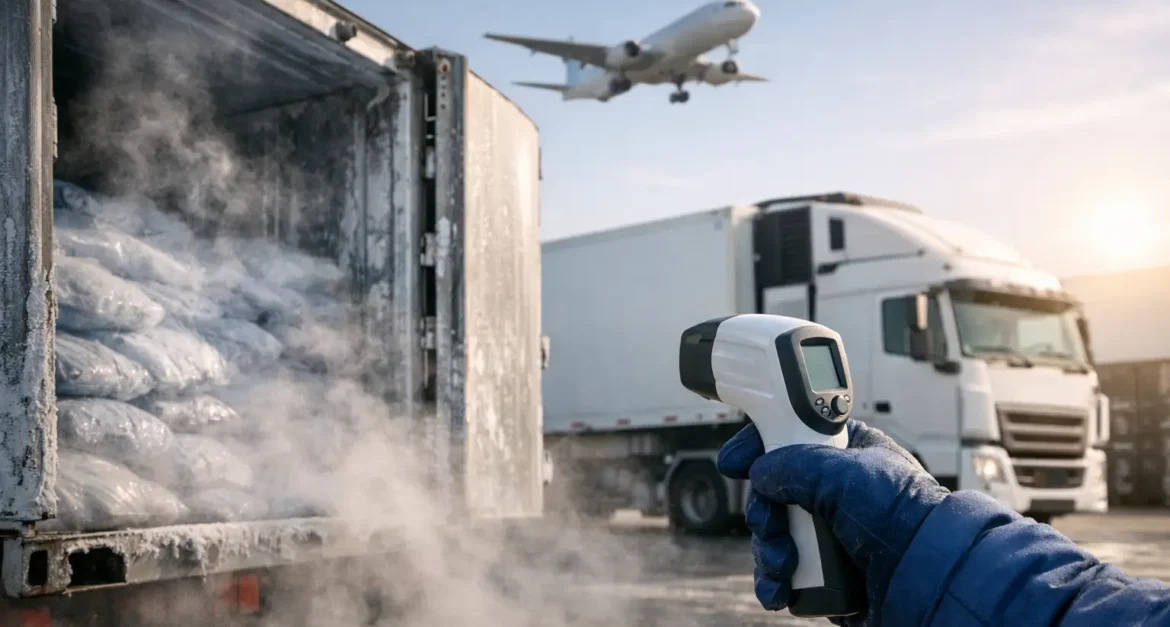
A pallet of chilled food can look perfectly fine at delivery and still be compromised. The same is true for vaccines, laboratory samples, and other temperature-sensitive goods. That is why businesses often ask, what is cold chain management? In simple terms, it is the system used to keep products within a required temperature range from collection to final delivery, so quality, safety, and compliance are protected at every stage.
For operations teams, this is not just a transport issue. It is a product integrity issue, a regulatory issue, and a customer trust issue. If temperature control breaks down for even a short period, the result can be spoiled stock, rejected deliveries, waste, failed audits, and reputational damage.
What is cold chain management in practice?
Cold chain management is the end-to-end planning, handling, storage, transport, monitoring, and documentation of temperature-sensitive goods. The goal is straightforward: maintain the correct conditions throughout the journey without deviation.
That journey usually starts long before a vehicle arrives on site. It includes pre-conditioned storage, correct product preparation, suitable packaging, validated loading procedures, temperature-controlled vehicles, route planning, delivery timing, and proof that the required conditions were maintained. If one part fails, the entire chain is at risk.
This is why cold chain management is called a chain. It depends on continuity. A refrigerated vehicle alone does not create a compliant cold chain if the goods were left on a loading bay too long, loaded at the wrong temperature, or handed over without proper records.
Why cold chain management matters
For chilled and frozen food, the issue is shelf life, food safety, and product quality. A temperature excursion can shorten usable life, affect texture or taste, and create serious compliance concerns. For pharmaceuticals and healthcare products, the stakes are often even higher. Some items become unusable if exposed to temperatures outside a narrow band, even briefly.
There is also a commercial reality. Businesses are judged on consistency. A supermarket does not want partial stock loss because a delivery arrived warm. A pharmacy cannot accept uncertainty around temperature integrity. A hospitality group cannot afford a missed delivery window that disrupts service across multiple sites.
Cold chain management reduces those risks by creating control. It provides a process, not just a vehicle. That process helps protect product value, avoid waste, support audits, and give operations teams confidence that goods will arrive in the right condition.
The core elements of cold chain management
At its most effective, cold chain management combines several controlled disciplines.
Temperature control is the obvious starting point. Different goods require different ranges, whether frozen, chilled, controlled ambient, or a mix of zones within one vehicle. The set point has to match the product specification, not just a generic category.
Monitoring is equally important. Real-time digital temperature tracking allows operators to see what is happening during transit rather than finding out after delivery. GPS visibility adds another layer of control by showing route progress, delays, and estimated arrival times.
Handling procedures matter because products are vulnerable during loading and unloading. Doors left open, poor loading discipline, or long waits at collection points can all undermine vehicle performance. Cold chain management addresses those points with clear operating procedures and trained drivers.
Traceability completes the picture. If a customer, auditor, or regulator needs proof of compliance, there should be a documented record showing temperatures, timings, vehicle details, and delivery confirmation. Without that, a business may struggle to prove the integrity of the shipment.
Where cold chain failures usually happen
Many cold chain issues do not begin on the road. They begin in handover points between teams, sites, and systems.
A common problem is loading delay. Products may be picked and staged correctly, but if they sit too long before entering a temperature-controlled vehicle, the cold chain is already under pressure. Another issue is poor route planning. Multi-drop work can be efficient, but only if it is structured around delivery windows, product priorities, and minimal door-open time.
Equipment can also be a factor. A vehicle may be refrigerated, but that does not automatically mean it is suitable for every load. Mixed consignments often require multi-temperature capability. Sensitive pharmaceutical movements may require validated control processes rather than standard chilled transport.
Then there is communication. If a supplier, depot, driver, and delivery site are not aligned on product requirements, even a small misunderstanding can cause a deviation. In cold chain logistics, assumptions are expensive.
What is cold chain management for different sectors?
The principle stays the same across industries, but the operational demands vary.
In food and beverage, cold chain management is often about preserving freshness, extending shelf life, and meeting food safety standards. Fresh produce, dairy, meat, seafood, and frozen products each have different handling requirements. Timing can be tight, particularly for retailers, wholesalers, and hospitality groups working to fixed service windows.
In pharmaceutical and medical logistics, compliance and traceability are central. Products may need narrow temperature tolerances, validated transport conditions, and complete records for quality assurance. Delays or temperature excursions are not just inconvenient. They may render stock unusable.
For commercial and manufacturing goods such as chemicals, cosmetics, or specialist components, the focus may be on stability and product performance. Some items are not classed as food or medicine, but still degrade if exposed to unsuitable temperatures.
That is why there is no one-size-fits-all model. The right cold chain setup depends on the product, the risk level, the delivery profile, and the evidence required after the job is complete.
How effective cold chain management works day to day
In operational terms, a well-run cold chain is built around planning, execution, and proof.
Planning begins with understanding the product specification. What temperature range is required? Is the load chilled, frozen, ambient, or mixed? Does the delivery require same-day movement, overnight storage, or a multi-drop route? Are there site restrictions, timed bookings, or compliance requirements that affect the run?
Execution depends on the right resources. That means suitable vehicles, calibrated monitoring systems, disciplined loading, trained drivers, and active traffic management. If conditions change during the journey, the response needs to be immediate. A passive approach creates avoidable risk.
Proof comes through data. Temperature records, tracking updates, delivery confirmations, and clear chain-of-custody documentation provide the visibility customers need. For many businesses, that visibility is just as valuable as the movement itself because it supports internal quality processes and customer assurance.
Choosing a cold chain logistics partner
If your business depends on temperature-sensitive transport, the key question is not simply whether a provider has refrigerated vehicles. The real question is whether they can maintain control under pressure.
A reliable cold chain partner should understand product risk, delivery urgency, and compliance expectations. They should be able to explain how temperatures are monitored, how deviations are managed, what traceability is available, and how mixed-temperature or time-critical jobs are handled.
It also helps to look at operational fit. A national retailer with regular multidrop schedules will need something different from a laboratory arranging urgent same-day consignments. The best provider is the one that matches your delivery profile, responds quickly when requirements change, and gives you full visibility rather than vague reassurance.
This is where specialist operators stand apart from general couriers. Cold chain work needs more than carrying capacity. It requires process control, technical understanding, and consistent execution.
What is cold chain management really protecting?
At one level, it protects temperature-sensitive goods. At a more practical level, it protects margin, compliance, continuity, and trust.
When the cold chain is managed properly, products arrive in the intended condition, audits are easier to support, customer complaints are reduced, and stock loss is kept under control. When it is managed badly, the cost is rarely limited to a single failed delivery. It often spreads into waste, replacement costs, service disruption, and damage to commercial relationships.
For businesses moving chilled, frozen, ambient, or medical products, cold chain management is not an added extra. It is the operating discipline that keeps the supply chain dependable. That is why specialist providers such as MT Logistics Group focus on validated control, real-time visibility, and precise execution from collection through to delivery.
If your products cannot afford temperature drift, late arrival, or uncertainty in transit, cold chain management is not just a logistics term. It is the control system that keeps your operation protected when it matters most.