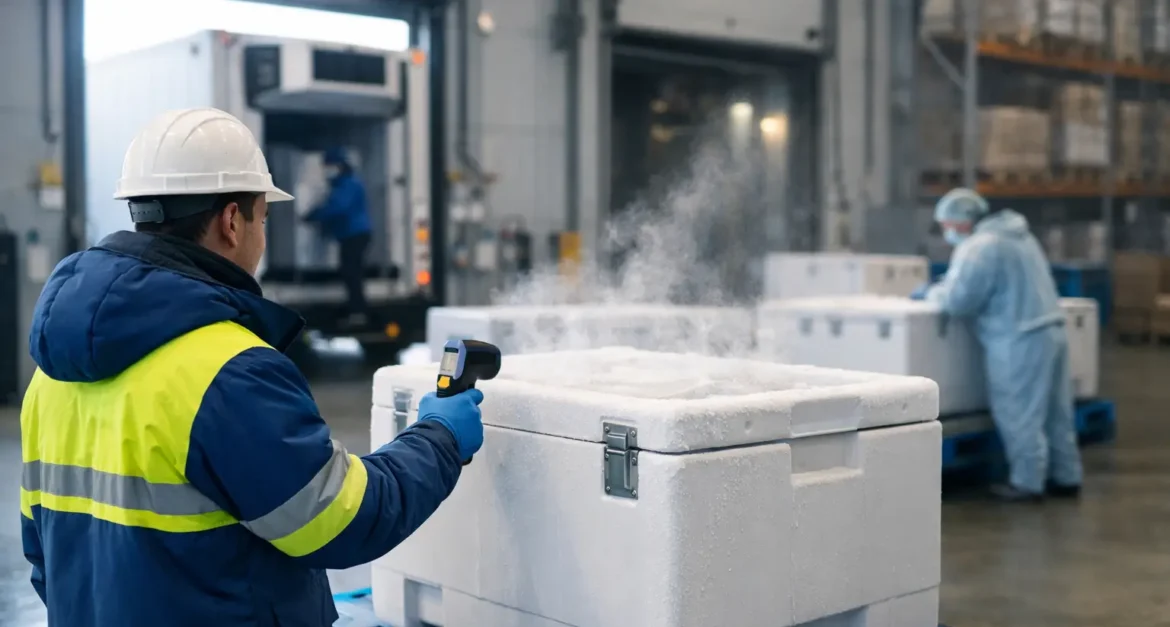
A chilled delivery can look perfectly normal at the point of handover and still be a costly failure. A short temperature excursion during loading, an unplanned stop, or an unopened data record can leave food unsafe to sell, medicines unsuitable for use, and your business exposed to waste, claims, and compliance risk. The best practices for cold chain operations are therefore not limited to setting a vehicle thermostat. They create control across the entire journey, from collection planning to documented proof of delivery.
For businesses moving chilled, frozen, ambient, pharmaceutical, or mixed-temperature goods, the aim is straightforward: maintain the required product condition, meet the agreed delivery window, and retain evidence that every critical control was managed properly.
Best Practices for Cold Chain Control Start Before Collection
Cold-chain performance is decided well before the vehicle arrives. The transport team needs accurate information about the product, its required temperature range, collection and delivery times, handling constraints, and any regulatory requirements. “Chilled” is not a sufficiently detailed instruction. A product held between 2°C and 8°C requires a different operating plan from fresh produce, frozen food, or controlled ambient stock.
Set the acceptable temperature range and the action limits separately. The target range describes normal operation. Action limits define what should happen if a reading approaches or crosses a threshold. This distinction prevents teams from treating every small fluctuation as a product failure while ensuring a genuine deviation receives immediate attention.
Collection and delivery locations also need to be assessed realistically. Consider loading-bay access, waiting times, security procedures, opening hours, pallet configuration, and whether goods will be exposed while being transferred. A vehicle with the correct refrigeration capacity cannot compensate for stock left on a warm loading bay for 30 minutes.
For urgent same-day work, planning has to be faster, not lighter. Confirm the consignment details, temperature specification, contact points, vehicle suitability, and route before dispatch. A rapid response should still be a controlled response.
Use the Right Vehicle and Capacity for the Load
Vehicle selection should reflect the product, load size, route, weather conditions, and stop pattern. Refrigerated transport is not one-size-fits-all. A single frozen consignment travelling directly to a distribution centre has different requirements from a multi-drop route carrying chilled, frozen, and ambient goods.
Pre-cool the load space before collection. Refrigeration units are designed primarily to maintain product temperature, not pull down warm stock quickly. Loading goods into an unconditioned compartment places unnecessary pressure on the unit and can compromise the first stage of the journey.
For multi-temperature work, use clearly separated and validated compartments where necessary. Products with different set points must not be treated as compatible simply because they travel in the same vehicle. Physical separation, correct airflow, and properly planned loading order all matter. Dense packing against evaporators or blocked air channels can create uneven temperatures even when the display shows the correct set point.
There is a practical trade-off here. More frequent drops can improve service coverage and reduce fleet movements, but each door opening introduces thermal risk. Multi-drop distribution needs disciplined route sequencing, short dwell times, and loading plans that keep the next delivery accessible without exposing the whole load.
Monitor Temperatures Continuously, Not Only at Handover
A temperature reading at collection and delivery is useful, but it does not show what happened between those points. Continuous digital monitoring provides the evidence needed to manage the journey, investigate an issue, and demonstrate control to customers or auditors.
Use calibrated monitoring equipment positioned appropriately for the load and vehicle configuration. A sensor near a refrigeration outlet may not reflect conditions in the warmest part of the compartment. For higher-risk pharmaceutical and medical consignments, monitoring arrangements should be based on the agreed transport specification and any applicable quality procedures.
Real-time alerts are most valuable when someone is accountable for responding. An alarm without an escalation process is simply a record of a problem. Define who receives alerts, the response time expected, the decisions they can make, and when the customer must be informed.
A sound deviation procedure should cover four actions:
- protect the product by checking vehicle operation, doors, airflow, and the load condition;
- establish the facts through time-stamped temperature and GPS data;
- notify the relevant customer contact where the agreed threshold has been breached; and
- quarantine or release the product only under the customer’s quality process.
Do not assume that every deviation means automatic disposal. The product owner or responsible quality team should assess the duration, temperature exposure, stability data, and regulatory requirements. Equally, do not allow commercial urgency to override that assessment. Traceability protects both product quality and decision-making.
Protect the Load During Handling and Handover
The greatest risk points are often the moments when goods are not moving. Loading, unloading, cross-docking, and waiting for a signature can all extend exposure beyond the planned window.
Keep doors open only for the time needed to complete the task. Prepare paperwork, delivery references, and handling equipment before opening the compartment. At multi-drop locations, confirm the receiving point and contact in advance so the driver is not searching for access while product temperature is at risk.
Drivers need clear instructions on what to check at collection and delivery. This includes packaging condition, visible damage, correct labels, pallet stability, product quantity, and any signs that the goods have not been held correctly before collection. A driver is not expected to make a scientific quality decision, but they should know when to stop, record the issue, and seek instruction.
Proof of delivery should capture more than a name and time. Depending on the consignment, it may need to include temperature data, condition notes, photographs, seal numbers, and any exceptions reported by the receiver. This is particularly valuable for high-value medicines, clinical materials, frozen products, and retail replenishment where disputes can develop quickly.
Build Compliance Into Everyday Cold-Chain Operations
Compliance works best when it is built into the operating routine rather than treated as paperwork after a delivery. Food businesses may need to demonstrate temperature control and hygienic handling under their food safety systems. Pharmaceutical and healthcare supply chains may require stricter documented procedures, training, validation, and deviation management.
The exact standard depends on the goods and the customer’s quality requirements. What remains consistent is the need for documented procedures that staff can follow under time pressure. That means clear cleaning schedules, maintenance records, calibration certificates, training records, vehicle checks, and traceable transport data.
Preventive maintenance deserves particular attention. Refrigeration breakdowns rarely arrive at convenient times, and a last-minute replacement vehicle may not have the right temperature zones or monitoring capability. Routine inspection of refrigeration units, door seals, drainage, airflow components, and temperature sensors reduces the chance of a failure becoming a product-loss event.
Cleaning must also match the product risk. A vehicle carrying packaged frozen food has different cleaning considerations from one transporting medical products or raw ingredients. Between-load checks help prevent cross-contamination, odour transfer, pest risk, and residue from affecting the next consignment.
Choose a Cold-Chain Partner That Can Prove Control
The lowest transport rate is not always the lowest operational cost. A missed retail delivery, rejected pharmaceutical consignment, or spoiled load can outweigh any initial saving many times over. Assess a provider on its ability to control risk, communicate quickly, and produce evidence when it matters.
Ask how vehicles are monitored, how temperature data is retained, what happens when an alert is raised, and whether the fleet can support your precise temperature range. For mixed loads, confirm the number of independently controlled compartments and how segregation is managed. For urgent work, ask what contingency is available if a vehicle issue or route disruption occurs.
It is also worth reviewing reporting quality. Useful reports are clear, time-stamped, and easy to match to a consignment. They should give operations teams full visibility without creating more administrative work. MT Logistics Group applies this approach through temperature-controlled vehicles, real-time monitoring, GPS tracking, and traceable delivery processes across UK operations.
Make Improvement Part of the Delivery Routine
Cold-chain control should be reviewed after delivery, not only after a failure. Track recurring waiting times, late collections, door-open durations, temperature alerts, rejected loads, and failed delivery attempts. These patterns often reveal small process weaknesses before they become serious incidents.
Use the findings to adjust routes, collection slots, vehicle allocation, loading methods, or customer instructions. The best process for a direct frozen run may not suit a five-drop chilled route through a congested city centre. Good cold-chain logistics is precise because it adapts to the actual operation, not because it applies the same rule to every load.
When product integrity is central to your business, transport should provide certainty rather than another point of exposure. Set clear requirements, verify every handover, act quickly on exceptions, and work with a partner that can show exactly how your goods were protected from collection to delivery.