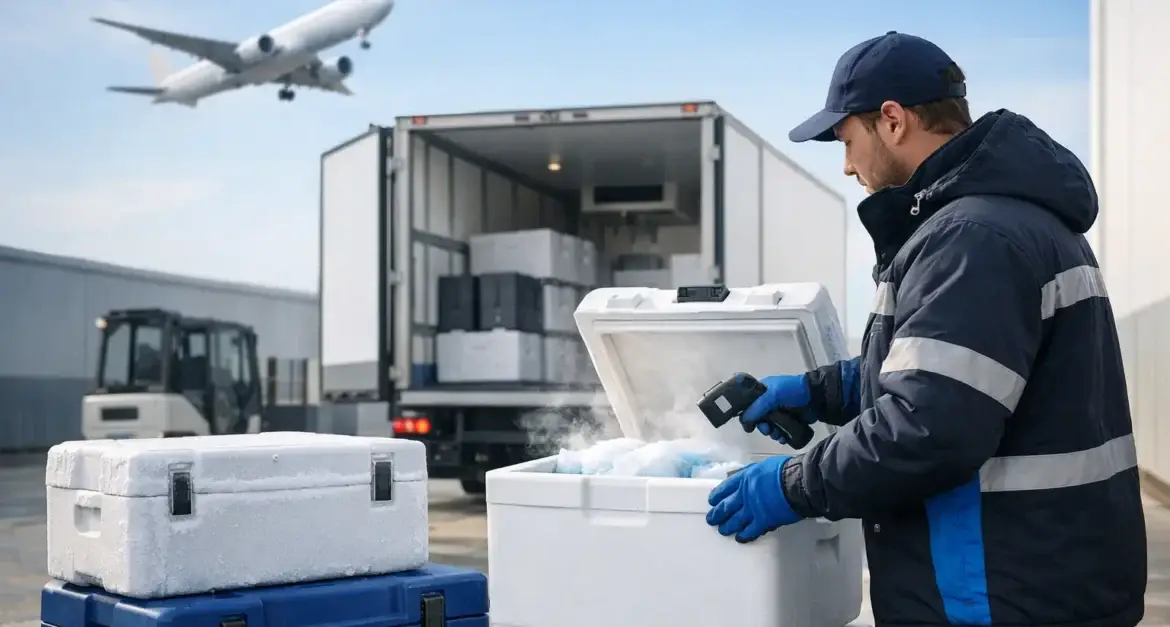
A cold room can be holding thousands of pounds’ worth of stock, but the real risk starts when the doors open. Once temperature-sensitive goods leave controlled storage, every handover, vehicle stop, route delay and temperature fluctuation matters. That is why the cold chain logistics process is not simply about moving products from A to B. It is about maintaining product integrity, compliance and traceability at every stage.
For food, pharmaceuticals and other regulated goods, small failures create expensive consequences. A short delay on a chilled delivery can shorten shelf life. A temperature deviation on a medical consignment can make the product unusable. A missed delivery slot can disrupt production, retail operations or patient supply. Businesses need more than transport capacity. They need a process designed to control risk.
What the cold chain logistics process actually involves
At its core, the cold chain logistics process is a controlled sequence of storage, handling, loading, transport, monitoring and delivery for goods that must stay within defined temperature ranges. Those ranges may be chilled, frozen, ambient-controlled or split across multiple zones in the same movement.
The process starts before a vehicle is even dispatched. Product type, temperature requirement, packaging method, delivery window, route profile and compliance obligations all shape how the movement should be planned. A consignment of frozen food for a regional wholesaler does not carry the same handling requirements as temperature-sensitive medical products, even if both move in refrigerated vehicles.
That distinction matters. Good cold-chain operations are built around the needs of the specific load, not a generic transport plan.
Planning is where control begins
The strongest cold-chain performance usually comes from the least dramatic delivery. No surprises, no avoidable delays, no last-minute changes, no uncertainty over product condition. That level of reliability depends on planning.
Before collection, operators need confirmed product details, required temperature bands, quantity, pallet configuration, collection and delivery times, access restrictions and any documentation requirements. If the shipment involves multiple drops, route sequencing becomes even more important. The wrong order can increase door openings, extend dwell time and put thermal stability under pressure.
Vehicle selection also has to match the load. Some deliveries need a dedicated refrigerated vehicle set to one stable range. Others need multi-temperature capability so chilled and frozen products can travel together without compromise. For urgent consignments, same-day response may be the deciding factor, but speed still has to sit alongside control.
When this stage is rushed, problems tend to appear later. The vehicle may be unsuitable, the route inefficient or the delivery window unrealistic. In cold-chain logistics, poor planning rarely stays a planning issue. It becomes a product risk.
Collection and pre-loading checks
Collection is the first live point of exposure. Goods need to be presented in the right condition, at the correct temperature, and ready for transfer without unnecessary waiting. If products sit on a loading bay while paperwork is being sorted, the clock is already working against temperature stability.
A disciplined collection process usually includes vehicle pre-cooling where required, temperature verification, equipment checks and confirmation that the load space is clean, suitable and ready to receive the goods. Drivers and operators also need to confirm the shipment matches the booking details. Wrong labels, mixed pallets or incorrect quantities create avoidable delays and can compromise traceability.
This is also where responsibility becomes clearer. If goods are already outside tolerance before loading, transport alone cannot correct that failure. A reliable provider will flag the issue rather than move a compromised consignment and hope it goes unnoticed.
Loading, segregation and handling discipline
Loading is not just about getting stock on board quickly. It is about placing goods in a way that protects temperature consistency, product safety and delivery efficiency.
Airflow inside the vehicle matters. So does segregation. Chilled, frozen and ambient-controlled loads may need separate zones or separate vehicles depending on product sensitivity and journey profile. Cross-contamination controls are equally important for food and pharmaceutical distribution, where handling standards are subject to scrutiny.
There is often a trade-off between speed and precision at this point. Fast loading reduces exposure time, but rushed loading can block airflow, damage packaging or create confusion at the delivery point. The best operators treat loading as a controlled part of the process, not dead time before the journey begins.
Transport and real-time temperature control
This is the stage most buyers think of first, but by itself it is only one part of the system. Refrigerated transport must maintain the required conditions continuously, supported by equipment that is properly maintained, calibrated and monitored.
Real-time digital temperature monitoring gives operators visibility while the consignment is in transit. That matters because recorded data after the event is useful for audit, but it does not help rescue a load if a live issue is unfolding. With active monitoring, teams can respond to deviations, delays or equipment concerns as they happen.
GPS tracking adds another layer of control. It supports accurate ETA management, delivery slot planning and communication with receiving sites. For customers managing production schedules, retail replenishment or medical supply deadlines, visibility is part of the service, not an extra.
Road conditions, traffic and delivery congestion can still affect performance. Cold-chain logistics is not immune to real-world disruption. What separates specialist providers is how well they anticipate those variables and respond without losing control of the load.
The role of compliance in the cold chain logistics process
A compliant cold chain logistics process protects more than product temperature. It protects audit readiness, product status and customer accountability.
For food businesses, this often means documented temperature control, hygienic handling and evidence that the supply chain has preserved safety and quality. For pharmaceutical and healthcare movements, expectations can be stricter still, with validated processes, traceable records and tighter tolerance for deviation.
Documentation matters because customers may need proof, not reassurance. Temperature records, collection and delivery timestamps, vehicle details, route information and chain-of-custody data can all become important if a consignment is challenged. In some sectors, no record means no confidence.
This is why specialist cold-chain providers invest in process discipline as much as transport assets. A refrigerated van on its own is not a compliant cold chain.
Delivery, handover and proof of condition
The final handover is where the process is tested. If the goods arrive on time but without clear temperature records, or if unloading takes too long and product temperature begins to drift, the last few minutes can undermine the rest of the journey.
A controlled delivery process should include timely arrival, careful unloading, confirmation of product condition and accurate proof of delivery. Where required, temperature data should be available to support the handover. For sensitive or high-value consignments, this level of traceability helps remove doubt and speeds up acceptance.
Multidrop distribution adds complexity here. Every stop creates exposure. Door openings, unloading times and site delays all affect temperature management. That is why route design, load configuration and delivery discipline matter so much in multi-drop cold-chain work.
Where businesses usually lose control
Most cold-chain failures are not dramatic equipment breakdowns. They are process gaps. A vehicle arrives without being pre-cooled. Goods are left waiting at collection. Delivery slots are overcommitted. Mixed loads are poorly segregated. Monitoring is passive rather than live. Communication is delayed when conditions change.
These issues are common because many businesses still treat temperature-controlled transport as a vehicle requirement rather than a managed process. That approach may work for low-risk goods, but it becomes expensive when stock is perishable, regulated or tied to strict delivery commitments.
For buyers reviewing logistics partners, the right question is not simply whether a provider offers refrigerated delivery. It is whether they can demonstrate control from collection through to handover, with visibility at each stage.
Why the process should fit the product
No two operations carry exactly the same risk profile. Fresh produce, frozen retail stock, laboratory materials and healthcare products all have different tolerance levels, handling needs and commercial consequences if something goes wrong.
That is why a dependable cold chain should be tailored. Some businesses need dedicated same-day transport because delay is the biggest threat. Others need scheduled multi-temperature distribution across a regional network. Others need day-rate vehicle support to extend their own capacity during peak periods. The process must fit the movement.
This is where specialist operators such as MT Logistics Group add value. The difference is not only in refrigerated vehicles or nationwide coverage. It is in building a transport plan around temperature control, visibility, timing and compliance from the outset.
A cold chain works best when it becomes predictable. Goods are collected in the right condition, loaded correctly, monitored in transit, delivered on time and backed by clear records. For businesses moving sensitive products, that consistency protects far more than the load. It protects service levels, margin and trust.