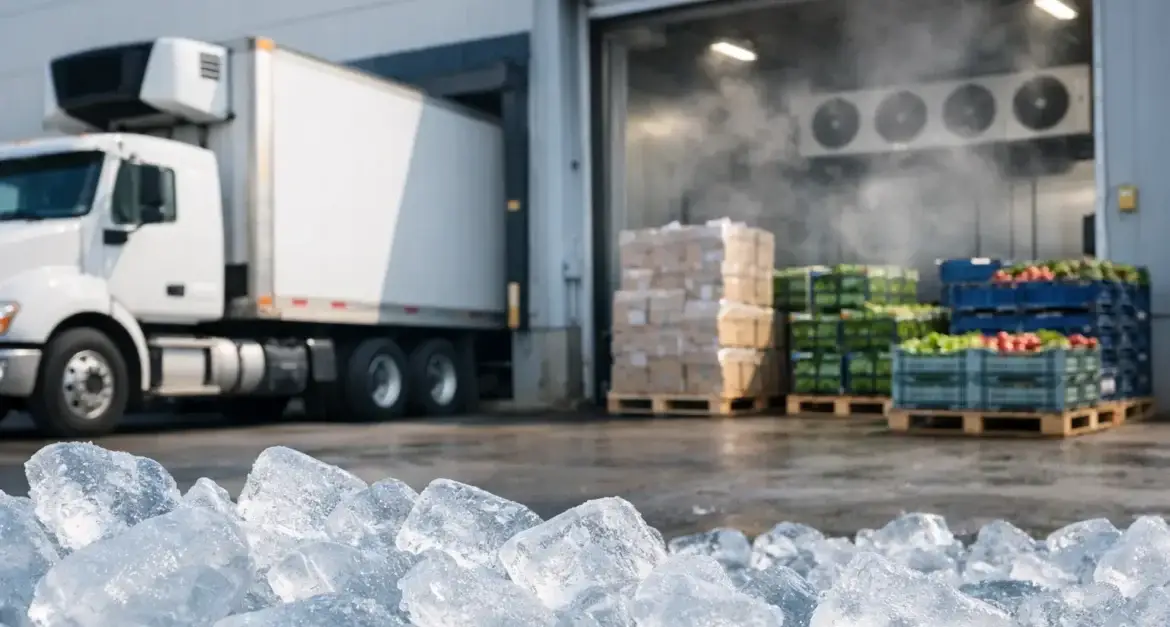
A pallet of fresh produce held at the wrong temperature for even a short period can arrive looking fine and still be unfit for sale. The same is true for frozen goods, pharmaceutical products and other sensitive consignments. That is why businesses keep asking what is cold chain logistics – because when product integrity matters, standard transport is not enough.
What is cold chain logistics?
Cold chain logistics is the controlled storage, handling and transportation of temperature-sensitive goods through every stage of the supply chain. The aim is simple: keep products within a specified temperature range from collection to delivery, without gaps, guesswork or avoidable exposure.
In practice, that means far more than putting goods in a refrigerated vehicle. A true cold chain includes temperature-controlled vehicles, suitable packaging, monitored loading procedures, route planning, trained drivers, proof of conditions during transit and clear traceability if anything needs to be checked later. If one part fails, the chain is broken.
For businesses moving chilled food, frozen stock, medicines or mixed-temperature consignments, the cold chain is not an added extra. It is the system that protects quality, shelf life, safety and compliance.
Why cold chain logistics matters so much
The commercial risk sits behind every temperature-controlled delivery. If a chilled consignment warms above its permitted range, bacteria can multiply faster and product life can shorten. If frozen stock partially thaws and refreezes, texture, quality and consumer safety can all be affected. In pharmaceutical and medical logistics, temperature deviation can make products unusable and create serious compliance issues.
There is also a reputational cost. A missed delivery or compromised load does not stop at one failed job. It can lead to rejected stock, retailer penalties, production delays, cancelled orders and damaged customer trust.
That is why cold chain logistics is built around control. Businesses are not only paying for a vehicle. They are paying for confidence that the goods collected are the goods delivered in the correct condition.
How the cold chain works in practice
A cold chain starts before the vehicle arrives. Products need to be stored correctly at origin, picked efficiently and prepared for loading in a way that limits exposure to ambient conditions. If chilled products are left on a loading bay for too long, the risk begins before the journey has even started.
Once the goods are loaded, the vehicle must be capable of maintaining the required temperature throughout transit. That could mean chilled, frozen, ambient or multi-temperature operation depending on the load. For many businesses, especially those serving retail, hospitality or healthcare sites, mixed loads are part of normal operations. In those cases, each compartment has to be controlled independently.
Monitoring is central to the process. Real-time digital temperature tracking gives visibility throughout the journey, while GPS data supports route control, ETA management and proof of movement. If there is traffic disruption, an urgent delivery window or a concern about product stability, live data allows decisions to be made quickly.
The final stage matters just as much as the first. Delivery needs to happen within the agreed temperature parameters, with confirmation that the goods stayed within range. For regulated sectors, that traceability is essential.
What products need cold chain logistics?
Food is the most obvious example, but it is far from the only one. Fresh meat, dairy, seafood, prepared meals, frozen products, bakery ingredients and produce all rely on stable transport conditions. Some require chilled movement, others frozen, and some need strict segregation to prevent contamination or temperature drift.
Pharmaceutical and healthcare supply chains often operate under even tighter controls. Vaccines, biologics, medicines, samples and diagnostic materials may have narrow acceptable temperature bands and strict documentation requirements. In these sectors, the transport provider is part of the compliance process, not just the delivery process.
There are also commercial products that are less visible but equally sensitive. Certain chemicals, cosmetics and specialist materials can degrade if exposed to heat or cold outside their permitted range. In those cases, climate-controlled freight protects product performance as well as value.
What makes cold chain logistics different from standard delivery?
The difference is control, validation and accountability.
A general courier may be able to move goods quickly, but speed alone does not protect temperature-sensitive products. Cold chain logistics adds a layer of technical discipline. Vehicles must be fit for purpose. Equipment has to be maintained. Drivers need to understand loading, temperature settings and handling requirements. Data should be recorded, not assumed.
This is where many businesses get caught out. A provider may offer a refrigerated van, but that does not automatically mean they are operating a dependable cold chain. If there is limited temperature visibility, poor communication, no contingency planning or no evidence of conditions in transit, risk remains high.
Cold chain logistics is about consistency under pressure. It needs to work during peak demand, urgent same-day jobs, multi-drop routes and unexpected delays – not just when conditions are ideal.
The key components of an effective cold chain
An effective cold chain depends on several parts working together. The vehicle is one part, but not the whole answer. Temperature-calibrated equipment, real-time monitoring, route planning, trained personnel and documented handovers all play a role.
The strongest operations also build in contingency. If a delivery window changes, a site cannot receive on time, or traffic disruption threatens the route, there must be a clear response that protects the load rather than simply hoping for the best.
For business customers, visibility is just as important as refrigeration. Knowing where a consignment is, what temperature it is running at and when it will arrive gives operations teams control. It also reduces the back-and-forth that often happens when a shipment is urgent and commercially critical.
What is cold chain logistics for multi-temperature deliveries?
This is where the model becomes more operationally demanding. Many businesses do not move one product type at one set temperature. A wholesaler might need frozen stock for one stop, chilled products for another and ambient goods on the same route. A hospitality supplier may need timed deliveries across several locations in one day.
Multi-temperature cold chain logistics allows these different requirements to be handled within one managed transport solution. That can improve efficiency and reduce the need for separate vehicles, but it also increases the need for careful planning. Compartment control, load segregation and disciplined delivery sequencing become critical.
If that control slips, mixed loads can create avoidable exposure. Done properly, they give businesses a more flexible and cost-effective way to serve customers without compromising product integrity.
Common risks in cold chain logistics
Most cold chain failures are not dramatic. They are often small operational lapses that build into bigger problems.
A vehicle set to the wrong range, goods loaded too slowly, repeated door openings on a multi-drop route, poor communication around site delays or a lack of recorded temperature data can all undermine the job. Even if the product looks acceptable on arrival, shelf life may already have been reduced.
There is also the issue of false reassurance. Some businesses assume that because goods travelled in a refrigerated vehicle, they were fully protected. Without traceability and proper process control, that assumption can be expensive.
This is why dependable operators focus on prevention rather than reaction. The best cold chain logistics providers reduce risk at each stage rather than relying on recovery after a deviation has happened.
Choosing the right cold chain partner
For operations managers, procurement teams and distribution leads, choosing a transport provider should come down to proof of control. Ask how temperatures are monitored, how exceptions are managed, what visibility you receive during transit and whether the fleet can support chilled, frozen, ambient or multi-temperature requirements.
It is also worth looking at responsiveness. A provider can have the right equipment and still create problems if communication is slow or service is rigid. Time-critical and temperature-controlled transport often go together, so your logistics partner needs to move quickly while maintaining standards.
This is where specialist operators such as MT Logistics Group add value. The difference is not simply refrigerated capacity. It is the combination of monitored vehicles, nationwide coverage, full traceability and the operational discipline needed to protect sensitive goods from collection through to delivery.
Price matters, but in cold chain logistics it should never be viewed in isolation. A lower-cost service that creates rejected stock, missed booking slots or compliance concerns is rarely cheaper in real terms.
Cold chain logistics is, at its core, about preserving what your business has already invested in – product quality, customer trust and delivery certainty. When the chain holds, everything downstream works better.