A vaccine shipment can look acceptable at delivery and still be unusable. Exposure to temperatures outside its approved range, poor packing, a delayed handover or missing records may compromise product quality and leave the consignment unsuitable for use. Knowing how to transport vaccines safely means controlling the complete journey, not simply placing products in a refrigerated vehicle.
For pharmacies, hospitals, laboratories, medical distributors and clinical teams, the objective is clear: maintain the manufacturer’s specified storage conditions from collection through to documented receipt. That requires a planned cold chain, trained handling and evidence that conditions remained within the approved limits.
Start with the vaccine’s approved transport requirements
There is no single temperature rule for every vaccine. Many routine products require storage at +2°C to +8°C, while others may have frozen, ultra-low-temperature or tightly defined short-term transport allowances. The product’s Summary of Product Characteristics, manufacturer instructions and the quality system governing the distribution route must determine the transport plan.
Before collection, confirm the required temperature range, permitted transport duration, sensitivity to light and any restrictions on freezing. Also establish whether the product can be transported with other goods. Vaccines should never be loaded alongside products that could introduce contamination, odour transfer, damage or uncontrolled temperature exposure.
The transport plan should identify the collection point, destination, delivery window, named receiving contact and contingency route. This prevents a common failure point: arriving at a site where no trained person is available to receive and transfer the vaccines into suitable storage.
Use validated packaging and temperature-controlled transport
The right solution depends on the route, consignment size, ambient weather conditions and product stability data. A small urgent consignment may travel in a qualified passive shipping system, while regular regional distribution may require an actively temperature-controlled vehicle. Neither option is automatically safer. The critical question is whether the chosen system has been validated to maintain the required range for the planned journey and credible delay scenarios.
Passive packaging needs disciplined preparation
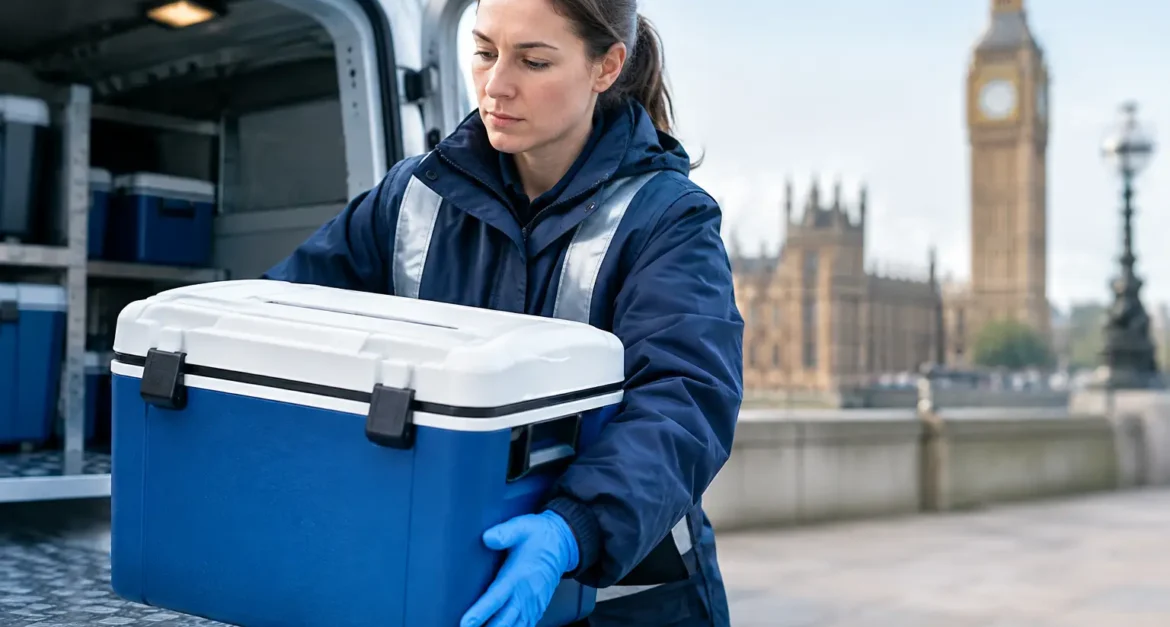
Insulated shippers, phase-change materials and cool packs can protect vaccines effectively when they are correctly conditioned, assembled and packed. They can also create a serious risk when preparation is inconsistent. Direct contact with frozen gel packs, for example, can freeze products intended to remain chilled.
Use the pack-out configuration specified by the packaging validation. Include barriers or separators where required, minimise empty space and ensure the shipper is sealed before dispatch. A temperature data logger should be positioned according to the validated method, not placed wherever it is most convenient.
Active vehicles provide control for critical routes
For time-critical, higher-volume or repeat vaccine distribution, a refrigerated vehicle with calibrated temperature control can provide stronger operational control. The load area must be pre-conditioned before loading, with the setpoint selected for the vaccine’s approved range rather than the day’s outside temperature.
Real-time digital temperature monitoring and GPS tracking give the transport team full visibility while the vehicle is in motion. They allow a developing issue, such as an extended stop, equipment alert or route delay, to be assessed and managed before it becomes a product-loss event. However, monitoring does not replace prevention. The vehicle, refrigeration equipment and alarm systems must be maintained, qualified and suitable for the operating profile.
Protect the consignment at every handover
The cold chain is most vulnerable when goods are stationary. Loading bays, reception desks, vehicle doors and temporary holding areas can all expose vaccines to unsuitable conditions. Keep transfers planned, brief and controlled.
At collection, verify the consignment against the dispatch documentation. Check outer packaging for damage, confirm the temperature-monitoring device is active where applicable and record the collection time. Load vaccines promptly into the validated temperature-controlled environment, securing them to prevent crushing, tipping or blocked airflow.
During transport, avoid unnecessary door openings and prevent mixed loads from interfering with airflow or temperature stability. Where a vehicle carries products with different requirements, compartmentalised multi-temperature transport may be necessary. A general courier service without controlled procedures is rarely appropriate for vaccines, particularly where delivery timing and audit evidence matter.
At delivery, hand the shipment directly to an authorised recipient. Confirm the recipient’s name, the delivery time, product condition and any temperature-monitoring status required by the receiving procedure. Vaccines should move into appropriate storage without delay. Leaving a consignment at an unattended reception point or with an untrained third party removes control at the final stage of the journey.
Maintain GDP-ready documentation and traceability
For pharmaceutical distribution, traceability is a core part of product protection. Good Distribution Practice principles require organisations to demonstrate that medicinal products were stored and transported under appropriate conditions. Records should make it possible to reconstruct what happened to a consignment, who handled it and how any exception was managed.
A practical transport record normally includes collection and delivery times, origin and destination, vehicle or packaging details, temperature data, proof of delivery and the identity of personnel involved. For monitored routes, retain logger data or real-time temperature records in line with the quality system and customer requirements.
Calibration matters as much as data capture. A temperature reading from an uncalibrated device cannot provide reliable assurance. Use calibrated monitoring equipment, maintain calibration certificates and define how often devices are checked or replaced. The same principle applies to refrigerated vehicle sensors and alarm systems.
Have a clear response plan for temperature excursions
A temperature excursion is not automatically a product failure, but it must never be ignored or casually judged at the delivery point. The response should be defined before the vehicle leaves.
If monitoring indicates that temperatures may have moved outside the approved range, protect the shipment from further exposure and place it in quarantine where appropriate. Record the time, duration, measured temperatures, packaging condition and circumstances of the event. Notify the responsible quality contact promptly so the product can be assessed against manufacturer stability information.
Do not return potentially affected vaccines to usable stock without documented authorisation. The correct outcome depends on the product, the extent of the deviation and the approved quality process. A reliable transport provider supports this investigation with accurate journey records, not assumptions.
Contingency planning should also cover vehicle breakdown, traffic disruption, failed collections, extreme weather and destination access issues. Options may include a replacement temperature-controlled vehicle, a secondary qualified packaging system, a nearby approved holding location or a revised delivery appointment. The value lies in having these decisions agreed and actionable before an incident occurs.
Select a specialist transport partner
When vaccines are moving through a commercial supply chain, the carrier is part of the quality process. Ask how temperature ranges are maintained and monitored, whether vehicles and packaging are validated, how drivers are trained, and what documentation is supplied after delivery. It is also worth checking how the provider handles urgent routes, out-of-hours deliveries and exceptions.
MT Logistics Group supports temperature-sensitive medical deliveries with refrigerated transport, real-time temperature monitoring, GPS tracking and full journey traceability. For customers managing planned distribution or urgent same-day requirements, this level of control helps protect product integrity while maintaining operational pace.
Build safety into the route, not just the vehicle
Safe vaccine transport is achieved through controlled decisions before, during and after the journey: the correct approved range, validated protection, minimal handling time, live visibility and documented receipt. Each step reduces the chance that a valuable consignment becomes an avoidable quality incident.
The most useful question to ask before dispatch is not whether the vehicle is cold enough. It is whether you can prove the vaccines remained protected throughout the entire journey. When the answer is clear, evidenced and repeatable, the cold chain is ready to perform when it matters.