A chilled pallet arriving at 10°C instead of 5°C can turn a routine delivery into waste, rejected stock, and a compliance problem by lunchtime. That is why temperature controlled delivery is not a transport extra. For many sectors, it is the control point that protects product quality, customer safety, and operational continuity.
For food businesses, healthcare providers, retailers, and manufacturers, the risk is rarely limited to spoilage alone. A temperature deviation can trigger failed audits, lost shelf life, stock write-offs, service disruption, and reputational damage. When delivery windows are tight and products are sensitive, the transport partner needs to do more than move goods from A to B. They need to maintain the right conditions, prove they maintained them, and respond quickly if plans change.
What temperature controlled delivery actually involves
Temperature controlled delivery means transporting goods within a defined temperature range from collection through to handover. That range may be chilled, frozen, controlled ambient, or split across multiple compartments for mixed loads. The exact requirement depends on the product, its shelf life, the regulatory framework around it, and how much tolerance exists for variation.
In practice, this involves more than a refrigerated vehicle. Effective delivery depends on pre-cooled equipment, route planning, correct loading patterns, calibrated monitoring systems, disciplined handling, and clear proof of temperature conditions throughout the journey. If one part of that chain fails, the rest of the system is compromised.
This is where many businesses get caught out. A standard courier with an insulated van may seem acceptable for a low-risk consignment, but that model often breaks down under real operational pressure. Multi-drop schedules, door openings, traffic delays, poor load segregation, and limited monitoring can all affect temperature stability. For sensitive goods, the margin for error is too small to leave to chance.
Why temperature controlled delivery matters by sector
Food and drink
For fresh, chilled, and frozen food, temperature control protects both safety and shelf life. If products warm up in transit, the issue is not always immediately visible. A consignment may still look acceptable on arrival, yet have lost crucial life in the supply chain. That creates downstream problems for retailers, hospitality groups, and wholesalers who are already working to tight stock rotation and service schedules.
The challenge becomes greater with mixed loads. A distributor supplying chilled dairy, frozen goods, and ambient products on the same route needs a vehicle and process that can separate each range without compromise. The wrong setup can lead to product cross-risk, rejected deliveries, and unnecessary waste.
Pharmaceutical and medical logistics
In pharmaceutical and healthcare distribution, the stakes are higher still. Many medicines, vaccines, lab samples, and medical products require validated cold chain conditions with complete traceability. Here, temperature controlled delivery is as much about compliance and documentation as it is about refrigeration.
A missed reading, an unverified handover, or a gap in monitoring records can become a serious issue. Distribution managers need confidence that products remained within the specified range at every stage, and that evidence is available if questioned by auditors, regulators, or customers. In this environment, transport must be precise, documented, and dependable.
Retail, hospitality, and time-critical supply
Restaurants, supermarkets, catering operations, and convenience chains often work to narrow delivery windows. A late chilled delivery can affect same-day service. A failed frozen drop can leave freezers understocked during peak trade. Temperature control matters, but so does timing.
That is why the delivery model has to suit the operation. A route that works for next-day replenishment may be completely unsuitable for urgent store support or event supply. The right service depends on what happens if the goods are delayed, whether stock can be substituted, and how quickly the site needs to recover.
The operational risks businesses need to control
The most obvious risk is temperature deviation, but it is rarely the only one. Delivery failure often happens through a combination of factors: poor planning, inadequate vehicle capability, limited visibility, and weak communication.
Door openings during multi-drop routes can steadily erode temperature stability. Incorrect loading can block airflow and create warm zones within the vehicle. Delays at collection points or customer sites can extend journey times beyond what the product can safely tolerate. If monitoring is patchy or retrospective, problems may only come to light after delivery, when the cost of recovery is far higher.
There is also a commercial risk that is easy to underestimate. When buyers lose confidence in a supplier’s cold chain, they usually tighten checks, challenge invoices, and reduce flexibility. One failed delivery can create months of friction. Reliable temperature controlled delivery helps prevent that by giving customers confidence in the integrity of every load.
What good temperature controlled delivery looks like
A reliable operation starts with the right vehicle specification for the goods being moved. That may be a single-temperature refrigerated van for dedicated chilled transport, a frozen-capable unit for low-temperature products, or a multi-temperature setup for mixed consignments. The key is matching equipment to product requirements rather than forcing goods into whatever vehicle happens to be available.
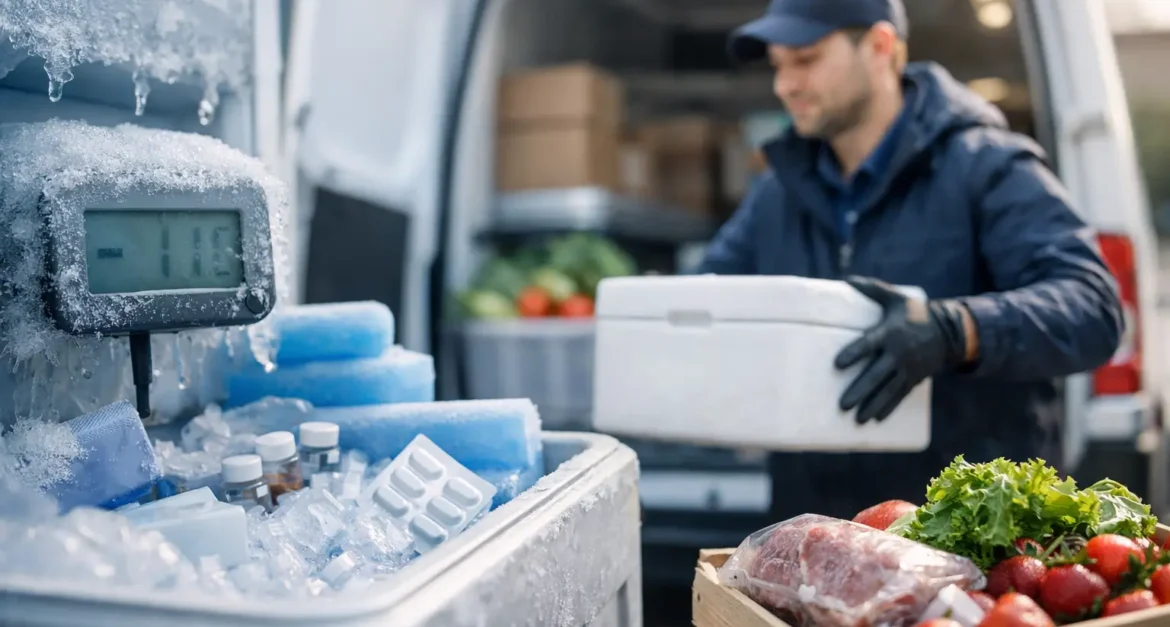
Monitoring is equally important. Real-time digital temperature tracking gives operators visibility during the journey, not just after it. If a reading moves outside tolerance, the team can investigate and act quickly. GPS tracking adds another layer of control by showing where the consignment is, whether it is on schedule, and how any delay may affect the delivery window.
Processes matter just as much as hardware. Drivers and transport teams need clear handling procedures, especially for sensitive or regulated goods. Collection times, loading discipline, route sequencing, proof of delivery, and escalation protocols all contribute to maintaining product integrity. Good cold chain performance is built through consistent execution, not assumptions.
Choosing the right delivery model
There is no single answer for every business. The right model depends on product sensitivity, volume, geography, and how costly disruption would be.
Same-day delivery suits urgent replenishment, critical healthcare movements, and short-shelf-life products where speed reduces risk. Next-day services can work well for planned distribution, provided vehicle control and monitoring standards remain high. Dedicated vehicles are often the best option when the load is high value, highly sensitive, or operationally critical, because they remove the uncertainty that comes with shared networks.
Multi-drop distribution can be efficient, but only if route density does not compromise temperature stability or timing. For some operators, a lower-drop dedicated run is more cost-effective in real terms because it reduces rejections, waste, and service failures. The cheapest quoted transport cost is not always the lowest supply chain cost.
What to ask a temperature controlled delivery provider
If you are reviewing providers, ask practical questions. How is temperature monitored during transit? Are vehicles suitable for chilled, frozen, ambient, or multi-temperature loads? What happens if a vehicle is delayed or a reading falls outside tolerance? Can they support urgent same-day requests as well as planned distribution? What level of traceability is available after delivery?
It is also worth asking how the provider handles your busiest and most difficult days, not just routine runs. Peak periods, failed collections, last-minute booking changes, and out-of-hours requests reveal the strength of an operation far more clearly than a standard service description.
A specialist provider such as MT Logistics Group is built around that reality. The difference is not simply refrigerated vehicles. It is the combination of controlled equipment, real-time visibility, responsive planning, and the discipline to protect sensitive goods under pressure.
Temperature control is really about trust
When a customer accepts chilled food, medical stock, or frozen products onto site, they are trusting that the goods arrived exactly as they should. That trust depends on more than a delivery note. It depends on evidence, consistency, and a transport process that leaves as little to chance as possible.
Temperature controlled delivery gives businesses that assurance when it is done properly. It protects quality, supports compliance, reduces waste, and keeps operations moving when timing and condition both matter. If your products cannot afford variation, your delivery model should be built around control from the start, not checked after the journey is over.
The most reliable supply chains are not the ones that hope for the best. They are the ones designed to hold their standards on the road as firmly as they do in the warehouse.