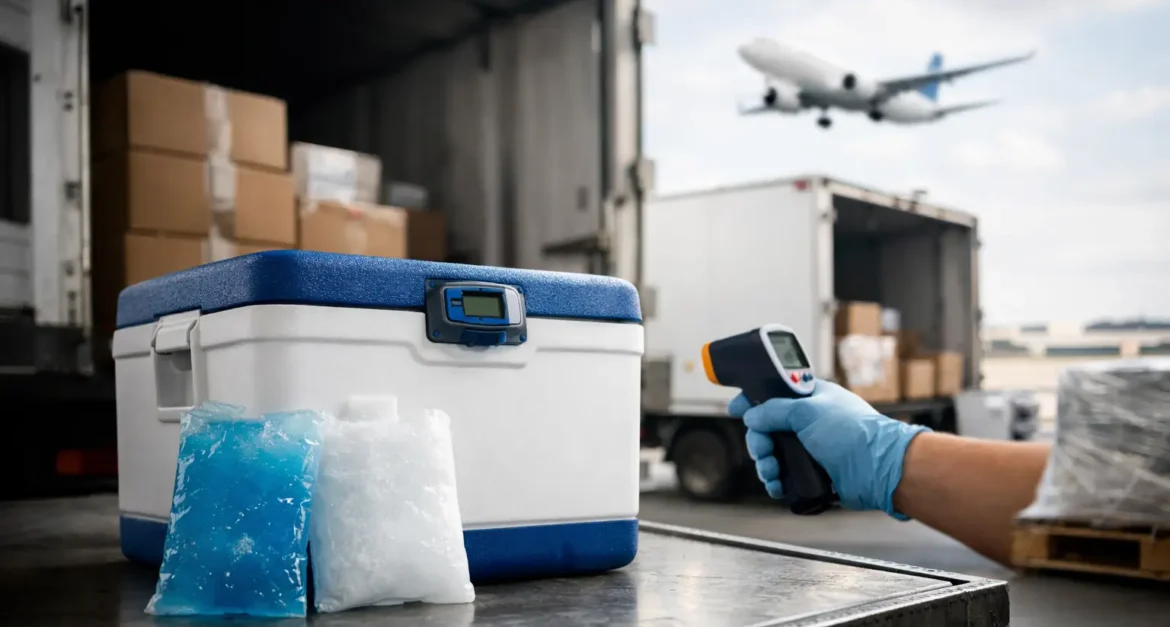
A temperature excursion is rarely caused by one dramatic failure. More often, it begins with a vehicle waiting too long at collection, doors left open during a multidrop run, an incorrect set point, or a product loaded before it has reached its required temperature. For businesses moving food, pharmaceuticals, medical supplies or other sensitive goods, knowing how to prevent temperature excursions means controlling every handover, not simply switching on refrigeration.
The consequences can be immediate: rejected deliveries, stock loss, service disruption and damage to customer confidence. In regulated sectors, an unexplained deviation may also create a compliance issue that requires investigation and product quarantine. The most reliable cold chain is therefore planned, monitored and evidenced from collection through to proof of delivery.
Start with a defined temperature specification
Temperature control begins before a vehicle is allocated. Each consignment needs a clear, documented specification that states the acceptable temperature range, whether it is chilled, frozen, ambient or controlled room temperature, and any product-specific handling conditions. A vague instruction such as “keep cool” leaves too much room for error.
The required range should be agreed between the shipper, logistics provider and receiving location. It must also be clear whether the stated range applies to the product temperature, the vehicle air temperature, or both. These are not interchangeable. A refrigerated vehicle can show the correct air reading while product near an open door, in an overloaded area or beside an evaporator is outside tolerance.
For mixed loads, identify each zone and its set point before collection. Multi-temperature transport is highly effective when the load plan, compartment capacity and delivery sequence have been designed around the products being carried. It becomes a risk when incompatible goods are placed together for convenience.
Validate the vehicle before loading
A vehicle should not be treated as temperature-controlled simply because it has a refrigeration unit. Its capability must match the product, route, ambient conditions, payload and delivery profile. A long-distance frozen delivery in summer places different demands on equipment than a short chilled urban run with frequent door openings.
Pre-cool the load space to the agreed set point before goods arrive. Loading into a warm compartment forces the refrigeration system to recover while product is already inside, increasing the risk of a deviation. This is particularly relevant for frozen stock and pharmaceutical consignments with narrow approved ranges.
Vehicle checks should confirm that the refrigeration unit is operating correctly, doors and seals are intact, drains are clear, bulkheads are secure and temperature sensors are functioning. Preventive maintenance matters here. A unit that appears to work at depot may fail to hold temperature under road conditions, during repeated door openings or in high ambient heat.
Temperature mapping and equipment validation provide further assurance where product risk or regulatory requirements demand it. They help establish where warmer and colder areas occur within a load space, allowing operators to place stock appropriately and set realistic operational controls.
How to prevent temperature excursions during loading
Loading is one of the highest-risk points in any cold-chain journey. The product is exposed, vehicle doors are open and teams are working against the clock. Speed is useful, but disciplined loading is what protects the consignment.
Goods should be checked for visible damage and, where required, verified for product temperature before loading. Do not accept stock that is already outside specification without a documented decision from the responsible party. Transport cannot correct a compromised product history.
Keep the loading area organised so stock is ready before vehicle doors are opened. Load in delivery order to reduce search time at each stop, and avoid blocking airflow around the cargo. Overpacking a compartment or stacking goods against air outlets can create localised hot or cold spots, even where the vehicle display indicates that the overall set point is being maintained.
For frozen products, minimise exposure to external air and avoid unnecessary staging. For chilled products, use appropriate packaging and maintain separation from warmer ambient goods. Pharmaceutical and medical consignments may require additional controls, including qualified packaging, tamper-evident handling and chain-of-custody records.
Monitor the journey in real time
A temperature record reviewed after delivery is useful evidence, but it cannot prevent a developing problem. Real-time digital monitoring gives operators the opportunity to intervene while the consignment is still recoverable.
Live temperature monitoring should be paired with GPS tracking and alert thresholds. If a reading moves outside its permitted range, the response must be immediate and defined. The team needs to know whether the issue is a temporary door-opening event, a sensor fault, a refrigeration failure or an actual product risk. Treating every alert identically can cause unnecessary disruption, but ignoring an alert can turn a minor issue into a lost load.
Alert thresholds should reflect the product specification and agreed escalation process. For example, a brief rise in air temperature during a scheduled delivery may not have the same significance as a sustained increase while the vehicle is travelling with doors closed. Duration, location, vehicle status and product type all matter.
The driver is central to this process. They should understand the set point, delivery sequence, door discipline and escalation route before departure. Clear instructions are more reliable than expecting a driver to make technical decisions without support when an alarm occurs.
Reduce risk at every delivery stop
Multidrop distribution creates a practical trade-off. Frequent deliveries improve service and reduce stockholding at customer sites, but each stop introduces exposure to outside conditions. The answer is not to avoid multidrop work. It is to control it properly.
Plan routes to reduce journey time, avoid unnecessary backtracking and account for delivery windows, traffic restrictions and expected dwell time. A route that looks efficient on a map may be unsuitable if it requires long waits with doors open or repeatedly moves between hot and cold locations.
At the delivery point, confirm that the receiving team is ready before opening the vehicle. Keep doors open only for the time needed to unload, close them fully between drops and avoid leaving them ajar while paperwork is completed. Where a site has poor access, congestion or no suitable receiving area, record the issue and review whether a different delivery time, vehicle configuration or handling process is needed.
Proof of delivery should capture the time, location, condition of goods and any exception. This strengthens traceability and gives supply chain teams evidence if a receiving site later raises a query.
Build a contingency plan before you need one
Even well-managed operations can face a breakdown, collision, road closure, refrigeration alarm or rejected delivery. Prevention includes being ready to respond when conditions change.
A practical contingency plan identifies who receives alerts, who can authorise decisions, how the product will be assessed and what replacement transport is available. It should include contact details for the shipper and consignee, approved holding locations where relevant, and clear instructions for product segregation or quarantine.
For time-critical healthcare or pharmaceutical deliveries, the response window may be extremely short. For fresh food, the priority may be to protect shelf life and prevent waste. The right response depends on the product’s stability data, the temperature reached, the duration of exposure and the customer’s quality procedures. Never assume that a brief deviation is harmless or that a recorded excursion automatically means the product must be discarded. Assess it against the approved specification and document the decision.
Use records to improve the next run
Temperature control should be measured as an operating process, not treated as a one-off transport task. Review temperature data, alarm history, delivery dwell times, maintenance records and recurring site issues. Patterns often reveal preventable causes: a particular route that creates long door-open periods, a site with slow unloading, a vehicle compartment that is routinely overloaded, or an alarm threshold that is not configured appropriately.
This review supports continuous improvement and helps demonstrate compliance to customers, auditors and internal quality teams. It also makes commercial sense. Reduced spoilage, fewer rejected loads and fewer emergency replacements protect margin as well as product integrity.
Reliable cold-chain delivery is built through preparation, visibility and decisive action. MT Logistics Group applies these controls through temperature-managed vehicles, live tracking and full traceability, giving businesses the confidence to move sensitive goods without leaving product quality to chance.