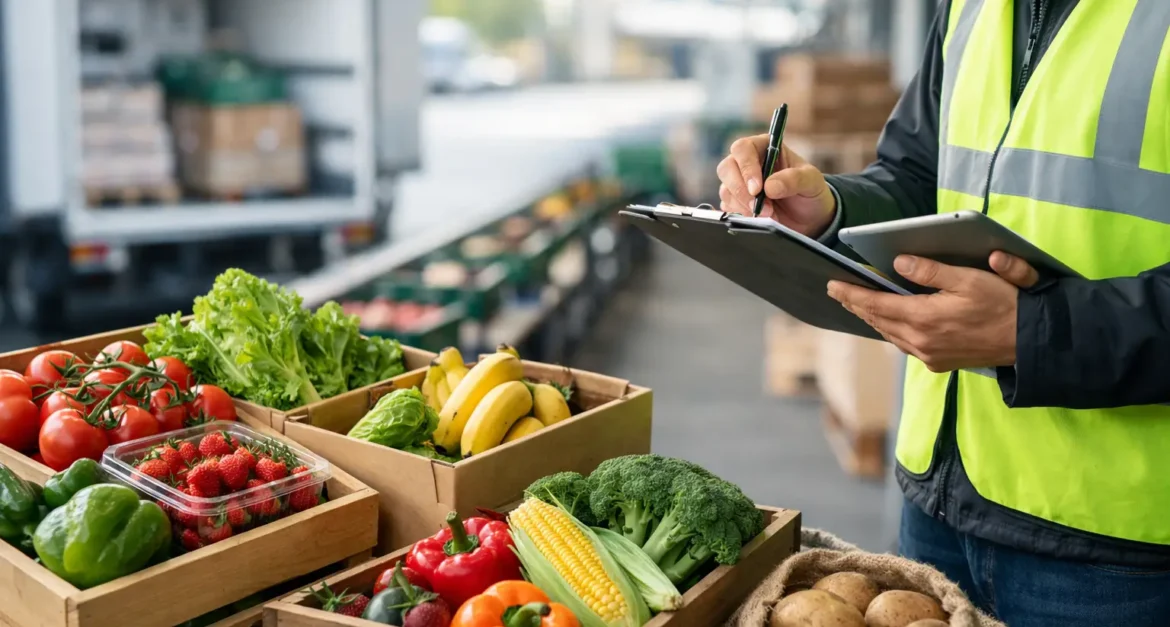
A rejected chilled delivery rarely begins at the point of rejection. It often starts hours earlier: a vehicle pre-cooling late, a loading bay door held open, an unclear handover, or a delivery route that leaves sensitive stock waiting. Knowing how to reduce food spoilage means controlling these small but critical points across the entire supply chain, not simply reacting when product quality has already declined.
For food wholesalers, manufacturers, retailers, hospitality operators and meal-prep businesses, spoilage is more than a waste issue. It can result in lost revenue, unavailable stock, customer complaints, disrupted service, disposal costs and damage to brand trust. A controlled cold chain protects product integrity while giving operations teams the evidence needed to make confident decisions.
How to reduce food spoilage through temperature control
Temperature is one of the most decisive factors in food shelf life. Chilled products may remain within a safe range yet still lose quality faster when temperatures fluctuate repeatedly. Frozen goods can be compromised by partial thawing and refreezing. Fresh produce, bakery products, dairy, meat and prepared foods all have different handling requirements, so a single approach is rarely enough.
The first requirement is to define the correct transport and storage temperature for each product category. This should reflect supplier specifications, product labelling, internal food-safety procedures and the conditions agreed with customers. Do not rely on a vehicle being described as refrigerated. The required set point, acceptable range and response to an excursion should be clear before collection.
Pre-cooling is equally important. A temperature-controlled vehicle should reach its required operating condition before stock is loaded, particularly for frozen and high-risk chilled goods. Refrigeration units are designed to maintain product temperature, not rapidly pull down warm stock introduced during loading. Loading goods that have already warmed on a bay can shorten usable shelf life before the vehicle leaves site.
Real-time digital monitoring adds the control that manual checks alone cannot provide. Continuous records create visibility throughout the journey and help identify an issue early enough to protect the load. For high-value or compliance-sensitive products, temperature data should be retained alongside collection and delivery records so that every movement is traceable.
Protect the cold chain at every handover
Food spoilage risk increases whenever responsibility changes hands. Collection points, consolidation hubs, distribution centres, retail back doors and restaurant deliveries all create opportunities for delay and temperature exposure. Clear processes reduce that risk.
At collection, check that products are correctly packed, labelled and presented at the agreed temperature. Pallets should be stable, packaging intact and airflow around the load preserved. Overpacking a vehicle or blocking evaporator circulation can create warm zones, even where the refrigeration unit is operating correctly.
During transport, minimise unnecessary door openings and avoid mixing incompatible products without proper compartmentalisation. Multi-temperature transport can be highly effective for businesses distributing chilled, frozen and ambient goods on the same run, but only when each compartment is independently controlled and loading is planned around the delivery sequence.
At delivery, timing matters as much as temperature. A retailer, kitchen or warehouse that is not ready to receive stock can leave goods exposed at the most vulnerable moment. Confirm delivery windows in advance, communicate delays immediately and obtain proof of delivery with any relevant temperature information. If a deviation occurs, the priority is to contain it, assess the affected stock against agreed procedures and document the outcome rather than making assumptions.
Plan routes around product life, not just mileage
The shortest route is not always the lowest-risk route. A route may appear efficient on a map but involve congested access, repeated door openings, long waiting times or delivery windows that leave chilled stock on board for too long. Effective route planning considers product sensitivity alongside mileage, driver hours, customer receiving times and vehicle capacity.
For multidrop food distribution, place the most temperature-sensitive or time-critical consignments where they can be delivered within their agreed exposure limits. Consider the sequence of compartments, unloading time at each stop and the practicality of site access. A vehicle idling outside a city-centre location while a driver searches for a loading point can quickly disrupt the planned cold chain.
Contingency planning is also essential. Traffic incidents, vehicle breakdowns, rejected deliveries and last-minute order changes happen. The difference lies in how quickly the operation responds. A reliable logistics plan includes escalation contacts, alternative delivery options, temperature monitoring and access to suitable replacement capacity when required.
Get packaging, loading and stock rotation working together
Transport cannot compensate for weak packaging or poor inventory discipline. Food businesses reduce spoilage fastest when procurement, warehouse, production and logistics teams work to the same handling standards.
Packaging should protect the product from contamination, damage and moisture while supporting its temperature requirement. Insulated packaging, liners, gel packs and dry ice can be appropriate for certain consignments, but they must be validated for the journey length, external conditions and product load. More insulation is not automatically better if it restricts airflow or creates condensation problems.
In the warehouse, use first-expired, first-out rotation rather than relying solely on first-in, first-out. Goods with the shortest remaining shelf life should be identified and dispatched first where customer specifications allow. Accurate date coding, regular stock checks and segregation of damaged or returned goods prevent stock from being overlooked until it becomes unsaleable.
Loading plans should also reflect shelf life. Avoid placing urgent, short-dated stock where it will be difficult to unload promptly. Keep chilled and frozen products away from prolonged exposure at open doors, and ensure staff understand that handling time is part of product control, not an administrative detail.
Build a response process for temperature deviations
No operation can promise that every disruption will disappear. What protects food safety and commercial value is a disciplined response when conditions move outside specification. Teams need to know who is alerted, what information is captured, who can release or quarantine stock, and how customers are informed.
A useful deviation record includes the product involved, temperature range, duration, location, likely cause and actions taken. This provides a factual basis for quality assessment and helps prevent repeat failures. It is also valuable during supplier reviews, customer investigations and food-safety audits.
Avoid blanket decisions where possible. A brief recorded deviation does not always mean automatic disposal, while a load that appears acceptable on arrival may still require review if there is no credible temperature history. The correct decision depends on the product, its specification, its remaining shelf life and the nature of the exposure. Quality teams should set these rules in advance so drivers and operations staff are not forced to improvise under pressure.
Choose transport partners that provide control, not just capacity
When food is moved by a third party, the provider becomes part of your food-safety system. Capacity alone is not enough. You need confidence that the fleet, procedures and people can protect the load from collection through to proof of delivery.
Ask practical questions: Are vehicles suitable for chilled, frozen, ambient or mixed-temperature loads? Is temperature monitoring continuous and accessible? How are vehicles cleaned, maintained and pre-cooled? What happens if a delay or temperature alert occurs? Can the provider manage urgent collections, timed deliveries and multidrop routes without losing visibility?
A specialist temperature-controlled logistics partner should provide clear communication, traceable records and a response process that matches the risk of the goods being carried. MT Logistics Group supports this requirement with monitored refrigerated transport, multi-temperature capability and time-critical delivery planning across the UK.
Make spoilage prevention measurable
Spoilage reduction improves when it is measured as an operational performance issue rather than treated as an unavoidable cost. Track rejected deliveries, temperature deviations, damaged cases, short-dated write-offs, missed delivery slots and customer complaints. Review patterns by route, site, product type, carrier and time of year.
These figures often reveal where attention is needed. A recurring issue on one route may point to unrealistic delivery scheduling. Higher waste at a particular depot may indicate poor stock rotation or loading-bay practices. Seasonal peaks may require additional vehicle capacity, revised collection times or more stringent contingency planning.
The aim is not paperwork for its own sake. It is to create a supply chain where every team can see the risks, act quickly and protect the value already invested in the product. When temperature, timing and traceability are treated as one controlled process, food reaches customers in the condition your business intended.