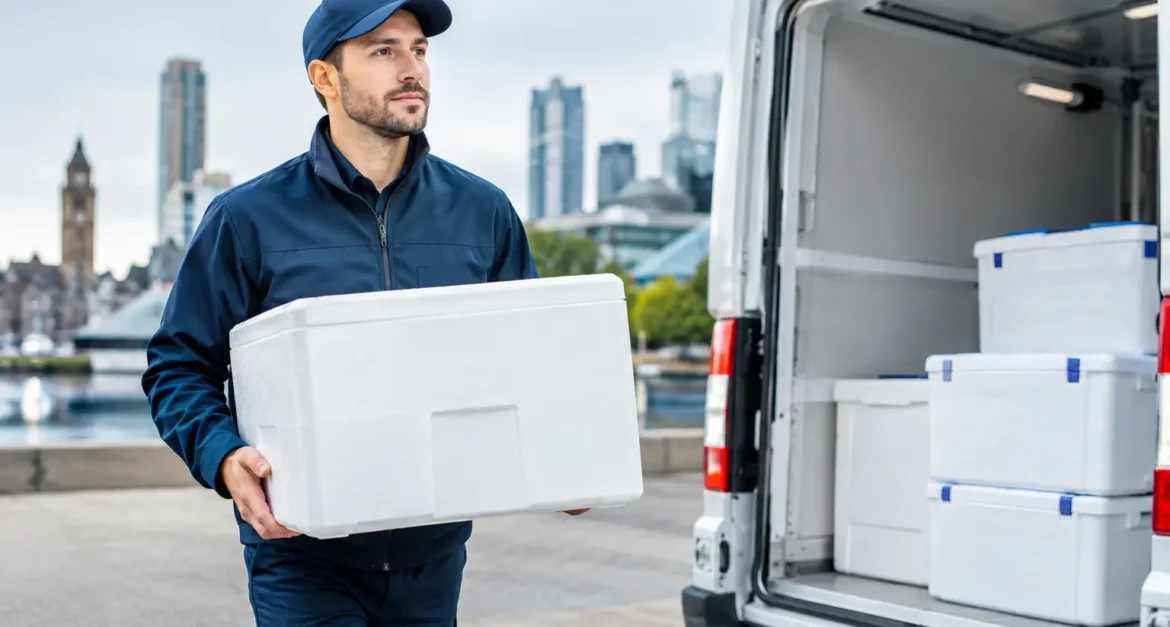
A missed delivery slot can mean a restaurant without stock for service, a production line waiting on materials, or temperature-sensitive medicine held up when it is needed most. For businesses handling critical goods, same day delivery Birmingham is not simply about speed. It is about maintaining control over temperature, timing, documentation and product condition from collection through to proof of delivery.
Birmingham is a major commercial and distribution hub, but its busy roads, restricted access areas and demanding customer delivery windows can turn an urgent movement into a complex operational task. The right courier service plans for those pressures before the vehicle leaves, rather than reacting once a delay has already put the load at risk.
When Same Day Delivery in Birmingham Is the Right Choice
Same-day transport is valuable when the cost of waiting until tomorrow is greater than the cost of an urgent vehicle. That may involve replenishing chilled stock for a hospitality site, moving frozen products to a retailer, collecting samples for a laboratory, or delivering a replacement component needed to keep operations running.
For temperature-controlled goods, urgency must never displace product protection. A general same-day courier may be suitable for paperwork or standard parcels, but it may not have the equipment, procedures or monitoring required for chilled, frozen or multi-temperature loads. If the goods have a defined storage range, a high value or a compliance requirement, the transport solution needs to reflect that risk.
The best approach depends on the consignment. A single urgent pallet requires a different plan from a multi-drop route across the West Midlands. A pharmacy delivery with a narrow temperature range has different controls from ambient stock that simply needs a direct, timed delivery. Clear information at booking allows the correct vehicle, service level and handling process to be put in place quickly.
What a Controlled Same-Day Service Should Include
A dependable same-day operation begins with a precise collection brief. The transport provider should establish what is being moved, its required temperature range, the collection and delivery addresses, available time windows, loading restrictions, and whether any special handling or delivery evidence is needed.
For cold-chain work, refrigerated vehicles should be selected and prepared for the required set point before loading. This matters because loading goods into a vehicle that has not stabilised can expose them to unnecessary temperature movement at the start of the journey. For mixed consignments, multi-temperature capability may be needed to keep chilled, frozen and ambient goods correctly separated.
Real-time temperature monitoring and GPS tracking provide the visibility that urgent movements require. Operations teams need to know where the vehicle is, whether it is on schedule and whether agreed transport conditions are being maintained. Digital records also support traceability, customer assurance and internal quality processes.
Proof of delivery should be equally clear. Depending on the goods and recipient requirements, this can include a name, signature, delivery time, photographic confirmation or documented handover. For regulated and high-value consignments, an unambiguous chain of custody protects both the sender and the receiver.
Speed Requires Planning, Not Guesswork
Same-day delivery does not mean promising an impossible collection time and hoping traffic cooperates. Birmingham routes can be affected by congestion around the city centre, the Clean Air Zone, roadworks, event traffic and limited access at retail, hospital or industrial locations.
An experienced operator accounts for these factors when planning collection and delivery. They confirm vehicle suitability for the route, allow for site access procedures, and communicate early if a customer action is needed to protect the delivery window. This is particularly important where the receiver can only accept deliveries at a specified time or where goods need immediate transfer into cold storage.
Direct delivery is often the strongest option for urgent temperature-sensitive consignments because it reduces handovers, waiting time and the chance of a load being delayed in a shared network. However, a dedicated vehicle is not always necessary. Consolidated or multi-drop transport can be more cost-effective for planned deliveries, provided the route, timings and temperature controls remain appropriate.
Same Day Delivery Birmingham: Sectors That Depend on It
Food businesses often need rapid support when stock is short, an order is rejected, or a supplier needs to send an urgent top-up. Fresh produce, dairy, meat, bakery products and frozen lines all have different transport needs, but each relies on goods arriving in saleable condition. A delayed or incorrectly handled delivery can create waste, lost revenue and a poor customer experience.
Pharmaceutical and healthcare organisations face an even tighter margin for error. Medicines, clinical trial materials, laboratory samples and medical products may require defined temperature conditions, secure handling and full delivery traceability. In these cases, the service must be built around documented control rather than just an urgent collection.
Retail, hospitality and quick-service restaurant operators also benefit from responsive same-day support. A missed replenishment can affect multiple sites, while a stock issue at one busy location can quickly become a trading problem. A dedicated refrigerated courier gives operations teams a practical recovery option when planned distribution is disrupted.
Manufacturers and commercial distributors may require fast movement of specialist components, chemicals, cosmetics or products that are sensitive to heat and cold. The product may not always be food or medicine, but its quality can still depend on a stable transport environment.
Information That Helps Secure a Faster Booking
When time is tight, incomplete information causes avoidable delays. A strong booking request should state the number of pallets, boxes or units; total weight and dimensions; the required temperature range; collection and delivery deadlines; and the names and contact details for both sites.
It is also useful to flag whether the collection point has a loading bay, forklift, tail-lift requirement, security check-in process or restricted vehicle access. At the delivery point, confirm who can receive the goods and whether there are any booking references, vehicle restrictions or site-specific instructions. These details allow the courier to allocate the right resource first time.
Where temperature records are required, make this clear before collection. The same applies to any requirement for specific packaging, vehicle cleanliness, segregation, signed documentation or return of paperwork. Urgent delivery works best when operational expectations are agreed at the outset.
Choosing a Provider Without Adding Risk
Price matters, but the cheapest response is not always the lowest-cost outcome. If a provider cannot protect the product, meet the delivery slot or provide the evidence your customer requires, any initial saving can be outweighed by spoilage, a rejected load or damage to a commercial relationship.
Look for a provider with dedicated temperature-controlled capability, transparent communication and practical experience in time-critical work. Ask how temperatures are monitored, what visibility is available during transit, how delivery evidence is captured and what happens if a route is disrupted. The answers should be specific and operational, not vague assurances.
MT Logistics Group supports urgent Birmingham collections and deliveries with refrigerated vehicles, live tracking and controlled handling for chilled, frozen, ambient and multi-temperature goods. The focus is simple: move critical stock quickly while protecting the conditions it needs to arrive in the right state.
Can a same-day courier carry chilled and frozen goods together?
It can, but only where the vehicle has suitable multi-temperature capability and the load is planned correctly. Chilled and frozen products must be maintained within their separate required ranges, with appropriate segregation and monitoring throughout the journey.
How quickly can a same-day vehicle be collected?
Collection time depends on vehicle availability, the collection location, required temperature conditions, load size and the delivery deadline. Providing complete booking information immediately gives the operator the best chance of dispatching the correct vehicle without delay.
Is same-day delivery suitable for planned distribution?
Yes, particularly for priority stock, short-notice customer orders and contingency cover. For regular, predictable routes, a scheduled distribution plan or dedicated day-rate vehicle may offer better value while still providing the responsiveness needed when requirements change.
When stock, safety or customer commitments are on the line, treat urgent transport as a controlled operation rather than a last-minute courier booking. The right vehicle, the right temperature and clear visibility give your team the confidence to act quickly without compromising the goods.