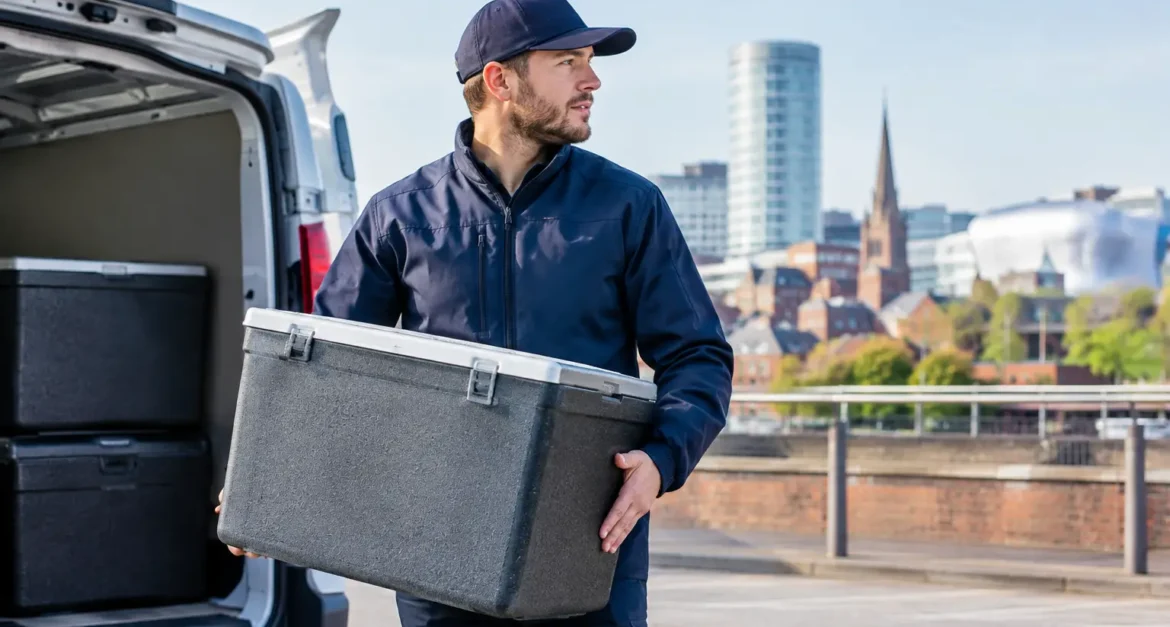
A chilled courier Birmingham businesses can rely on is not simply a vehicle with refrigeration. It is a controlled transport operation that protects product quality from collection through to proof of delivery. For fresh food, pharmaceuticals, laboratory samples and temperature-sensitive commercial goods, a late arrival or temperature deviation can mean wasted stock, disrupted service and avoidable compliance exposure.
Birmingham sits at the centre of busy national distribution routes, with demanding urban delivery schedules and tight connections to the wider Midlands. That creates opportunity, but it also creates pressure. Businesses need a courier partner that can plan around delivery windows, traffic restrictions, loading access and the temperature requirements of the load – without losing visibility of the consignment.
What a Chilled Courier in Birmingham Must Deliver
Temperature-controlled delivery is about maintaining a defined range, not merely keeping goods cool. The required range depends on the product, its packaging, the journey length and the handling instructions. Chilled food may require a different operating range from medicines, clinical materials or ingredients destined for production.
The process should begin before the vehicle arrives. Collection instructions need to establish the required set point, collection and delivery times, load condition, packaging requirements, any segregation needs and the evidence required at delivery. This gives the transport team a clear operating brief and avoids assumptions once the consignment is in motion.
A dependable service then combines a suitably maintained refrigerated vehicle with active temperature monitoring, GPS tracking and clear communication. The objective is straightforward: maintain the agreed conditions, keep the customer informed and create a traceable record of the journey.
For businesses moving regulated or high-value stock, this control is essential. A delivery can arrive on time and still fail if the temperature history cannot be evidenced. Equally, a perfectly chilled consignment can become a commercial problem if it misses a retail booking slot, a hospital receiving window or a production deadline. Temperature and timing must be managed together.
Birmingham Delivery Conditions Need Proper Planning
Birmingham deliveries are rarely a simple point-to-point task. City-centre access, congestion, limited unloading space, timed retail bookings and restricted service entrances all affect the plan. The same applies to collections from industrial estates, food production sites, wholesalers and healthcare facilities across the West Midlands.
The right vehicle is determined by more than load size. A small urgent consignment may need a refrigerated van that can access constrained urban locations quickly. Larger palletised loads may require greater capacity and loading capability. Mixed consignments may need multi-temperature compartments so chilled, frozen and ambient products can travel in their required conditions without compromising one another.
Route planning should allow for the realities of the job rather than rely on the shortest mileage. That includes the collection readiness time, vehicle pre-cooling, traffic risk, driver waiting time, security requirements and the criticality of the delivery slot. Where a deadline cannot move, a dedicated vehicle is often the safer option because the journey is built around one customer’s load and timetable.
When Dedicated Transport Is the Better Choice
Shared distribution can be cost-effective for planned, repeatable deliveries with flexible lead times. However, it is not always appropriate for urgent or sensitive loads. Every additional collection, stop and handover introduces another point where timing, handling or temperature control can be affected.
A dedicated chilled courier service gives businesses direct control over the vehicle, route and delivery priority. It is particularly valuable for same-day replenishment, urgent pharmaceutical movements, production-critical ingredients, product launches and stock required for an event or hospitality service.
Dedicated transport also makes communication simpler. The transport team can respond quickly if collection times change, the receiving site requests an update or a delivery route needs to be adjusted. This does not remove the need for planning, but it provides the flexibility to act when operations do not follow the original schedule.
For recurring demand, a day-rate refrigerated vehicle can provide similar assurance with more operational flexibility. It gives a business access to dedicated capacity for multiple collections and deliveries during the day, without needing to manage its own specialist fleet. This can suit wholesalers, caterers, retailers and healthcare distributors whose workload changes by the hour.
Multidrop chilled distribution requires discipline
Multidrop work is efficient only when it is properly controlled. The vehicle must have enough capacity for the route, stop times must be realistic, and the loading sequence needs to support safe, efficient unloading. Repeated door openings, extended waiting periods and poorly organised drops can place unnecessary demand on the refrigeration system.
For foodservice, retail and quick-service restaurant distribution, delivery timing is often as commercially important as temperature. A missed morning delivery can leave a site short of ingredients for an entire trading day. A controlled multidrop plan balances route efficiency with the service windows each customer has committed to.
Visibility Protects More Than the Product
Real-time temperature monitoring and GPS tracking provide operational control throughout the journey. They allow the transport provider to identify risks early, communicate accurate progress updates and retain evidence of the conditions under which goods travelled.
This visibility matters differently across sectors. A food supplier may need confidence that fresh products have remained within specification before reaching a distribution point. A pharmaceutical distributor may need a documented temperature record to support quality procedures and demonstrate appropriate handling. A logistics coordinator may simply need a precise estimated arrival time so the receiving team is ready.
Proof of delivery should complete the chain of evidence. Depending on the consignment, that may include time of delivery, recipient confirmation, condition notes and temperature data. The level of documentation should reflect the product risk. A routine chilled food delivery and a controlled medical shipment may both require care, but they will not necessarily require the same handling protocol or records.
Questions to Ask Before Booking a Chilled Courier
Choosing a provider on price alone can create expensive problems later. A lower transport rate may not account for temperature reporting, timed delivery, dedicated vehicle use, waiting time or the contingency needed for a genuinely time-critical movement. The best option depends on the cost of delay, spoilage, rejection or reputational damage if the delivery fails.
Before booking, establish four practical points:
- What temperature range must be maintained, and what evidence is required?
- Is the load urgent, time-definite or suitable for planned distribution?
- Does the consignment need a dedicated vehicle, multi-temperature capacity or secure handling?
- What are the collection and delivery site constraints, including booking times, access and unloading arrangements?
It is also worth confirming the escalation process. If there is traffic disruption, a collection delay or an issue at the receiving site, who will act, who will be updated and what information will be available? Clear answers reduce pressure when the unexpected happens.
A Controlled Process From Collection to Delivery
A specialist cold-chain provider should make the process easy to manage while retaining the necessary detail. First, the job is assessed against its temperature, timing, vehicle and documentation requirements. The vehicle is then allocated and prepared for the agreed operating conditions before loading.
At collection, the driver follows the job instructions and checks that the consignment is ready for transport. During the journey, temperature and location are monitored, with the route managed against the delivery commitment. At delivery, the load is handed over in line with site procedures and the relevant proof is captured.
That disciplined approach is how MT Logistics Group supports customers moving chilled, frozen, ambient and multi-temperature goods across Birmingham, the UK and beyond. It is built for businesses that need more than availability – they need control, traceability and confidence that their products will arrive as intended.
When a consignment cannot tolerate compromise, treat transport as part of product protection rather than an afterthought. The right chilled courier will give your operation the certainty to keep serving customers, meeting obligations and moving critical stock without unnecessary risk.