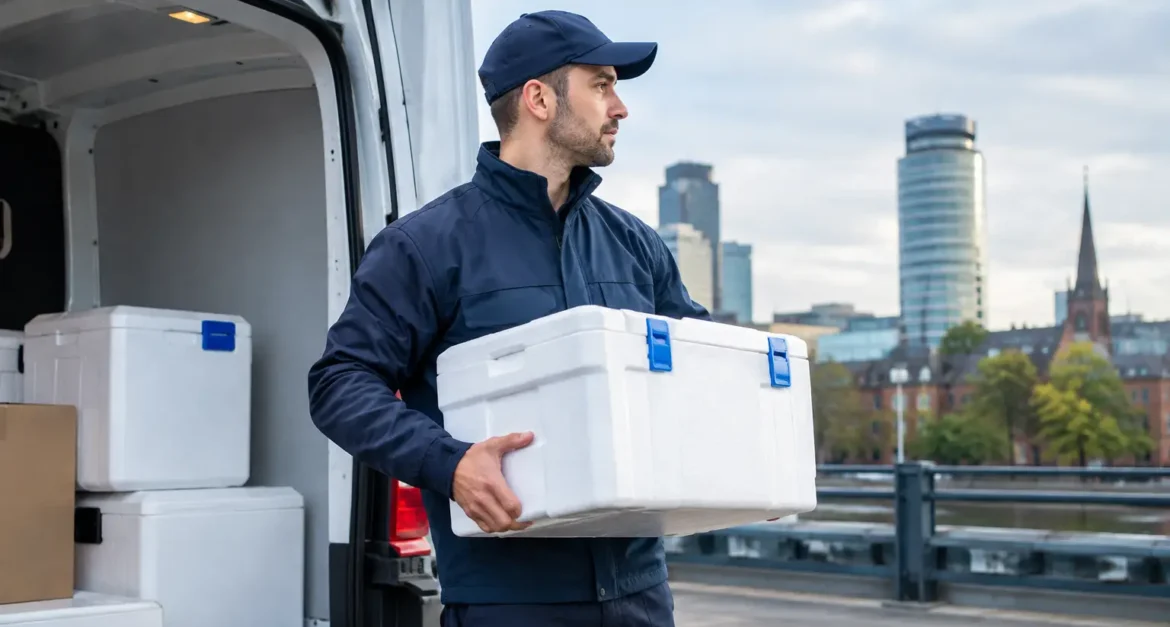
A late delivery to a Birmingham restaurant can mean an unavailable menu. A temperature excursion involving pharmaceuticals can mean quarantined stock, investigation and lost confidence. For businesses moving sensitive goods, a temperature controlled courier Birmingham service is not simply a transport booking. It is a controlled process that protects product quality, delivery commitments and compliance from collection through to proof of delivery.
Birmingham sits at the centre of major UK road networks, making it a practical base for regional distribution, nationwide replenishment and urgent same-day movements. That advantage only counts when the vehicle, monitoring process and delivery plan are suited to the consignment. Chilled produce, frozen food, medicines and temperature-sensitive commercial products each have different tolerances, handling requirements and consequences if control is lost.
What a temperature-controlled courier must provide
A refrigerated vehicle alone does not create a dependable cold chain. The real requirement is to maintain the agreed temperature range throughout the journey and provide evidence that it was maintained. This starts before loading. The vehicle must be suitable for the required set point, pre-cooled where necessary, and capable of holding that environment through traffic, multiple drops and door openings.
For business-critical transport, full visibility matters just as much as refrigeration. Real-time temperature monitoring and GPS tracking allow the transport team to confirm vehicle conditions and location while the consignment is in transit. If a route is delayed or a delivery site changes its receiving arrangements, there is a clear operational picture from which to act.
Traceability should continue at delivery. A clear record of collection, transit conditions and handover gives supply chain teams the information they need for quality assurance, customer queries and internal audit. The level of documentation required depends on the product and sector, but uncertainty should never be the default.
Temperature range is only one part of the brief
A consignment can arrive at the right temperature yet still fail operationally. It may miss a booking slot, be unloaded at the wrong entrance, arrive without the required delivery reference, or be exposed during an extended wait. A specialist courier plans around the complete handover, not just the road journey.
This is particularly relevant for hospitals, laboratories, food production sites, retail distribution centres and hospitality locations. Each may have strict collection windows, site procedures or receiving restrictions. Accurate job information at the point of booking enables the courier to allocate the right vehicle and build a practical route plan.
Choosing a temperature controlled courier in Birmingham
The right service depends on the product, the deadline and the delivery network. A same-day direct run is often the safest option for a high-value, urgent or highly sensitive consignment because it limits handling and reduces dwell time. A planned multi-drop route can be more cost-effective for regular distribution, provided the vehicle capacity, door-opening profile and delivery schedule support the temperature requirement.
For businesses moving mixed stock, multi-temperature capability can avoid the need to split loads unnecessarily. Chilled, frozen and ambient goods may need separate controlled compartments, each operating at its own specified range. This is useful for wholesalers, foodservice suppliers and retailers serving several locations from one dispatch point. It also requires careful loading discipline so the correct products are accessible at each stop without compromising other compartments.
Before appointing a courier, ask how they manage the operational details that cause the most disruption in practice:
- How are temperatures monitored, recorded and escalated if conditions move outside the agreed range?
- Is the proposed vehicle suitable for the load size, set point, packaging and number of drops?
- Can the team support same-day, next-day, scheduled and dedicated vehicle requirements?
- What tracking, delivery confirmation and reporting will be available to your team?
- How will collection times, delivery slots, site restrictions and contingency arrangements be confirmed?
These questions are not administrative extras. They reveal whether a provider understands the difference between moving goods and protecting a temperature-sensitive supply chain.
When same-day delivery is the right decision
Urgent temperature-controlled transport is often required when stock has been missed from a planned run, a production site needs an ingredient or component to continue operating, or a pharmacy or laboratory has a time-critical requirement. In these cases, the lowest transport cost is rarely the main consideration. The more relevant comparison is the cost of downtime, waste, cancelled service or a damaged customer relationship.
A dedicated same-day vehicle provides direct control over the journey. The consignment is collected, monitored and delivered without being passed through a general courier network or held at a depot. This reduces touchpoints and makes communication clearer when timings change.
That does not mean same-day is always necessary. For repeat deliveries with predictable volumes, a scheduled service or dedicated day-rate vehicle can deliver better control and value. A day-rate arrangement is especially useful for businesses whose demand changes through the week, such as caterers, wholesalers, events teams and growing food brands. It gives access to specialist vehicle capacity without the fixed cost and administration of operating a fleet internally.
Protecting food, pharmaceutical and specialist consignments
Food transport presents a constant balance between speed, temperature integrity and practical delivery operations. Fresh produce, dairy, meat and prepared foods need reliable chilled conditions, while frozen goods require a stable frozen environment and handling that prevents thawing during loading or unloading. For retail and hospitality distribution, a missed delivery can quickly become a stock availability problem at site level.
Pharmaceutical and medical consignments demand an even tighter focus on control and evidence. Product stability, patient safety, chain of custody and quality procedures may all be affected by the transport process. A courier should understand the agreed temperature range, the sensitivity of the consignment, collection and delivery protocol, and the importance of documented handover. The service should be designed around the product’s requirements rather than treated as ordinary freight in a refrigerated vehicle.
Other sectors also need considered climate-controlled transport. Cosmetics, chemicals, specialist components and exhibition materials can be affected by temperature exposure, humidity or delivery delay. The critical question is not whether an item looks delicate. It is whether conditions in transit can affect its performance, safety, shelf life or saleability.
Planning removes avoidable risk
The most reliable temperature-controlled deliveries are usually planned with disciplined, concise information. Provide the required temperature range rather than a general description such as “cold”. Confirm the number of pallets, dimensions, total weight and any loading constraints. State whether the goods are chilled, frozen, ambient or mixed, and make collection and delivery windows clear.
It also helps to identify factors that can affect the route. These include timed access, vehicle height restrictions, tail-lift requirements, waiting-time risks, security procedures and contact details for the receiving team. For urgent work, clarity at the outset prevents time being lost while a vehicle is already on the road.
MT Logistics Group supports businesses that need controlled, time-critical transport with monitored refrigerated vehicles, GPS visibility and traceable delivery processes. Whether the requirement is a direct same-day run from Birmingham, a planned multi-drop route or dedicated fleet support, the objective remains the same: keep products within their required conditions and keep your operation moving.
A courier partnership that supports growth
As volumes grow, temperature control becomes a wider operational issue. More collection points, changing order cut-offs and a larger customer base create more opportunities for delay or inconsistency. A specialist courier can help standardise collection procedures, delivery communications and reporting, so service quality does not depend on last-minute intervention from your own team.
The best arrangement is not always the largest or most complex one. It is the service model that matches your actual risk profile: direct transport for urgent high-value movements, multi-temperature distribution for mixed stock, or planned dedicated capacity for regular demand. Start with the product, the temperature requirement and the consequence of failure. From there, the right Birmingham courier solution becomes much clearer.