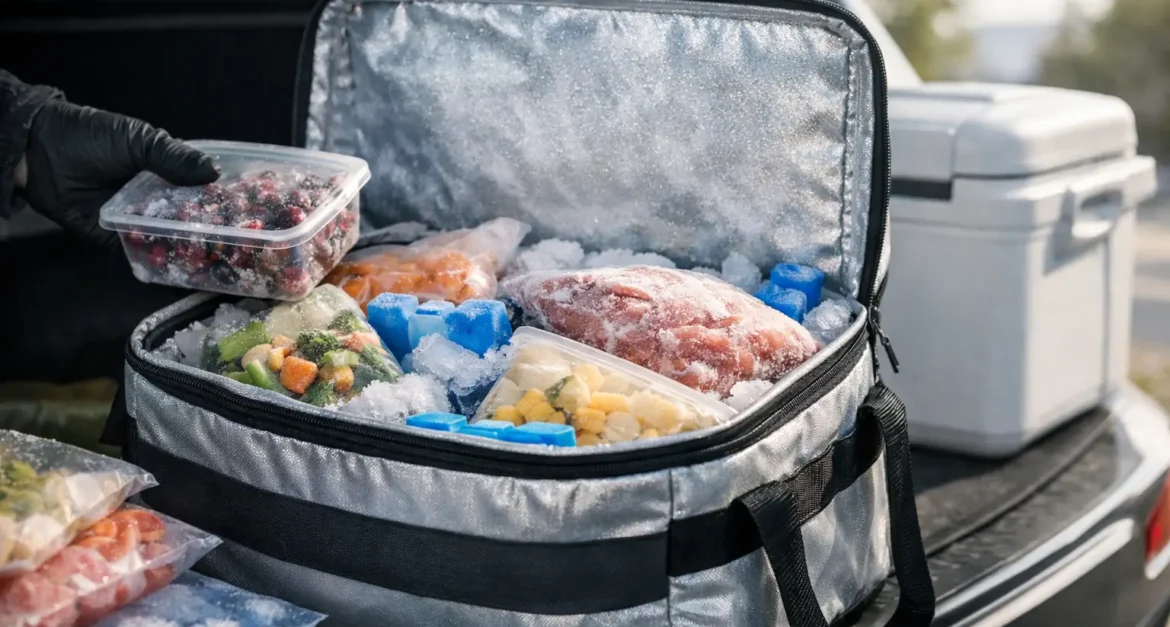
A frozen delivery can look perfectly acceptable at the point of unloading while having already lost its temperature history. That is the risk businesses need to control. Knowing how to transport frozen food means managing more than a freezer setting: it means protecting product temperature, packaging integrity, traceability and delivery timing from collection through to handover.
For wholesalers, manufacturers, retailers, caterers and foodservice operators, a temperature deviation can create waste, rejected stock, interrupted service and a difficult compliance conversation. A controlled frozen transport plan prevents those outcomes by treating every stage of the journey as part of the cold chain.
Start with the required product temperature
Frozen food is commonly transported at or below -18°C, but the correct transport specification should always be based on the product, its packaging, customer requirements and your documented food-safety controls. Some products may have stricter contractual limits, while others need protection from temperature cycling as much as a single warm excursion.
Confirm the required set point before the vehicle is allocated. This should include the product temperature at collection, the acceptable transport range, the maximum journey time, the delivery window and any loading or unloading restrictions. A vague instruction to keep goods “frozen” leaves too much room for error.
It is also essential to distinguish between vehicle air temperature and product temperature. A refrigerated vehicle may show the correct air temperature, yet warm pallets loaded from an uncontrolled staging area may not be at the required core temperature. Pre-cooling does not freeze product already outside specification. The product must enter the vehicle in a suitable condition.
How to transport frozen food with the right vehicle
The vehicle must be matched to the load and route, not simply selected because it is refrigerated. A short, direct delivery of fully frozen palletised goods has different requirements from a multi-drop route serving restaurants, shops or distribution centres. Door openings, waiting time, traffic, ambient weather and the volume of stock all affect temperature stability.
A suitable frozen-food vehicle should be capable of maintaining the agreed set point for the full journey, including realistic operating conditions. It should be clean, well maintained, correctly insulated and pre-cooled before loading begins. Refrigeration equipment needs sufficient capacity for the route, particularly where frequent stops or long loading periods are expected.
For mixed operations, use separate temperature-controlled compartments or dedicated vehicles where required. Frozen goods should not be compromised by a chilled or ambient load sharing the same uncontrolled space. Multi-temperature transport can be highly effective, but only when each compartment is correctly configured, monitored and loaded to protect airflow.
Vehicle capacity matters too. Overloading can restrict air circulation around pallets and reduce the refrigeration unit’s ability to maintain consistent conditions. Equally, poor load placement can expose goods near door areas to repeated heat ingress. The best solution depends on product type, pallet configuration and drop sequence, but airflow must never be treated as an afterthought.
Pre-cool, check and load without delay
The cold chain is most vulnerable at transfer points. Goods can be held on a loading bay, moved through an open doorway or left while paperwork is completed. Each delay increases the thermal load placed on the vehicle and the risk of a temperature rise.
Pre-cool the load space to the agreed operating temperature before the goods arrive. Then check that the vehicle is clean, dry, odour-free and free from any previous-load contamination risk. The refrigeration unit, doors, seals and temperature-monitoring equipment should be operational before loading starts, not checked halfway through the run.
Load frozen products quickly and methodically. Keep goods out of direct sunlight and away from unconditioned areas. Do not place pallets against evaporators, block air chutes or stack product in a way that prevents cold air moving around the load. Where the route involves several drops, load in reverse delivery order so the driver can access each consignment with minimal door-open time.
A clear handover record should confirm the collection time, consignment condition, required temperature and any special handling instructions. If product is already damaged, softening or outside the agreed temperature range, record it immediately and agree the next step with the customer. Transport should not conceal an issue that existed before collection.
Maintain visibility during the journey
A frozen delivery is only controlled if its condition can be demonstrated. Real-time digital temperature monitoring gives operations teams visibility during transport, while GPS tracking confirms vehicle location, route progress and expected arrival. Together, these controls help identify a developing problem before it becomes a failed delivery.
Set alerts around the agreed temperature limits so that any deviation triggers an active response. The response may involve checking whether a door has been left open, confirming the refrigeration unit is operating, rerouting to reduce delay or arranging a replacement vehicle if there is an equipment fault. The appropriate action depends on the temperature trend, the product and the customer’s escalation procedure.
Temperature data should be retained alongside delivery records. For regulated or high-value frozen goods, this traceability supports quality assurance, customer audits and investigations. It also allows recurring issues to be identified, whether they relate to a specific route, loading practice, delivery location or vehicle.
Drivers have a critical role in this process. They need clear instructions on set points, door discipline, delivery procedures and who to contact if a delay or alarm occurs. Refrigerated transport is not a fit-and-forget operation. Strong cold-chain performance depends on disciplined people as well as reliable equipment.
Control delivery windows and door openings
A delivery arriving late can create a temperature risk even when the vehicle has performed correctly. Sites may have limited receiving capacity, restricted access or specific booking slots. If a lorry arrives before the receiver is ready, the driver may face a long wait with doors opening and closing during unloading.
Plan the route around realistic delivery windows, traffic conditions, driver hours and the time needed at each stop. For multi-drop distribution, allow for the fact that later deliveries are exposed to more door openings and a longer journey. The route should be designed around product protection, not merely the shortest distance on a map.
At the delivery point, confirm that the receiving area is ready before opening the vehicle. Unload efficiently, minimise door-open duration and obtain proof of delivery without delaying the transfer of goods. Where a temperature reading or condition check is required, follow the agreed process and record any exception at the point of handover.
If a site rejects a delivery or cannot receive it, do not improvise. Keep the consignment in controlled conditions, notify the relevant contact and agree a documented contingency plan. A dependable logistics partner should provide clear communication and practical options when an operational problem arises.
Build a documented frozen transport process
The most reliable approach is to make frozen transport repeatable. Document the required temperature range, vehicle pre-cooling procedure, loading controls, route plan, monitoring method, alarm escalation and delivery handover process. This supports HACCP-based food-safety controls and gives every person involved a clear standard to follow.
Review performance regularly. Look at temperature records, missed slots, rejected consignments, dwell time and delivery exceptions. A single deviation may be caused by an isolated equipment issue, but a pattern of small deviations often points to a route-design, loading or site-process problem that needs correcting.
For urgent replenishment, high-volume distribution or complex multi-drop work, specialist cold-chain support can remove pressure from internal teams. MT Logistics Group provides refrigerated transport with real-time temperature monitoring, GPS tracking and full traceability, helping businesses maintain control when timing and product condition cannot be left to chance.
Frozen food does not get a second chance once its cold chain has been compromised. Set the specification clearly, keep transfers short, monitor every journey and treat exceptions as a prompt for immediate action. That discipline protects the stock on board and the trust behind every delivery.