A late pallet of frozen stock, a missed pharmacy delivery slot, a chilled load that drifts outside range for even a short period – this is where the question what is supply chain logistics stops being theoretical. For businesses moving time-sensitive or temperature-sensitive goods, logistics is the part of the supply chain where planning becomes performance, and where risk either gets controlled or exposed.
What is supply chain logistics?
Supply chain logistics is the planning, movement, storage, and control of goods as they travel from source to end user. It covers the physical flow of products, but also the systems, timing, data, compliance checks, and transport decisions that keep those products moving correctly.
In practical terms, it includes collecting goods, routing vehicles, managing warehousing, tracking consignments, coordinating deliveries, and handling exceptions when plans change. If the wider supply chain is the full network of sourcing, production, inventory, transport, and fulfilment, logistics is the operational engine that moves goods through it.
That distinction matters. Supply chain strategy can look strong on paper, but if logistics is weak, products arrive late, damaged, out of specification, or not at all. For sectors such as food, healthcare, hospitality, and regulated distribution, that is not simply inefficient – it can mean waste, lost revenue, compliance failure, and reputational damage.
The difference between supply chain and logistics
People often use the terms interchangeably, but they are not the same. The supply chain is broader. It includes procurement, supplier management, manufacturing, inventory planning, demand forecasting, warehousing, transport, delivery, and returns. Logistics is one part of that wider system, focused on how goods are stored and moved.
A simple way to think about it is this: the supply chain decides what needs to happen across the whole operation, while logistics makes the physical movement happen in the right way. Good logistics supports the wider supply chain by keeping products available, deliveries on schedule, and customers informed.
For a cold-chain operator, that difference becomes even more defined. Moving a product is not enough. It must be moved within a strict temperature band, within a delivery window, with traceability, and with evidence that conditions were maintained throughout the journey.
What supply chain logistics includes in day-to-day operations
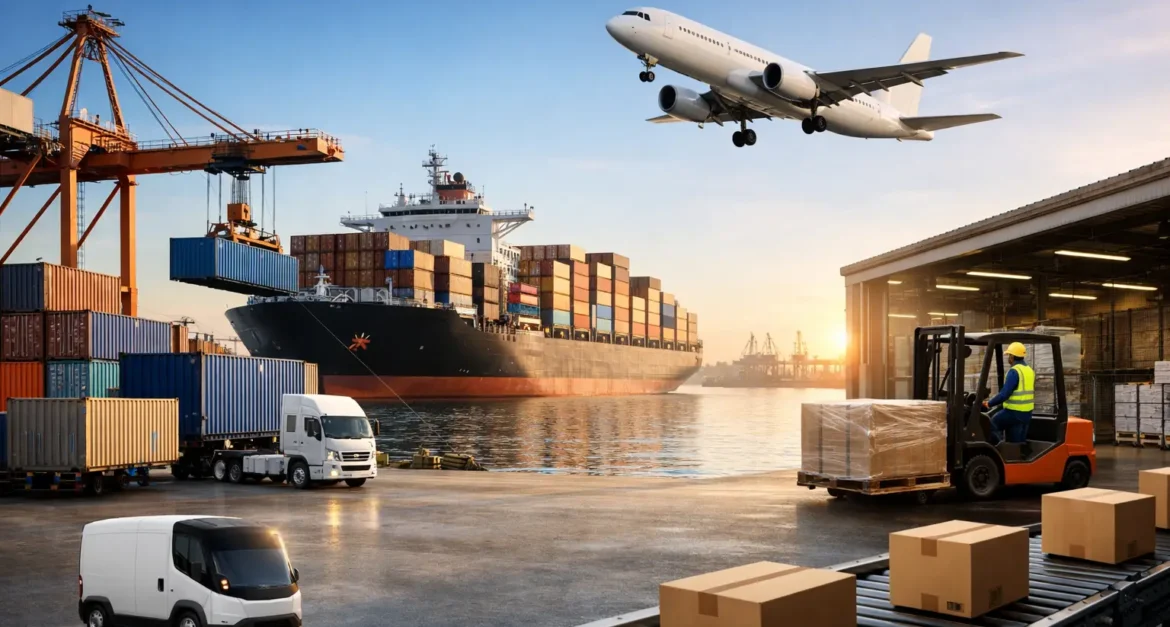
At operational level, supply chain logistics is made up of several connected functions. Transport is the most visible part, but it sits alongside inventory control, warehousing, route planning, scheduling, tracking, proof of delivery, and contingency handling.
Inbound logistics covers the movement of goods from suppliers into production sites, distribution centres, or storage facilities. Outbound logistics covers delivery from those points to retailers, customers, clinical sites, restaurants, or other end destinations. Reverse logistics deals with returns, rejected goods, collections, recycling, or disposal.
Each stage creates pressure points. Stock can be delayed at collection. Vehicles can be routed poorly. Loads can be packed in ways that affect temperature stability or unloading time. Delivery windows can be missed because the route looked efficient on paper but did not reflect real road conditions. Strong logistics control reduces those risks before they affect the customer.
Why supply chain logistics matters more for temperature-controlled goods
If you are moving ambient consumer goods, a short delay may be inconvenient. If you are moving chilled food, frozen stock, medicines, or laboratory materials, the same delay can compromise the product itself. That is why supply chain logistics is especially critical in temperature-controlled distribution.
Cold-chain logistics adds another layer of responsibility. The operator must protect product integrity, not just transport it. That means validated temperature control, suitable vehicle specification, disciplined loading processes, route planning that supports thermal stability, and real-time visibility when conditions change.
There is also a compliance dimension. Food safety standards, pharmaceutical handling requirements, and customer audit expectations all place pressure on the logistics process. Businesses need more than a carrier. They need an operation that can evidence control.
This is where specialist providers stand apart from general freight services. A standard delivery model may be built around moving goods efficiently. A cold-chain model is built around moving goods safely, accurately, and within defined conditions, even when the job is urgent or multi-drop.
The core goals of effective supply chain logistics
The job of logistics is often described in terms of cost and speed, but that is only part of the picture. Effective supply chain logistics aims to deliver the right product, in the right quantity, to the right location, at the right time, in the right condition, with the right documentation.
For most commercial buyers, three outcomes matter most. First, continuity – stock arrives when and where it is needed. Second, control – the business can see what is happening and respond quickly if conditions change. Third, protection – the product reaches the customer without damage, spoilage, or compliance concerns.
There are trade-offs. The cheapest transport option is not always the safest or most reliable. The fastest route is not always the best one if it increases handling risk or reduces temperature stability. Consolidated loads may reduce cost, but they can add complexity when products have different temperature requirements or tight delivery windows. Good logistics management balances these factors rather than chasing one metric at the expense of the others.
What good logistics looks like in practice
Well-managed supply chain logistics is usually quiet. Deliveries arrive on time. Temperature records are available. Drivers have clear instructions. Recipients know when to expect the consignment. Exceptions are dealt with quickly before they become failures.
Behind that calm performance is a lot of operational discipline. Vehicles must be suitable for the load profile. Routes need to account for traffic, delivery restrictions, and sequence of drops. Loading must be organised to protect product condition and speed up unloading. Tracking systems should provide more than vehicle location – they should support traceability and accountability.
For temperature-sensitive operations, good logistics also means knowing where the critical control points are. Door-open time, waiting time on site, cross-docking delays, and poor load segregation can all affect the integrity of the shipment. Businesses that rely on cold-chain delivery need a partner that treats these details as central, not secondary.
Common problems supply chain logistics is meant to solve
Most logistics issues are not caused by one dramatic failure. They come from small weaknesses that build into disruption. Poor forecasting creates pressure on transport. Weak communication leads to missed delivery windows. Limited visibility makes it harder to respond to delays. In temperature-controlled transport, even brief lapses in process can cause costly waste.
Good logistics solves these problems through planning and control. It creates predictable lead times, supports stock availability, reduces manual chasing, and gives operations teams confidence that the movement of goods is being actively managed.
That matters whether you are replenishing a supermarket, supplying a restaurant group, delivering to a hospital, or moving frozen product to multiple sites in one run. In each case, the commercial impact of failure is immediate. Service disruption affects revenue, customer trust, and internal workload very quickly.
What to look for in a logistics partner
If your business depends on precise delivery conditions, the right logistics partner should offer more than transport capacity. You need reliability, visibility, and process control. That includes suitable vehicles, clear communication, real-time tracking, documented temperature monitoring where required, and the ability to respond quickly when priorities change.
You also need sector understanding. A partner handling pharmaceutical consignments must understand the consequences of deviation. A provider serving food distribution must understand shelf life, hygiene, and timed deliveries. Multi-temperature work requires a different level of vehicle capability and load planning than standard single-temperature transport.
This is why many businesses choose specialist operators such as MT Logistics Group when product integrity cannot be left to chance. The value is not just in moving the load. It is in protecting the load, maintaining compliance, and giving operations teams full visibility from collection to delivery.
Why the answer is ultimately about control
So, what is supply chain logistics? At its simplest, it is the controlled movement of goods through the supply chain. At business level, it is how you protect service levels, product quality, and customer confidence when timing and handling matter.
For temperature-controlled sectors, logistics is not a back-office function. It is a frontline part of risk management. When the process is planned properly, monitored closely, and executed by the right people, goods arrive in the correct condition and the wider operation keeps moving.
That is the real value of logistics – not movement for its own sake, but dependable control where there is no room for compromise.