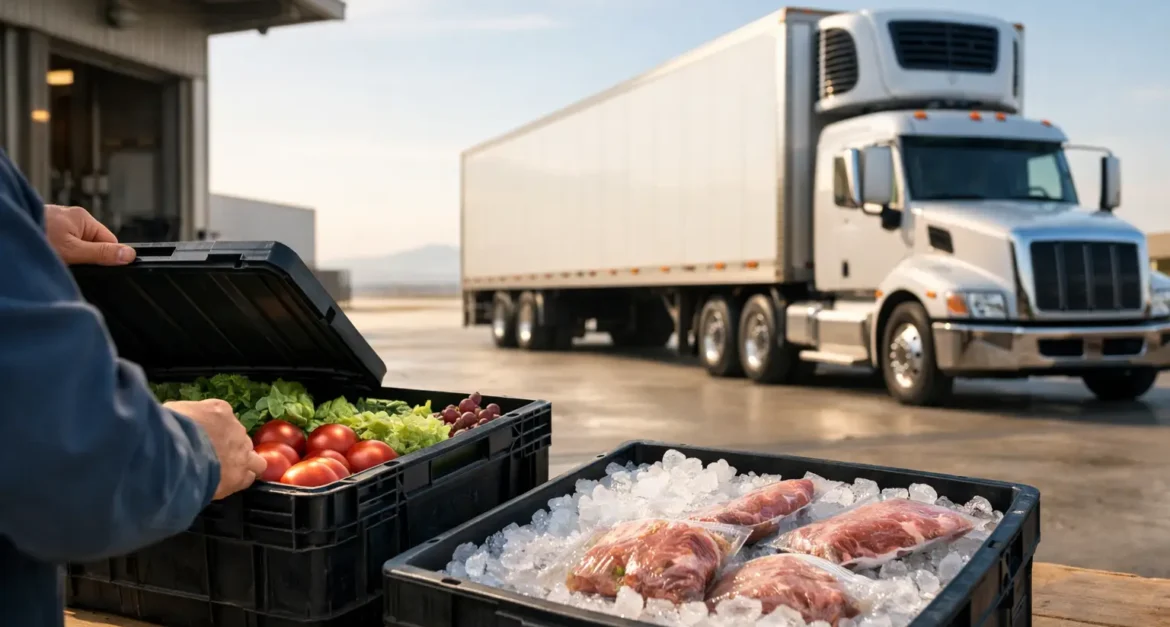
A chilled consignment can look perfect at collection and still become a costly problem before it reaches the customer. A missed delivery slot, an unrecorded temperature rise or a vehicle unsuitable for mixed loads can lead to rejected stock, waste, interrupted service and avoidable compliance exposure. Refrigerated transport is therefore not simply a vehicle with a cooling unit. It is a controlled process designed to protect product integrity from collection through to proof of delivery.
For food, pharmaceutical, healthcare and specialist commercial businesses, the standard is clear: the right goods must arrive at the right location, within the agreed window and at the required temperature. Achieving that consistently requires planning, suitable equipment, trained handling and full visibility throughout the journey.
What reliable refrigerated transport involves
Temperature-controlled delivery starts before the vehicle arrives. The required temperature range, product type, packaging, collection readiness, delivery restrictions and journey duration all need to be understood in advance. A frozen food delivery, for example, has different operating requirements from a chilled pharmaceutical consignment or an ambient product that must be protected from heat.
The vehicle must be capable of maintaining the specified set point for the full route, not just at the point of loading. This includes the realities of urban traffic, multiple drops, door openings, waiting time at goods-in and long-distance travel. Refrigeration performance, airflow, vehicle loading and door discipline all affect the temperature around the product.
Monitoring is equally critical. Real-time digital temperature monitoring creates an auditable record of conditions during transit, while GPS tracking gives operations teams visibility of the vehicle’s location and progress. Together, these controls allow issues to be identified early rather than discovered after a delivery has been rejected.
Why temperature control is only part of the equation
A stable temperature is essential, but it does not guarantee a successful delivery on its own. Product protection depends on the complete chain of custody. Goods need to be loaded correctly, secured safely, kept separate where required and delivered within the agreed service window.
For food businesses, this can mean protecting shelf life and avoiding disruption to retail, wholesale or hospitality operations. A restaurant group receiving a late frozen delivery may not have stock available for service. A supermarket supplier facing a temperature deviation may have to write off an entire consignment, even if the product appears unchanged.
For pharmaceutical and medical distribution, the stakes can be higher still. Temperature-sensitive medicines, samples and healthcare products may require validated handling, detailed records and strict delivery procedures. Any unexplained deviation can compromise product suitability and create a compliance issue that cannot be resolved by simply delivering late.
This is why the most dependable providers manage refrigerated transport as a risk-controlled operation. They focus on the conditions that affect the product, not only the movement of the vehicle.
Choosing the right temperature-controlled service
The right service depends on the product, route and commercial priority. There is no single transport model that suits every consignment.
A dedicated vehicle is often the strongest option for urgent, high-value or sensitive loads. It gives the customer direct control over collection and delivery timing, reduces handling points and avoids the risks associated with shared capacity. This can be particularly appropriate for pharmaceutical deliveries, production-critical stock or same-day replenishment.
Multidrop distribution can be a more efficient approach for planned retail, hospitality and wholesale routes. However, it requires disciplined route planning and a fleet capable of maintaining conditions during repeated door openings. Delivery windows need to be realistic, and each drop must be managed without compromising the remaining load.
Multi-temperature transport is valuable where chilled, frozen and ambient products must travel together while remaining segregated. It can reduce the need for separate vehicles and simplify delivery planning, but only when the vehicle configuration, loading plan and monitoring arrangements support each temperature zone.
For businesses with changing demand, dedicated day-rate vehicles provide useful flexibility. They offer fleet capacity without the fixed cost and management burden of operating additional vehicles internally. This is particularly useful during seasonal peaks, promotions, product launches or periods of unexpected demand.
The controls that protect product integrity
A high-integrity cold chain is built on practical controls that work together. These are not administrative extras. They are the measures that prevent avoidable deviation and provide assurance when customers, auditors or internal teams need evidence.
Pre-collection planning
Every movement should begin with clear instructions. The transport team needs the collection and delivery addresses, time requirements, product temperature range, quantity, packaging details and any site-specific restrictions. Information such as tail-lift access, booking references, pallet requirements and out-of-hours procedures can determine whether a delivery runs smoothly or fails at the gate.
The vehicle should be pre-cooled where required and checked for cleanliness, suitability and capacity before loading. Where products have different temperature requirements, the loading plan should maintain separation and protect airflow.
Continuous monitoring and traceability
Temperature data should be captured throughout the journey, not inferred from a single reading at collection or delivery. Live monitoring gives the operator the opportunity to respond if conditions move outside the expected range. GPS tracking supports accurate ETA updates and gives customers full visibility of their consignment.
Traceability also matters after delivery. A clear record of collection, transit conditions, arrival and proof of delivery helps resolve queries quickly and supports compliance documentation. When the load is time-critical or regulated, this evidence is part of the service, not an optional add-on.
Responsive exception management
Delays can occur despite careful planning. Traffic incidents, site congestion, vehicle access issues and changes to customer requirements all create risk. The difference lies in how quickly the issue is identified and how decisively it is managed.
A specialist operator should monitor the journey, communicate early and take practical action. That may involve adjusting the route, informing the receiving site, arranging a revised delivery plan or deploying an alternative vehicle where necessary. Silence creates uncertainty. Clear updates allow customers to protect their own operations.
Common gaps that create cold-chain risk
Many transport failures begin with assumptions. A general courier may accept a temperature-sensitive load without the equipment, monitoring or handling controls needed to protect it. The consignment then becomes vulnerable at the exact point where certainty is required.
Using a vehicle that is too large or too small can also create problems. Oversized space may affect airflow and load security, while insufficient capacity can lead to poor loading practice or rushed decisions. The correct vehicle is the one that supports the product, route and delivery profile, rather than simply being the first one available.
Another common gap is treating temperature control as a fixed setting rather than a managed condition. Frequent door openings, poorly organised loading and extended waiting time can all affect product temperature. Planning for these operational realities is essential, especially on multi-drop routes.
Finally, incomplete communication between the supplier, transport provider and receiving site can turn a manageable delay into a failed delivery. Booking requirements, access instructions and delivery contacts should be confirmed before departure. The most effective cold chains are coordinated, not improvised.
Refrigerated transport for different sectors
Food and beverage businesses often require dependable chilled and frozen distribution across multiple delivery points. Fresh produce, dairy, meat, bakery products, meal-prep ingredients and frozen foods all need carefully managed transport, but their priorities may differ. A wholesaler may need reliable overnight replenishment, while a caterer may need a same-day delivery to protect an event.
Pharmaceutical and healthcare customers need a higher level of assurance around handling, visibility and documentation. Delivery timing may be tied to laboratory schedules, pharmacy operations, clinical requirements or patient care. In these cases, a controlled chain of custody and immediate communication are fundamental.
Retail, hospitality and quick-service restaurant operations depend on consistency at scale. A late or incomplete delivery can affect multiple sites and quickly become a customer-facing issue. Planned multidrop routes, accurate ETAs and suitable multi-temperature capacity help protect availability without adding unnecessary complexity.
Specialist commercial products, including cosmetics, sensitive components and regulated materials, may also require climate-controlled freight. The key question is not whether the product is technically perishable. It is whether temperature variation could affect its quality, performance, safety or compliance status.
What to expect from a specialist partner
A specialist provider should make control visible. Customers should know what vehicle is assigned, how the product will be monitored, who is managing the movement and what happens if the plan changes. The service should combine responsive communication with disciplined execution.
MT Logistics Group supports chilled, frozen, ambient and multi-temperature transport with dedicated refrigerated vehicles, real-time temperature monitoring, GPS tracking and nationwide coverage. For planned distribution, urgent collections or flexible dedicated capacity, the focus remains the same: protect the load, maintain visibility and deliver with confidence.
When reviewing a transport requirement, begin with the product’s actual risk profile rather than the distance alone. The right refrigerated transport plan protects more than a consignment. It protects your stock, your compliance position and the trust your customers place in your business.