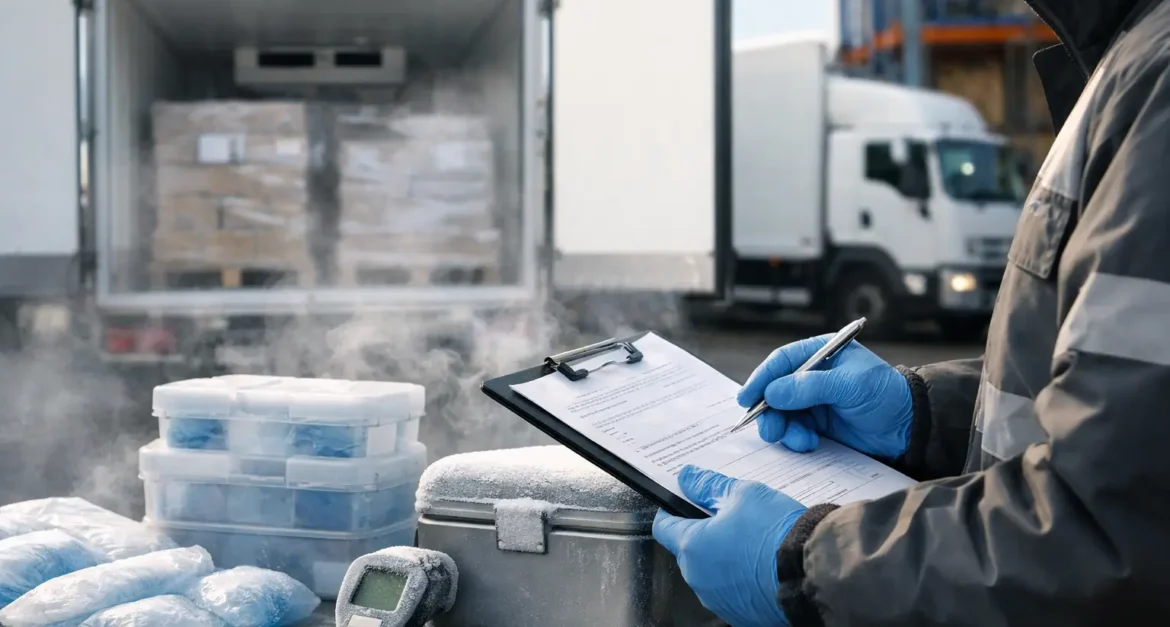
When a chilled food load arrives one degree out of range, or a pharmaceutical consignment loses its temperature record halfway through transit, the problem is not only operational. It becomes a compliance issue, a quality issue and, in some sectors, a patient or consumer safety issue. That is why cold chain logistics certification matters. It gives businesses a clearer way to assess whether a logistics provider can control temperature, document performance and operate to recognised standards when failure is not acceptable.
For operations managers, procurement teams and regulated product distributors, certification should never be treated as a box-ticking exercise. It is evidence of process discipline. It shows whether a provider has invested in documented controls, audit trails, staff competence and equipment management rather than relying on informal good practice.
What cold chain logistics certification actually means
Cold chain logistics certification is not one single badge that covers every product type, every temperature band and every regulatory environment. In practice, it refers to formal certification, audited quality systems and recognised compliance frameworks that demonstrate a provider can handle temperature-sensitive goods in a controlled and repeatable way.
That distinction matters. Some operators say they offer refrigerated delivery because they run temperature-controlled vehicles. That is not the same as being able to prove how temperatures are monitored, what happens if there is a deviation, how calibration is managed, how records are retained, or how staff are trained to handle sensitive loads.
A certified or audit-ready cold chain operation typically has documented procedures covering vehicle pre-checks, temperature set points, loading controls, monitoring during transit, delivery confirmation, escalation protocols and equipment maintenance. The benefit for customers is straightforward. You are not relying on promises alone. You are buying into a controlled system.
Why certification matters beyond compliance
The obvious reason to look for cold chain logistics certification is compliance. In food, healthcare and regulated distribution, standards exist for a reason. Goods that move outside the required range can become unsafe, non-compliant or commercially unusable.
But certification also affects day-to-day performance. A provider working to audited standards is more likely to spot risk early, respond quickly to deviations and maintain cleaner documentation. That reduces disputes, cuts product loss and gives your team stronger evidence if a customer, auditor or regulator asks questions later.
There is also a commercial point. If your brand depends on freshness, shelf life, efficacy or product stability, one failed movement can damage more than the load itself. It can affect supply continuity, retailer confidence and end-customer trust. Certification supports consistency, and consistency protects reputation.
The certifications and standards buyers should ask about
The right certification depends on what you are moving. There is no universal answer, and a credible provider should be clear about that.
Food and beverage cold chain requirements
For chilled and frozen food movements, buyers often look for evidence of food safety management, temperature control procedures and traceability. HACCP-based controls are central because they show how hazards are identified and managed. Quality management certification such as ISO 9001 can also be relevant because it demonstrates process control, corrective action and documented oversight.
If you are distributing into retail, hospitality or wholesale networks, you may also need assurance that the logistics provider understands delivery window compliance, multidrop handling and the risk of temperature loss during repeated door openings. Certification alone does not prove operational fit, but it gives a stronger foundation.
Pharmaceutical and healthcare standards
In pharmaceutical and medical logistics, expectations are higher and more specific. Good Distribution Practice, or GDP, is often the benchmark. GDP compliance focuses on maintaining product quality and integrity throughout storage and transport, with strict attention to documentation, training, validation and deviation management.
For healthcare buyers, this is where superficial claims tend to fall apart. If a provider cannot explain how it validates temperature-controlled transport, manages excursions, calibrates monitoring equipment and retains shipment records, that should raise concern. In this sector, proof matters more than marketing.
Quality and environmental management systems
Broader business certifications can still be valuable. ISO 9001 supports quality management across operations. Depending on your sector and tender requirements, environmental and occupational standards may also be relevant. These do not replace cold chain-specific controls, but they can indicate a more mature management system.
The key is context. A certificate only has value if it connects to the service you actually need.
How to assess a provider properly
If you are reviewing cold chain logistics certification during procurement, do not stop at the certificate name. Ask how that standard shows up in live operations.
Start with temperature monitoring. You need to know whether data is captured in real time, whether records are accessible after delivery and how alerts are handled if a vehicle drifts outside range. A provider should also explain calibration schedules and how they verify equipment accuracy.
Next, look at process control. Ask what happens before collection, during loading, in transit and at delivery. A capable operator should be able to describe clear handover points, escalation procedures and documented checks without hesitation.
Training is another strong indicator. Cold chain performance depends on people as much as equipment. Drivers, planners and operations teams need to understand temperature set points, product handling requirements, hygiene expectations and incident reporting. If staff training is vague, certification may not be embedded in practice.
Finally, check traceability. Can the provider produce a full audit trail if there is a customer complaint or product query? In many sectors, that level of visibility is not optional.
Certification is not the same as capability
This is where buyers need to be careful. A business may hold relevant certifications and still be the wrong fit for your operation. Certification confirms that certain systems and controls are in place. It does not automatically mean the provider can handle urgent same-day deliveries, multi-temperature consignments, nationwide distribution or high-volume multidrop schedules.
That is especially important for businesses with mixed operational demands. A frozen food distributor with retail drops has different requirements from a laboratory moving temperature-sensitive samples. Both may ask about cold chain logistics certification, but the service model behind the certificate needs to match the job.
The practical question is simple: can this provider maintain control under your real delivery conditions? That includes traffic delays, restricted access sites, timed bookings, split-temperature loads and last-minute changes. If the answer is uncertain, certification alone will not protect you.
What strong cold chain control looks like in practice
In a well-run operation, certification supports visible working standards. Vehicles are suitable for the product and temperature range. Monitoring systems provide live data rather than delayed assumptions. Maintenance and calibration are scheduled, recorded and reviewed. Delivery teams follow defined procedures, and deviations are escalated quickly rather than explained away after the event.
Customers should also expect clear communication. If a delay threatens product integrity, you need immediate information, not a vague update after the delivery window has passed. Full visibility and reliable records are part of control.
This is where specialist providers stand apart from general freight operators. A cold chain delivery is not just a standard movement in a refrigerated vehicle. It is a controlled transport process with compliance, product protection and time sensitivity built into every stage. That is the standard MT Logistics Group works to because our customers depend on certainty, not approximation.
Questions worth asking before you appoint a provider
A good procurement conversation should go beyond rates and availability. Ask which standards the provider works to, how those standards are audited and how they apply to your specific products. Ask for examples of deviation handling, temperature record retention and vehicle validation. If your goods are regulated, ask who owns compliance at each handover point.
It is also worth asking what is not covered. Some providers are strong on single-temperature transport but less capable with mixed loads. Others can manage routine schedules but struggle with urgent replenishment or out-of-hours requirements. The more direct the conversation, the lower the risk later.
Certification should give you confidence, but confidence should still be tested against operational reality. A dependable cold chain partner will welcome that scrutiny because they already have the controls, records and processes to answer it.
If your products cannot tolerate temperature drift, patchy paperwork or avoidable delays, treat certification as the starting point rather than the finish line. The right provider will not just show you a standard on paper. They will show you how that standard protects every consignment you put in their care.