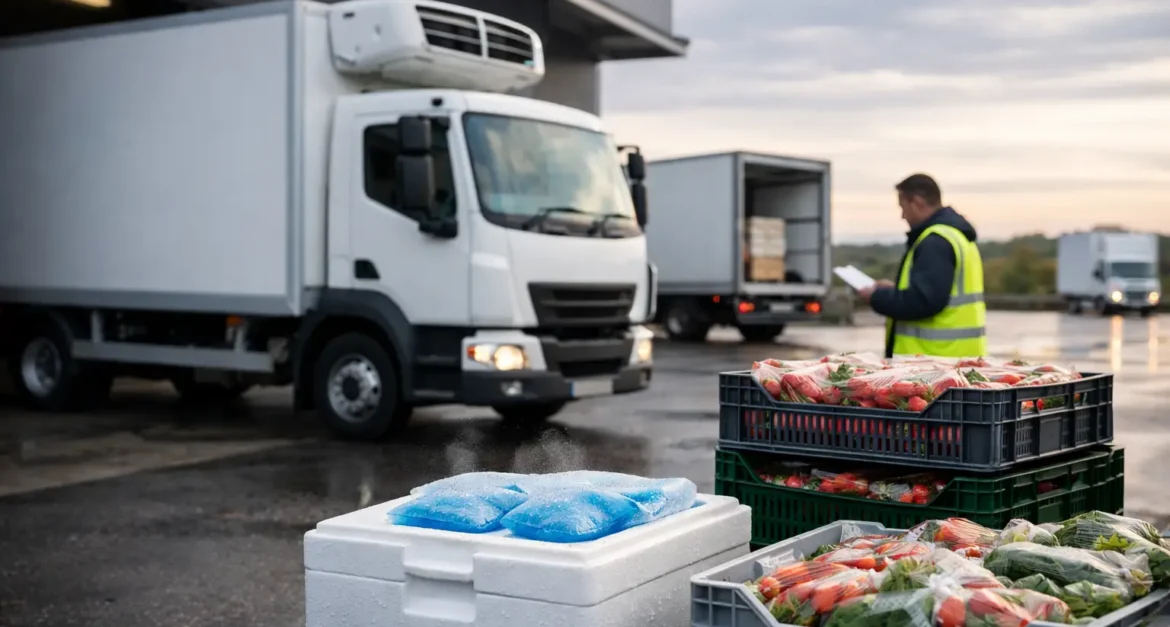
A controlled ambient transport guide starts with one essential point: ambient does not mean uncontrolled. For many products, the acceptable range is wider than chilled or frozen transport, but a temperature excursion can still compromise quality, stability, shelf life or compliance. The requirement is to keep goods within their approved conditions, prove that this happened, and respond quickly if it did not.
For food, pharmaceuticals, cosmetics, chemicals and sensitive commercial products, the risk often sits between collection and delivery. A vehicle parked in direct sunlight, repeated door openings on a multidrop route, an unplanned delay, or a poorly prepared consignment can all change the product environment. Controlled ambient transport puts clear processes, suitable equipment and full visibility around those risks.
What controlled ambient transport means
Controlled ambient transport is the movement of goods within a defined non-refrigerated temperature range. The exact range must be set by the product manufacturer, quality team or applicable regulation. It is often described as controlled room temperature, but businesses should never assume one standard range applies to every product.
Some pharmaceutical products may require strict control between 15°C and 25°C. Certain food ingredients, confectionery, cosmetics and specialist components can have different limits, including short-term excursion allowances. The transport provider needs the authorised specification before collection, including the target range, permitted duration outside that range, packaging requirements and action to take if an issue occurs.
This is where controlled ambient differs from standard parcel or general freight delivery. A general courier may move goods efficiently, but cannot necessarily maintain a defined thermal environment, monitor conditions throughout the route or provide the evidence needed for quality release and audit.
Why ambient products still need temperature control
Ambient goods can appear lower risk because they are not visibly cold. That assumption creates avoidable exposure. UK weather may be variable, but vehicle temperatures can rise sharply in summer, especially during urban delivery rounds and prolonged stops. In colder periods, unheated load spaces can also fall outside product limits.
The consequence depends on the product. A temperature deviation may lead to rejected pharmaceutical stock, shortened shelf life, melting or bloom in confectionery, damaged packaging, altered cosmetic texture, or a customer receiving goods that cannot be accepted into its own quality system. Even where the product remains usable, a missing temperature record can create a compliance problem.
For operations teams, the objective is straightforward: prevent excursions where possible, identify them immediately where they occur, and retain a complete chain of evidence. That reduces waste, protects customer relationships and gives the receiving site confidence to accept the consignment.
Build the transport plan around the product
Effective controlled ambient transport begins before a vehicle is allocated. The product profile should determine the service design, rather than fitting the product into a standard route.
First, define the handling requirements. Confirm the approved temperature range, whether monitoring is mandatory, the maximum journey time, packaging format, loading orientation and any segregation needs. If the goods are high value, clinical, regulated or particularly sensitive to heat, the plan may also require tighter vehicle controls, a dedicated service or contingency capacity.
Next, assess the route. A direct same-day movement has very different risks from a nationwide multidrop operation. Collection and delivery windows, expected traffic, urban access restrictions, waiting time at site and the number of door openings all affect thermal control. A route that looks cost-effective on paper may be unsuitable if it exposes goods to repeated loading bay delays or long periods outside a conditioned vehicle.
Finally, match the vehicle to the load. Climate-controlled vehicles can actively maintain the agreed environment, while insulated equipment may be appropriate for some short, lower-risk journeys. The right choice depends on the product specification, outside conditions, route duration and monitoring requirement. It should be a documented decision, not a guess.
Packaging and loading are part of the control system
Vehicle temperature alone does not guarantee product temperature. Cartons, pallets and secondary packaging need to protect goods during loading, unloading and short periods of exposure. Poor airflow around a load, placement near doors, damaged wrapping and incomplete palletisation can all undermine an otherwise well-managed journey.
Loading plans should allow appropriate air circulation where required and keep goods secure during transit. Drivers also need clear instructions on door discipline, delivery sequence and what to do if a receiving point is not ready. Every unnecessary door opening adds risk, particularly on busy multidrop runs.
Monitoring, traceability and proof of delivery
A controlled ambient shipment should be visible from collection to delivery. Real-time digital temperature monitoring gives the transport team the ability to observe conditions during transit rather than discovering a problem after the vehicle has returned. Combined with GPS tracking, it also provides context: where the vehicle was, how long it stopped and whether an event coincided with a route delay or site wait.
For regulated or quality-critical movements, records should be clear enough to support investigation and audit. That includes collection and delivery times, vehicle identification, temperature data, route events, chain-of-custody information and proof of delivery. If a customer requires a temperature report, agree the format and release process before the first consignment moves.
Monitoring is valuable only when someone acts on the information. Alert thresholds should be agreed in advance, with an escalation route that identifies who contacts the driver, who informs the customer and who decides whether goods can continue. A prompt intervention may be as simple as closing doors, adjusting the set point, changing the route or deploying a replacement vehicle. The key is to have a defined response before pressure builds.
Managing deviations without losing control
No transport operation can eliminate every disruption. Road closures, mechanical incidents, collection delays and unexpected site queues happen. A reliable ambient service is judged by how it manages those events.
A deviation procedure should establish the facts first. Record the time, actual temperature, relevant product limit, duration, location and any corrective action taken. Do not assume stock is acceptable or reject it without evidence. The customer or nominated quality representative should receive the information needed to make the right disposition decision.
Contingency planning matters most for time-critical and high-consequence freight. This may include backup vehicle availability, alternative delivery points, direct contact details for receiving sites, extended driver cover and route alternatives. For an urgent pharmaceutical delivery or a production-critical component, the response time can be as important as the vehicle specification.
Choosing a controlled ambient transport partner
When comparing providers, look beyond whether they state that they offer temperature-controlled delivery. Ask how the range is set and checked, what monitoring is available, how alerts are managed and what documentation is supplied after delivery. A provider should be able to explain its process in operational terms, not vague assurances.
It is also worth checking whether the fleet and service model fit your distribution pattern. A business with frequent UK-wide replenishment may need dependable multidrop capability. A manufacturer facing irregular demand may benefit from dedicated day-rate vehicles. A healthcare distributor may need a direct, validated service with defined handover procedures. The best solution depends on the product, the lane and the commercial impact of failure.
MT Logistics Group supports controlled ambient, chilled, frozen and multi-temperature movements with refrigerated vehicles, GPS tracking and real-time digital temperature monitoring. That combination gives businesses a practical route to greater visibility while keeping service decisions focused on the actual risk profile of each load.
Put control into the first booking
Before your next ambient consignment leaves site, bring the product temperature specification, route details, delivery windows and reporting needs into one transport brief. A clear brief allows the vehicle, monitoring plan and contingency response to be set correctly from the outset. When product integrity is commercially critical, control should begin at booking, not after a delivery problem has occurred.