A frozen delivery can look successful at the kerbside while the product inside has already been put at risk. A missed loading check, prolonged door opening or poorly planned route can compromise the cold chain long before a receiving team signs the paperwork. Effective frozen food transportation is therefore not simply about using a refrigerated vehicle. It is about maintaining verified control from collection to handover.
For food manufacturers, wholesalers, retailers, hospitality suppliers and meal-prep businesses, the consequences of failure are immediate. Product may need to be rejected, stock can be lost, and a disrupted delivery can leave a site without essential supply. The right transport operation protects product quality, supports food safety obligations and gives your team confidence that each load has been handled correctly.
What frozen food transportation must achieve
Frozen goods need to remain at a temperature appropriate to the product specification throughout the journey. For many frozen foods, this is commonly -18°C or below, but the required set point, permitted tolerance and monitoring requirements should always be agreed for the specific product and customer. A vehicle set to the right temperature is only the starting point. The load must be protected against temperature rise during loading, transit, delivery and any unplanned delay.
That requires a controlled process. The vehicle must be suitable for the consignment, pre-cooled before loading where required, and operated by a team that understands how quickly frozen stock can be affected by poor handling. The carrier also needs a clear plan for delivery windows, site access, waiting time and escalation if a problem occurs.
The objective is straightforward: preserve the product in the same condition in which it was collected, with evidence to support that outcome.
The risks are often operational, not mechanical
Refrigeration equipment is vital, but many cold-chain failures begin with everyday operational gaps. A vehicle may arrive late and miss a booked slot. A mixed route may involve too many door openings. Pallets may be loaded in a way that restricts airflow. Temperature records may exist, but no one reviews an alert until after delivery.
These issues are particularly significant on multidrop work. Every stop introduces a potential exposure point, especially where drivers are delivering to busy kitchens, stores or depots with limited unloading space. The longer doors remain open, the harder the refrigeration unit must work to recover the set point. Route design, drop sequence and realistic delivery scheduling therefore matter as much as the vehicle specification.
There is also a commercial risk. Frozen stock may still appear acceptable, but if a receiver cannot obtain the necessary temperature evidence, they may reasonably reject the delivery. Traceability is not an administrative extra. It is part of protecting customer trust and defending the integrity of the supply chain.
Planning frozen food transportation before collection
Reliable outcomes are created before the vehicle reaches site. A transport provider should establish the product temperature requirement, collection and delivery times, pallet count, load format, access restrictions and whether the consignment is dedicated or part of a planned distribution route. These details shape the right vehicle, route and handling plan.
Select the vehicle around the load
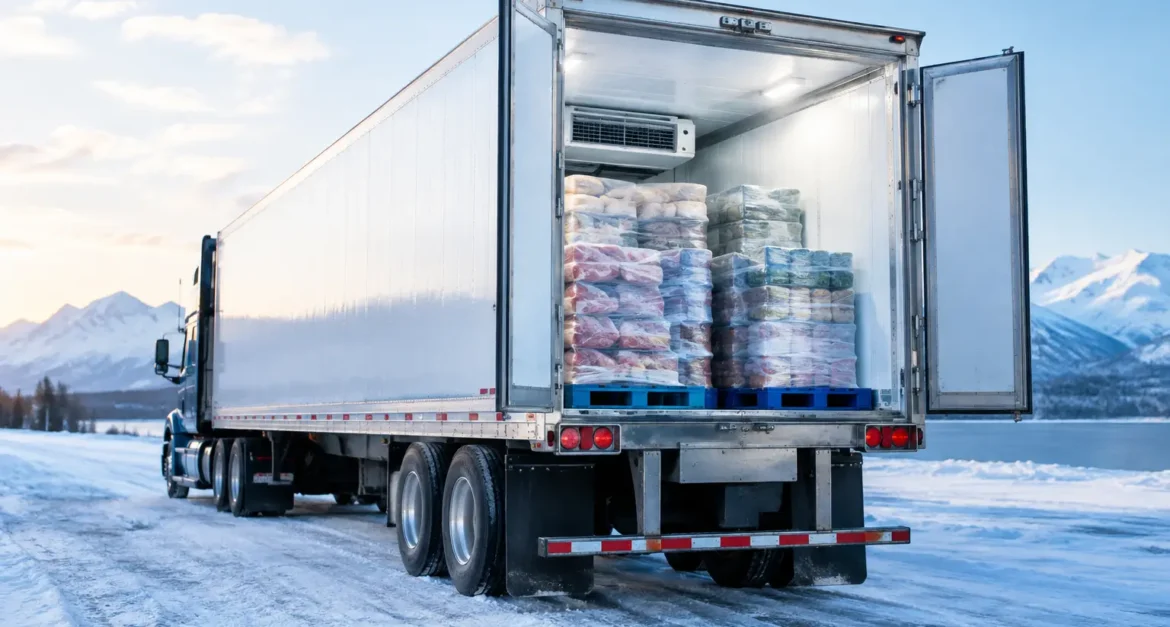
Vehicle choice depends on volume, weight, delivery profile and the required level of temperature separation. A small urgent consignment may need a temperature-controlled van with direct delivery, while larger retail or wholesale movements may require a refrigerated lorry with capacity for pallets and multiple drops.
For mixed-load operations, multi-temperature capability may be necessary. Frozen, chilled and ambient goods should not be treated as interchangeable simply because they are travelling to the same destination. Separate compartments and independently managed set points can protect each category while helping businesses consolidate deliveries efficiently.
There is a trade-off. Consolidating stock can reduce transport cost and vehicle movements, but it must not create an operational plan that exposes frozen goods to excessive unloading time or unsuitable temperature conditions. The best approach depends on the delivery profile, not just the load size.
Pre-cool, inspect and load correctly
The load space should be brought to the required operating temperature before product is introduced. Loading frozen food into a warm body places unnecessary pressure on the refrigeration system and can affect product at the point of collection.
Drivers and loading teams should check that doors, seals and refrigeration equipment are functioning correctly, and that the vehicle is clean and suitable for food transport. Stock should be loaded to maintain airflow around the cargo. Overfilling a compartment or obstructing evaporator circulation can create uneven temperatures, even when the display appears satisfactory.
Loading should also be organised around the route. Placing the final delivery at the rear of the compartment increases door-open time at each earlier stop. Good loading discipline shortens handling time and reduces unnecessary thermal exposure.
Monitoring creates evidence, not assumptions
A temperature display in the cab is useful, but it is not sufficient proof of cold-chain performance. Digital temperature monitoring gives operations teams a time-stamped record of conditions throughout the journey. Combined with GPS tracking, it provides full visibility of vehicle location, progress and any temperature event that requires attention.
The value lies in active control. If a monitored temperature moves outside the agreed operating range, the transport team needs a defined response: investigate the cause, check whether doors are secure, assess the refrigeration unit, notify the relevant contact where necessary and record the action taken. A system that merely stores data after a failure offers limited protection.
For high-value or tightly controlled consignments, agree in advance who receives alerts, what escalation thresholds apply and whether temperature reports are required at delivery. This avoids uncertainty at the point when rapid decisions are needed.
Delivery is the final cold-chain control point
A well-managed journey can still be undermined at the consignee’s premises. Delays at goods-in, lack of available staff or unsuitable unloading arrangements may leave the vehicle waiting with doors open. That is why delivery requirements should be confirmed before dispatch, particularly for booked retail, distribution centre and hospitality drops.
Drivers should arrive with the correct delivery information and follow site procedures without losing sight of product protection. Where a delay occurs, the transport provider should communicate quickly and take practical steps to maintain control. Depending on the situation, that may mean keeping doors closed until the receiver is ready, adjusting the drop sequence where possible or escalating to the customer’s operations contact.
Proof of delivery should be accurate, with any exceptions documented at the time. If the receiver checks product temperature on arrival, the process should be anticipated rather than treated as a disruption. Clear records help resolve queries quickly and support compliance audits later.
Choosing a frozen transport partner
The right provider should be able to explain how it controls risk, not simply confirm that it has refrigerated vehicles. Ask how vehicles are monitored, how temperature records are retained, how drivers are briefed, and what happens if a deviation, breakdown or delay occurs. You should also understand whether the provider can support urgent collections, timed deliveries, dedicated vehicles and multidrop distribution as your requirements change.
A specialist partner brings operational resilience. That includes proactive route management, real-time communication, contingency planning and people who understand that frozen goods cannot be treated like general freight. MT Logistics Group provides temperature-controlled transport with monitored vehicles, GPS visibility and traceable delivery processes for businesses that need certainty at every stage.
Cost remains a valid consideration, but the cheapest quote can be expensive if it results in rejected stock, waste or service disruption. Compare providers on the controls behind the price: equipment suitability, response capability, documentation, capacity and communication.
Build control into every movement
Frozen transport performs best when it is treated as a managed cold-chain operation rather than a simple collection and delivery task. Agree the required temperature, plan the vehicle and route around the product, monitor the journey actively and make sure delivery arrangements protect the final handover.
When those controls are in place, your transport operation does more than move frozen goods across the UK. It protects availability, compliance and the reputation your customers rely on.