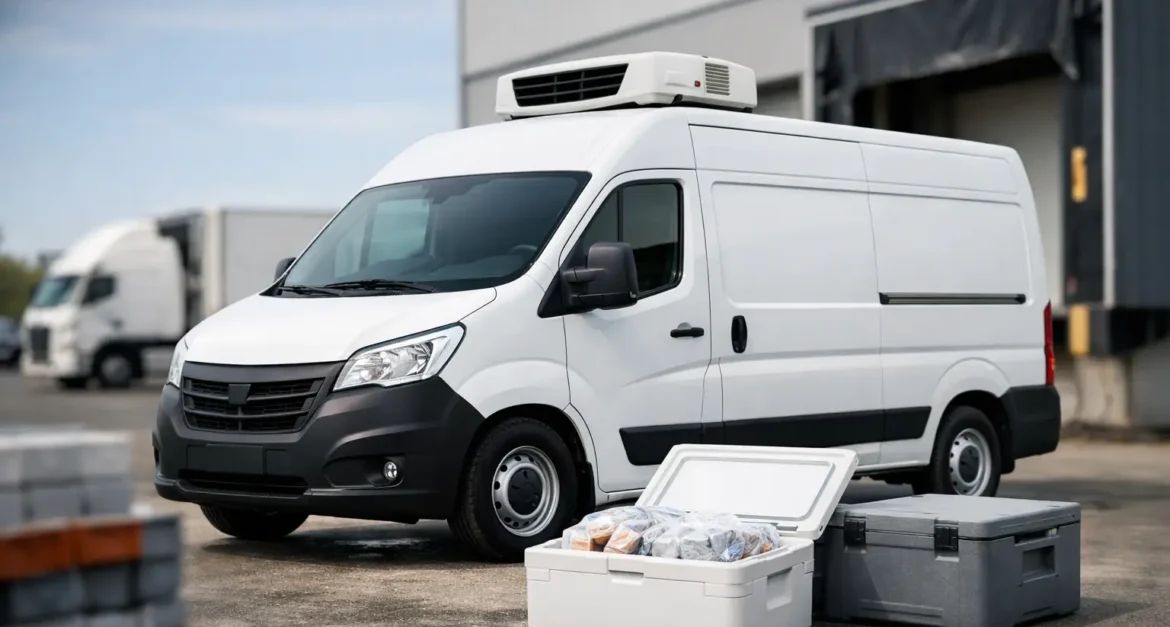
A freezer van is not simply a vehicle with a cold compartment. For businesses moving frozen food, medical products or other temperature-sensitive stock, it is a controlled transport environment that must preserve product condition from collection through to proof of delivery. A short delay, an incorrectly loaded vehicle or a temperature excursion can create waste, rejected stock, lost revenue and a difficult compliance conversation.
The right transport solution protects more than the load. It protects service levels, customer confidence and the continuity of your operation. That means matching the vehicle, refrigeration capability and delivery plan to the product and the risk involved.
What a freezer van needs to do
A freezer van is designed to carry goods at frozen temperatures, commonly around -18°C or below depending on the product specification. The refrigeration unit removes heat from the insulated load space and works to maintain the required set point throughout the journey.
However, the set point alone is not a guarantee of product integrity. The real test is whether the vehicle can hold the required range while making collections, travelling through traffic, opening doors at delivery points and completing multidrop work. This is where a specialist temperature-controlled operator adds value. The vehicle, route and handling process need to operate as one controlled system.
For frozen food distribution, stability protects texture, quality and food safety. For pharmaceutical or healthcare products with frozen requirements, the stakes may include batch integrity, audit readiness and patient safety. In both cases, transport should be planned around the product’s actual tolerance, not a generic assumption that “frozen” is one condition.
Freezer van capability is about control, not just capacity
Vehicle size matters, but choosing purely on cubic capacity can introduce avoidable risk. An oversized vehicle carrying a small, poorly secured load may have more air movement and longer recovery times after door openings. A vehicle that is too small can restrict airflow, complicate loading and leave no room for sensible load separation.
The best choice depends on consignment volume, pallet configuration, delivery frequency and access at each site. A compact freezer van can be effective for urgent, lower-volume consignments and urban deliveries. Larger refrigerated vehicles may be more appropriate for wholesale, retail replenishment or scheduled multidrop distribution.
Temperature monitoring is equally important. Real-time digital monitoring provides visibility during transit, allowing the operator to verify that conditions remain within the agreed range. Where a customer needs supporting evidence, recorded temperature data creates a clear audit trail rather than relying on assumption or a driver’s manual check.
GPS tracking adds another layer of control. It enables accurate delivery updates, supports route management and helps operations teams respond quickly if traffic disruption, vehicle access issues or a missed time slot threaten the plan. For a time-critical frozen load, visibility is operational protection.
Door openings and loading discipline matter
Every door opening allows warmer air into the load space. On a single direct run this may be manageable, but on a busy multidrop route the cumulative impact can be significant. Delivery sequencing, dwell time at site and the way goods are presented for unloading all affect temperature recovery.
Loads should be prepared before the vehicle arrives, with goods already at their required temperature and clearly separated by drop. Drivers need sufficient information to complete each handover efficiently, including site access instructions, contact details and delivery booking requirements. A freezer vehicle cannot compensate for avoidable delays on the loading bay.
Airflow must also be protected. Stacking goods tightly against evaporator outlets or packing beyond the intended load line can restrict circulation. Products may remain frozen while temperatures vary within the compartment, which is why sound loading practice is as important as refrigeration performance.
When a dedicated freezer van is the right option
A dedicated vehicle gives the shipper direct control over collection timing, route, delivery sequence and the handling of the load. It is particularly valuable for urgent replenishment, high-value frozen stock, sensitive products or routes where a missed slot would disrupt a production line, retail operation or hospitality service.
Dedicated day-rate transport can also make operational sense where demand changes from week to week. Instead of maintaining spare fleet capacity, a business can secure a suitable freezer van and driver for a defined period, using the vehicle for collections, transfers or multiple planned drops.
Shared or consolidated distribution may be a sensible alternative for routine consignments where timing is more flexible and the service has been designed for compatible temperatures. The trade-off is reduced control over route and delivery timing. It should only be used when the product profile, delivery window and handling requirements allow it.
For mixed loads, a standard freezer van may not be sufficient. Businesses moving frozen, chilled and ambient products together need a multi-temperature solution with physically separated zones and independent temperature control. Trying to make one compartment serve conflicting requirements is a risk, not an efficiency.
Questions to ask before booking freezer transport
Before arranging a collection, establish the required carriage temperature, acceptable tolerance and whether the requirement applies to air temperature, product temperature or both. Confirm the product is fully frozen before loading. A vehicle is designed to maintain a product’s condition during transport, not rapidly freeze warm stock.
You should also confirm the collection and delivery windows, the number of drops, pallet or carton dimensions, total weight, loading equipment and any access restrictions. A city-centre restaurant, a supermarket distribution bay and a regional warehouse can each require a different vehicle and arrival plan.
If the goods are regulated, agree the evidence required at delivery. This may include temperature records, collection and delivery timestamps, a signed proof of delivery, chain-of-custody details or named-contact confirmation. Setting this out before dispatch avoids gaps when the consignment has already left site.
Finally, ask what happens if the plan changes. A dependable provider should have clear escalation procedures for delays, failed access, refrigeration alerts and redelivery instructions. Temperature-controlled logistics is not about assuming disruption will never happen. It is about responding quickly, documenting decisions and keeping the customer informed.
A practical dispatch process for frozen goods
Reliable freezer transport begins before the vehicle reaches your premises. The booking should capture product requirements, collection readiness, delivery priorities and site constraints. Operations teams can then allocate an appropriate vehicle, plan the route and brief the driver properly.
At collection, the load should be checked for visible damage, correct quantities and suitable packaging. Frozen products need packaging that protects them during handling and supports safe stacking. If products are being moved on pallets, the load should be stable and secured without blocking airflow.
During transit, the vehicle should operate to the agreed temperature requirement with tracking and monitoring in place. Any issue requiring intervention should be addressed early, rather than discovered after delivery. Proactive communication gives the receiving site time to prepare and allows the shipper to make informed decisions if circumstances change.
At delivery, speed and accuracy matter. The driver should follow site procedures, obtain the required proof of delivery and report exceptions immediately. A completed delivery is only fully successful when the product arrives on time, in specification and with the evidence the customer needs.
Why specialist support reduces frozen-chain risk
General freight capacity can be useful for general freight. Frozen distribution is different because the product, vehicle and process are inseparable. The provider must understand temperature set points, refrigeration behaviour, loading practices, delivery windows and the commercial impact of a failed drop.
MT Logistics Group provides temperature-controlled transport with dedicated refrigerated vehicles, real-time temperature monitoring and GPS tracking to give customers full visibility of their frozen consignments. This level of control supports urgent direct deliveries, planned routes and multidrop operations across the UK.
The practical benefit is peace of mind for operations teams. Rather than chasing updates or questioning whether a vehicle was suitable, they have a defined transport plan, clear communication and traceability from collection to delivery.
A freezer van should be selected with the same care as the product it carries. When temperature, timing and documentation are agreed before collection, frozen goods can move through the supply chain with fewer surprises and far stronger protection at every handover.