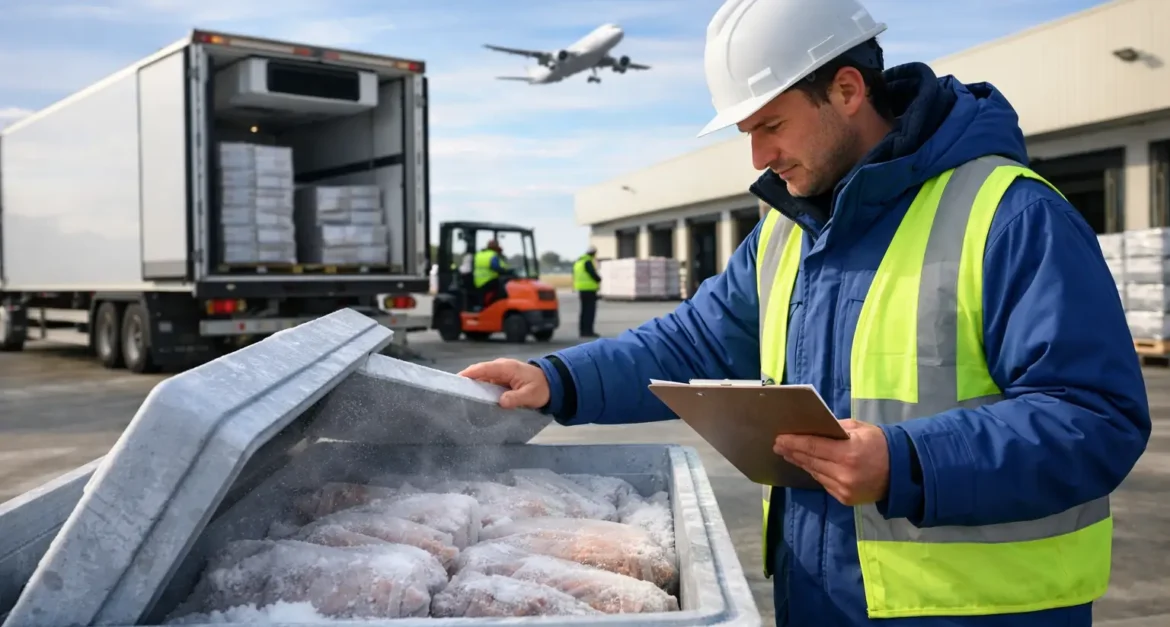
A late chilled delivery is rarely just a late delivery. It can mean rejected stock at a distribution centre, wasted product on a retail shelf, a missed patient-critical shipment, or a full day of disruption across a supply chain. That is why cold chain logistics UK operations are judged on more than whether a vehicle arrives. They are judged on whether temperature, timing, traceability and compliance hold firm from collection through to handover.
For businesses moving food, pharmaceuticals, healthcare products or other temperature-sensitive goods, the cold chain is not a transport add-on. It is a controlled process. If one part fails, the commercial and regulatory consequences can be immediate. Product integrity is either protected throughout the journey or it is compromised. There is very little middle ground.
What cold chain logistics UK businesses actually need
Most organisations do not simply need a refrigerated vehicle. They need certainty. That usually means the right temperature band, the right vehicle specification, the right route planning and the right proof that conditions were maintained throughout the journey.
In practice, requirements vary. A frozen food wholesaler may need strict sub-zero transport with multiple timed drops. A laboratory may need a validated movement with a documented temperature record and a clear chain of custody. A hospitality supplier may need mixed chilled and ambient loads delivered into tight service windows. The goods are different, but the pressure is the same. There is no room for avoidable deviation.
This is where specialist cold chain providers stand apart from general freight operators. The vehicle matters, but so do the process controls around it. Real-time temperature monitoring, GPS tracking, trained drivers, planned contingency routes and clear delivery records all play a direct role in reducing risk.
Why the cold chain fails – and what causes the real cost
Cold chain problems are not always dramatic. In many cases, they begin with ordinary operational gaps. A vehicle arrives outside the booked slot. Doors are opened too often on a multidrop route. Goods are loaded in the wrong sequence. The chosen vehicle is technically refrigerated but not suitable for the product mix or journey length. Monitoring is limited, so a problem is only discovered after delivery.
The direct cost may be spoilage, waste or a rejected consignment. The wider cost is often more serious. Customer trust drops. Internal teams spend hours resolving claims. Stock availability suffers. Compliance pressure increases. In regulated sectors, poor temperature control can trigger investigation, reporting requirements and reputational damage.
That is why experienced operators look beyond price per mile. A cheaper rate can become expensive very quickly if the service model does not match the operational risk. For temperature-sensitive transport, value is measured by control.
The building blocks of reliable cold chain logistics UK services
Reliable cold-chain distribution depends on consistency at every stage of the journey. Collection procedures need to be clear. Vehicles need to be fit for purpose and maintained to standard. Loads need to be handled correctly. Delivery teams need visibility while the vehicle is on the road, not after the fact.
Temperature control is the starting point, but not the whole answer. Businesses also need traceability. If a customer, auditor or internal quality team asks what happened to a consignment in transit, the provider should be able to show the journey, the timings and the temperature record with confidence.
For many operations, multi-temperature capability is equally important. A supplier may need frozen, chilled and ambient goods moved together while keeping each range stable. That requires more than partitioned space. It requires planning, equipment that performs under real operating conditions and drivers who understand how load handling affects thermal stability.
The same applies to urgent movements. Same-day cold chain work can be done safely, but speed should never come at the expense of control. The strongest providers move quickly because their systems are disciplined, not because corners are cut.
Vehicle choice matters more than many teams expect
The wrong vehicle creates problems that no amount of reactive management can fully correct. Payload, compartment setup, door access, route type and stop frequency all affect thermal performance. A single direct run has different demands from a dense multidrop schedule across urban locations.
For that reason, fleet flexibility matters. Vans, larger refrigerated vehicles and dedicated day-rate options each have their place. The best setup depends on the load profile and service model. A provider that asks detailed questions before confirming the job is often the provider taking risk seriously.
Monitoring only helps if it is live and usable
Recorded data has value, particularly for compliance and post-delivery verification. But operationally, live visibility is what allows teams to act before a minor issue becomes a failed delivery. If a route is delayed, if a temperature threshold starts to drift, or if a delivery window is at risk, the response needs to happen in real time.
That visibility also improves communication with customers and internal stakeholders. Operations teams do not want vague updates. They want clear status, accurate ETAs and confidence that the consignment remains within specification.
Compliance is not just for pharmaceutical loads
Pharmaceutical and medical logistics naturally attract the highest scrutiny, and rightly so. Temperature excursions can compromise product safety, treatment effectiveness and patient outcomes. In these settings, validated processes, documented handling procedures and complete traceability are essential.
But food and drink supply chains face serious compliance demands as well. Chilled and frozen products must be transported within suitable conditions to protect safety and quality. Retailers, wholesalers and hospitality operators all rely on transport partners who understand not just delivery timing, but product handling standards and audit expectations.
Different sectors have different tolerances, and that is where nuance matters. Not every product requires the same validation model. Not every route needs the same level of intervention. A capable logistics partner knows how to scale control measures to the risk profile of the goods without making the operation unnecessarily complex.
How to assess a cold chain provider properly
Choosing a provider should be a practical decision, not a marketing one. The right questions are usually operational. Can they maintain the required temperature range consistently? Can they evidence it? Do they have nationwide coverage if your footprint grows? Can they support same-day requirements, planned distribution and dedicated capacity when demand changes?
It also helps to ask how they handle exceptions. Delays happen on UK roads. Traffic builds. sites run behind. Collections overrun. What matters is whether the provider has a clear response process that protects the load while keeping all parties informed.
Service fit is critical here. A business sending urgent medical stock across the country has different needs from a food supplier replenishing multiple hospitality sites before lunch service. Both need control, but the operating model should reflect the job. Good providers do not force every customer into the same template.
Where specialist support changes the outcome
Cold chain transport tends to become most visible when something has gone wrong elsewhere in the supply chain. Stock is released late. A supplier misses a slot. A site urgently needs replenishment. A planned route suddenly becomes time-critical. In those moments, specialist support matters because speed must be matched by discipline.
This is where providers such as MT Logistics Group are strongest. The value is not just in refrigerated vehicles on standby. It is in combining temperature control, live tracking, responsive planning and delivery assurance in one managed service. That gives operations teams a practical way to protect product quality while keeping commitments intact.
For growing businesses, there is another advantage. Flexible cold-chain support allows logistics capacity to scale without immediately adding fleet overhead, staffing complexity or compliance burden internally. That can be especially useful for seasonal peaks, promotional activity, urgent overflow work and specialist one-off movements.
Cold chain logistics UK is really about protecting outcomes
At surface level, cold chain transport is about moving goods within a required temperature range. In reality, it is about protecting what those goods represent – revenue, compliance, service continuity, patient safety and brand reputation.
That is why the strongest logistics decisions are usually the least dramatic ones. They are built on careful vehicle selection, clear process control, reliable communication and evidence at every stage. When those pieces are in place, chilled, frozen and temperature-sensitive products arrive as they should, and your team can focus on running the wider operation with confidence.
If your supply chain depends on stable conditions and dependable delivery windows, the right logistics partner should bring more than transport capacity. They should bring control when it matters most.