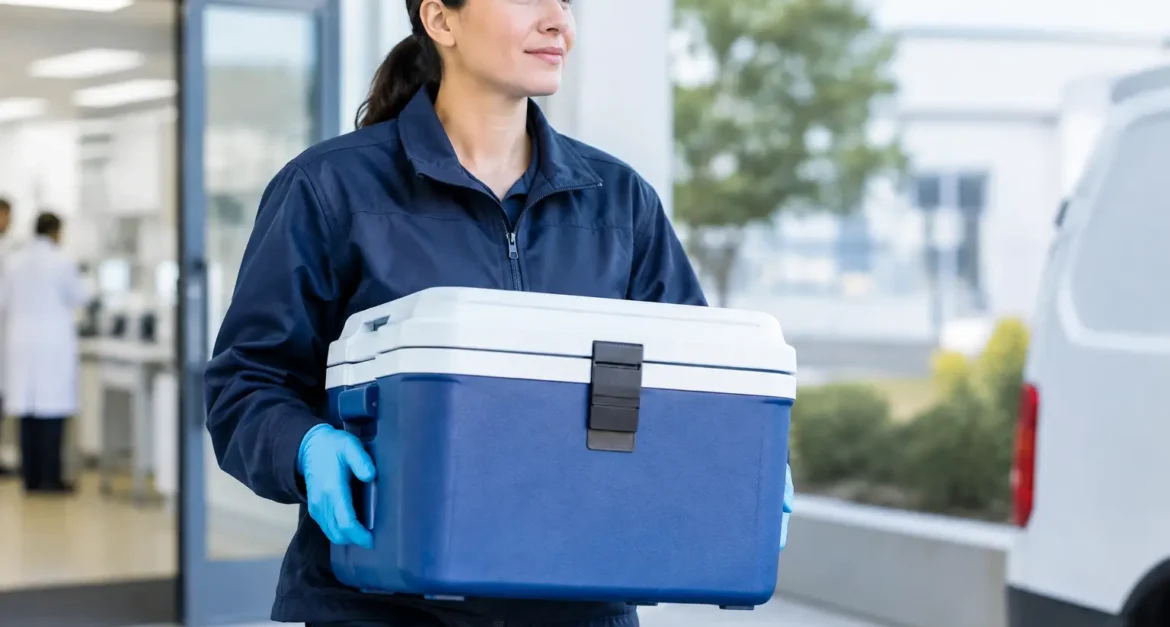
A medical sample courier temperature controlled service is not simply a vehicle with refrigeration. It is a controlled chain of custody designed to protect a specimen from collection through to laboratory receipt. For blood samples, tissue, swabs, clinical trial materials and other diagnostic specimens, the journey can directly affect the reliability of the result.
A late collection, an unrecorded temperature excursion or unclear proof of delivery can create more than an operational inconvenience. It may mean a rejected sample, a repeated appointment, delayed treatment, additional cost and avoidable pressure on clinical or laboratory teams. The right courier service provides the visibility and discipline needed to prevent those risks.
Why temperature control matters for medical samples
Medical samples do not all travel under the same conditions. Some require chilled transport, others must remain frozen, and many can travel at controlled ambient temperatures. What matters is not selecting the coldest possible option. It is maintaining the temperature range specified for that individual sample, for the full duration of transit.
A specimen may appear unchanged after a temperature deviation while its clinical value has already been compromised. Heat can accelerate degradation in certain materials, while unintended freezing may damage samples that should be chilled. Temperature control is therefore a matter of sample integrity, not just product presentation.
The transport plan should reflect the sample type, its stability profile, collection time, packaging requirements, destination laboratory acceptance criteria and delivery deadline. A same-day journey may need a different solution from an overnight route, just as a hospital collection differs from a scheduled transfer between laboratories.
Medical sample courier temperature controlled requirements
A dependable service begins before collection. The courier must understand the required temperature band, the quantity and type of consignments, whether the load is time-critical and the exact receiving arrangements. This information determines the vehicle, monitoring approach, route and contingency plan.
For many medical movements, the core requirements are clear: a suitable temperature-controlled vehicle, trained handling, secure and appropriate packaging, live location visibility and documented proof of delivery. Where temperature monitoring is required, the readings must be available as a credible record rather than an assumption that the vehicle was cold enough.
Defined temperature ranges
Chilled, frozen and controlled ambient shipments demand different operating conditions. A multi-temperature vehicle may be appropriate when several categories of samples or associated medical products need to move in one collection. However, mixed loads require careful segregation and planning. Combining consignments only makes sense when every item can remain within its required range without introducing delays or cross-contamination risk.
The specified range should be agreed in advance, not decided at the kerbside. A courier team needs clear instructions on acceptable limits, escalation contacts and the action to take if a delay threatens the agreed transit window.
Full chain-of-custody visibility
Clinical and laboratory teams need to know where a sample is, who has handled it and when it was delivered. GPS vehicle tracking supports real-time operational visibility, while collection and delivery confirmations create a clear audit trail.
This becomes particularly valuable for urgent specimens. If a hospital team is awaiting a result, a vague delivery estimate is not enough. Accurate updates allow receiving teams to prepare, identify emerging issues early and make informed decisions if a collection or delivery window changes.
Secure handling and documentation
Medical samples must be handled with care from handover to receipt. The correct packaging and labelling remain the sender’s responsibility, but an experienced courier supports the process by maintaining secure transport conditions, minimising unnecessary handling and ensuring the consignment reaches the named recipient.
Documentation should match the movement. Depending on the sample and route, this may include collection details, temperature records, proof of delivery and chain-of-custody information. Requirements can differ according to the material being carried, so the transport plan should be checked against the relevant laboratory, clinical and regulatory procedures before the first collection.
What a controlled medical courier journey looks like
The strongest medical logistics operations are planned around control points. At collection, the courier verifies the agreed consignment details and takes custody without leaving sensitive material waiting in an unsuitable environment. The sample is placed in the appropriate temperature zone and the journey begins with its handling requirements already defined.
During transit, temperature monitoring and vehicle tracking provide oversight. This does not remove the need for experienced operations management. Technology identifies conditions and location; a responsive transport team acts on that information. If traffic disruption, road closures or a site access issue threatens the planned delivery, the team must be able to intervene quickly and communicate clearly.
At delivery, the sample should be transferred to the correct authorised recipient, with a time-stamped confirmation. Where a laboratory has restricted receiving hours or a designated sample reception point, these details need to be built into the route plan. A specimen delivered to the wrong entrance or outside the agreed window is not a successful delivery.
Choosing between same-day, scheduled and dedicated transport
The right solution depends on risk, frequency and urgency. For a single time-critical specimen, a dedicated same-day courier provides direct movement and reduces unnecessary stops. It is often the preferred option when a sample has a short stability window or must reach a specialist laboratory quickly.
Scheduled collections can be more efficient for laboratories, pharmacies, clinics and medical distributors with regular volumes. A planned route creates consistency, but it still needs capacity for late-running appointments, additional collections and unexpected demand.
Dedicated day-rate vehicles offer another option for organisations managing multiple collections or transfers across the day. This gives operational teams a controlled vehicle resource without having to arrange each movement separately. It can be especially useful for clinical trial activity, hospital networks and multi-site laboratory operations where timings may change at short notice.
Cost matters, but the cheapest transport option is not always the lowest-cost decision. A rejected specimen may lead to repeat testing, staff time, patient disruption and reputational damage that far outweigh the price difference between general transport and a specialist medical courier.
Questions to ask a medical sample courier
Before appointing a provider, ask how they control the required temperature range, how readings are monitored and what evidence can be supplied after delivery. Confirm whether they use dedicated refrigerated vehicles, whether they can support controlled ambient, chilled, frozen or multi-temperature requirements, and how they manage urgent collections.
It is also sensible to ask about communication. Who is contactable if collection instructions change? How are delays escalated? Can the operations team provide live location updates and prompt proof of delivery? In a time-critical environment, the quality of response is as important as the planned route.
Finally, examine the provider’s understanding of your sites. A courier that knows the collection point, security process, laboratory reception hours and named contacts will reduce avoidable delay. That level of preparation turns a transport booking into a dependable part of the clinical workflow.
Protecting the result, not just the shipment
For medical and diagnostic organisations, transport is an extension of the quality process. The specimen may have been collected carefully, labelled correctly and prepared to procedure, but that work can be undermined by poor control on the road.
MT Logistics Group supports temperature-sensitive, time-critical movements with refrigerated vehicles, digital temperature monitoring, GPS tracking and responsive UK-wide operations. The aim is straightforward: keep every sample within its agreed conditions, maintain full visibility and deliver it when the receiving team expects it.
When sample integrity is on the line, arrange transport around the specimen’s requirements from the outset. A controlled collection plan gives laboratory and clinical teams the confidence to focus on the result that matters.