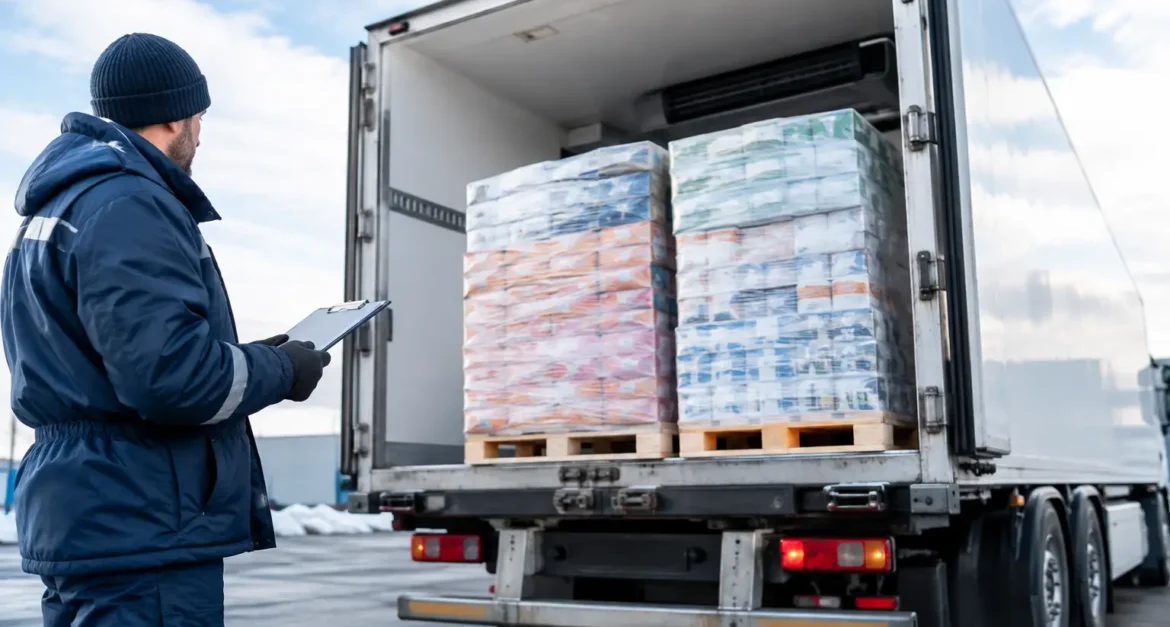
A frozen load can look perfect at the point of delivery and still represent a serious risk if its temperature history cannot be evidenced. For businesses arranging frozen food transport UK-wide, the job is not simply to move pallets from A to B. It is to maintain a controlled frozen environment, meet agreed delivery times and provide a clear record of how the consignment was handled.
That standard matters whether you are supplying a supermarket distribution centre, replenishing a restaurant group, moving ingredients to a production site or delivering direct to wholesale customers. A missed slot, a prolonged door opening or an unsuitable vehicle can create avoidable waste, rejected stock and difficult conversations with your customers.
What reliable frozen transport needs to protect
Frozen food is generally transported at temperatures appropriate to the product specification, commonly at or below -18°C. However, the set point alone does not prove that a load has been protected. The full journey matters: pre-cooling the vehicle, loading efficiently, managing access to the load space, monitoring conditions in transit and responding quickly if something changes.
A refrigerated vehicle must have sufficient capacity for the external conditions, route profile and delivery pattern. A single, direct run is very different from a multi-drop route with frequent door openings. In both cases, the transport plan should reflect the product, the packaging, the vehicle and the customer’s receiving requirements.
Reliability also means protecting product condition beyond temperature. Pallets must be stable, air circulation must not be obstructed, and goods need to be separated where load compatibility requires it. Frozen products should arrive in the same saleable, usable condition in which they were collected.
Frozen food transport operations across the UK can evidence
When a customer asks whether a carrier can handle frozen goods, the most useful answer is not a broad assurance. It is a clear account of the controls in place.
A specialist provider should be able to confirm the vehicle’s temperature capability, the monitoring method used and what documentation can be supplied after delivery. Real-time digital temperature monitoring and GPS tracking provide visibility during the journey, while retained records support internal quality processes, customer audits and investigations should a query arise.
This is particularly valuable where a receiving site rejects a delivery, a delay occurs on the road or a customer requests evidence before accepting stock. Without traceable information, it is difficult to establish what happened. With accurate records, decisions can be made based on facts rather than assumptions.
For high-value or time-critical loads, visibility should extend beyond a location update. Operations teams need to know whether the vehicle is running to plan, whether it will meet its booked slot and whether any issue requires immediate action. The right transport partner communicates early and works to resolve disruption before it affects your supply chain.
The journey starts before collection
Cold-chain failures are often created before the wheels move. A well-managed frozen collection begins with accurate information: collection and delivery addresses, contact details, product type, pallet count, weight, temperature requirement, loading restrictions and time windows.
The vehicle should be suitable, clean and pre-cooled before loading. Drivers need clear instructions on the agreed set point, handling expectations and delivery process. If the consignment includes frozen goods alongside chilled or ambient products, a multi-temperature vehicle or segregated solution may be required. Combining incompatible loads to save space can create more risk than value.
Loading discipline is equally important. Goods should be presented ready for collection, correctly wrapped and labelled, with no unnecessary delay while vehicle doors are open. Airflow within the load space needs to be maintained, particularly with dense pallet configurations. Refrigeration units control air temperature, but they cannot compensate for poor loading practices or product that is already outside specification at handover.
Delivery planning is part of temperature control
The shortest route is not always the best route. Frozen distribution must account for timed slots, site access, traffic restrictions, driver hours, unloading equipment and the likely time spent at each stop. A route that appears efficient on a map may be unsuitable if it introduces long waits or repeated access to the load space.
For retail, hospitality and foodservice deliveries, delivery windows can be tight and missed arrivals can affect trading. A restaurant may need stock before service begins. A production facility may be waiting for ingredients to keep a line running. A distribution centre may refuse an unbooked vehicle even if the goods are only minutes late.
This is why planning should be proportionate to the consequence of failure. Dedicated transport can be the right choice for urgent replenishment, sensitive stock or a delivery with a fixed appointment. Multi-drop distribution can be cost-effective for regular regional runs, provided the route has been designed around the product’s requirements and realistic handling times.
Choosing the right service model
There is no single best solution for every frozen consignment. The right model depends on volume, frequency, delivery density, urgency and the level of control required.
A dedicated vehicle gives businesses control over collection timing, route and delivery priority. It is often the strongest option for high-value goods, late orders, direct deliveries or time-critical consignments. A day-rate arrangement can also give operations teams flexible access to refrigerated capacity when demand rises or internal fleet availability changes.
Scheduled multi-drop distribution can offer better value for routine deliveries to several locations. The trade-off is that route design becomes more important. Each additional stop introduces handling time and potential thermal exposure, so the carrier must manage the sequence, vehicle access and expected arrival times closely.
Same-day and next-day refrigerated courier services are useful when stock shortages, production changes or failed deliveries need immediate support. Speed matters, but it must not replace process. An urgent frozen delivery still requires the correct vehicle, monitored conditions and a documented handover.
Questions to ask a frozen transport provider
Before placing a load, procurement and logistics teams should test how a provider manages control in practice. Ask how temperatures are monitored, what happens if a deviation is identified, and whether temperature data can be provided for the journey. Confirm the vehicle type, load capacity, collection and delivery availability, and whether the proposed service is dedicated or part of a multi-drop route.
It is also sensible to establish escalation procedures. Who will contact your team if a vehicle is delayed? How quickly can an alternative vehicle be deployed? What proof of delivery and temperature information will be available once the consignment is complete?
These questions are not administrative detail. They reveal whether the operator understands the difference between refrigerated transport and a managed cold-chain service. A dependable partner should answer directly, explain any limitations and recommend an option that fits the load rather than forcing every requirement into the same service model.
Protecting your reputation at the final handover
The final handover is where transport performance becomes visible to your customer. Drivers should arrive prepared, follow site requirements and obtain a clear proof of delivery. If a site raises a concern, it should be recorded and escalated promptly, not left to emerge after the vehicle has departed.
For frozen food suppliers, every successful delivery protects more than the product on the pallet. It protects availability on shelf, continuity in kitchens and confidence in your brand. MT Logistics Group supports this with refrigerated vehicles, live temperature monitoring, GPS tracking and responsive operational control across UK distribution requirements.
The most effective frozen transport arrangement is one your team does not need to chase. Set clear specifications, choose a provider that can evidence control, and build the delivery plan around the realities of your operation. That is how frozen stock arrives ready for sale, service or production – exactly as intended.