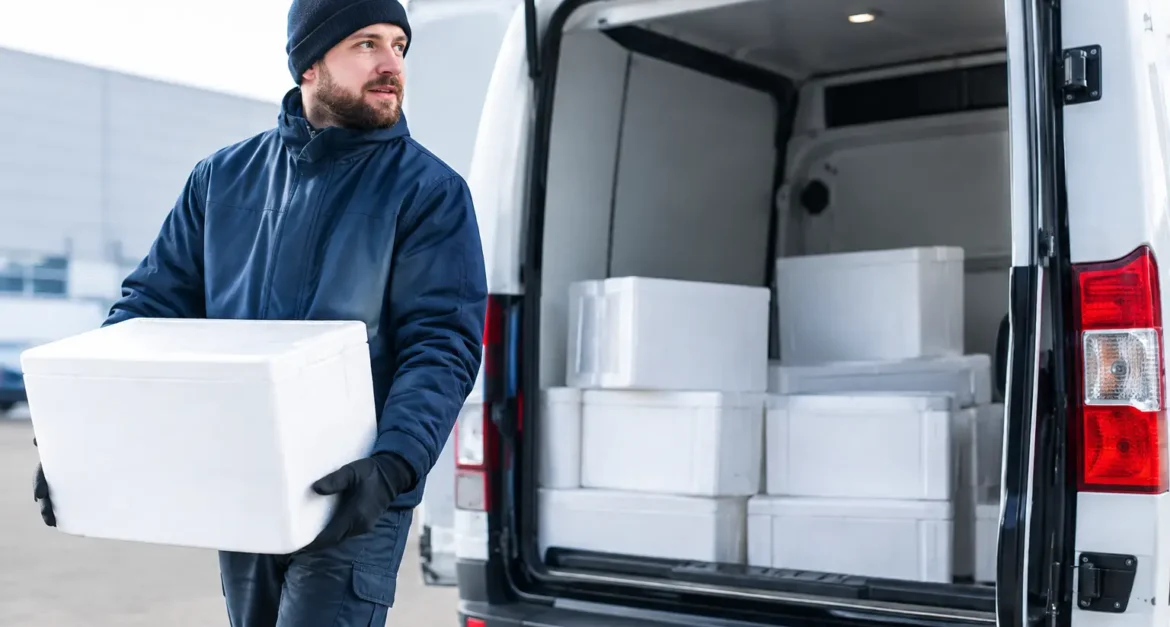
A frozen consignment does not get a second chance. Once a delivery falls outside its required temperature range, the consequences can extend far beyond a rejected pallet: wasted stock, disrupted service, lost revenue and questions about compliance. For businesses that depend on frozen delivery Birmingham, transport must be planned around product protection from collection through to proof of delivery.
Birmingham is a major distribution hub, but its road network, delivery restrictions and time-sensitive commercial routes make cold-chain execution demanding. Whether you are replenishing retail sites, supplying hospitality venues, moving frozen ingredients to production facilities or managing healthcare-related products, the right carrier provides more than a refrigerated vehicle. They provide control, visibility and a clear response when plans change.
Why frozen delivery in Birmingham needs specialist control
Frozen goods are often required to remain at or below a defined set point, commonly -18°C for food products, subject to the product specification and your quality procedures. The precise temperature matters, but so does the consistency of the environment around the goods. Repeated door openings, unnecessary waiting time, poor loading discipline and a vehicle that has not been pre-cooled can all put the cold chain under pressure.
Birmingham adds operational variables that need to be accounted for before a vehicle leaves site. Congestion around the city centre, timed access at retail parks, tight unloading arrangements and restricted delivery windows are routine realities. A dependable frozen delivery plan builds these factors into the schedule rather than treating them as unexpected obstacles.
For a food wholesaler, a delay may mean a customer cannot meet the next day’s trading demand. For a restaurant group, it can create an immediate menu and staffing issue. For a manufacturer, a missed collection can interrupt production. The service must therefore balance route efficiency with sufficient contingency to protect both the temperature profile and the agreed delivery time.
What a controlled frozen delivery service should include
A standard parcel or general freight service is rarely designed for frozen distribution. The vehicle, operating processes and communication all need to reflect the sensitivity of the load.
Temperature-controlled vehicles and pre-cooled loading
The vehicle should be suitable for the load type, volume and target operating temperature. Before goods are loaded, the cargo area needs to be brought to the correct temperature. Loading frozen product into a warm compartment creates an avoidable risk at the first point of the journey.
Vehicle capacity also matters. An under-specified van may not maintain stable conditions through a long, multi-stop route, while an oversized vehicle can add unnecessary cost to a small urgent consignment. The right solution depends on pallet count, packaging, journey length, the number of drops and how frequently the doors will be opened.
Real-time temperature monitoring and traceability
A temperature-controlled delivery should not depend on assumptions. Digital monitoring gives operations teams a record of conditions during transit and allows potential issues to be identified early. Combined with GPS tracking, this gives full visibility of where the consignment is and how it is being protected.
For regulated or high-value goods, records are not simply reassuring. They form part of the evidence that agreed handling standards were followed. Ask a provider how data is captured, whether alerts are available and how temperature information can be retrieved after delivery. The answer should be clear and practical, not vague.
Trained handling at every handover
Cold-chain integrity can be lost in minutes during poor handling. Drivers need to understand loading sequences, door management, segregation requirements and the importance of reducing dwell time at collection and delivery points. A delivery team should also know what to do if site access is delayed, a receiving bay is unavailable or a temperature concern is identified.
The strongest process is one where responsibility is visible at every handover. Goods are checked at collection, secured correctly, monitored in transit and delivered with clear confirmation. This supports product quality while giving your team a reliable chain of accountability.
Choosing the right delivery model for your operation
There is no single frozen transport model that suits every Birmingham business. The right option depends on the commercial impact of a delay, the volume being moved and the complexity of the final-mile delivery.
A dedicated same-day vehicle is often the right choice for urgent replenishment, a production-critical ingredient or an exceptional customer order. The vehicle and driver are assigned to your consignment, reducing handling points and allowing a direct response to changing instructions. It is usually more costly than a shared route, but the reduced risk can make it the more economical decision when stock availability or service continuity is at stake.
For regular distribution, planned multi-drop delivery can offer better cost control. This requires careful route design, sensible drop sequencing and a vehicle capable of maintaining the required temperature despite multiple door openings. It works well for retail, foodservice and hospitality networks when delivery windows are known and volume is consistent.
Dedicated day-rate vehicles provide another useful option for businesses with fluctuating needs. Instead of committing to a permanent fleet, you gain access to a controlled vehicle and driver for the operating day. This can support seasonal peaks, new contracts, pop-up events or periods when your own capacity is unavailable.
Questions to ask before booking frozen delivery Birmingham services
The lowest quote does not always represent the lowest operational cost. A delivery that arrives late, lacks temperature evidence or requires emergency replacement stock can quickly outweigh a small saving on transport. Procurement and operations teams should assess a provider against the real risks of the load.
Start with temperature capability. Confirm the operating range required, the type of monitoring used and whether the provider can supply the records your quality system needs. Then consider collection and delivery timing: can they meet your booking slot, communicate delays promptly and provide a realistic contingency plan?
It is also worth discussing the delivery environment. Does the site have a loading bay, restricted access, a tail-lift requirement or strict rules on driver arrival? Are the goods palletised, loose-loaded or packed in insulated containers? The more detail supplied at the booking stage, the more accurately the transport operation can be planned.
Finally, look at scalability. A provider that can handle one urgent frozen pallet but cannot support a growing regional distribution programme may not be the right long-term partner. Businesses often need a mix of same-day response, scheduled routes, multi-temperature capability and nationwide reach as their requirements develop.
Reducing frozen stock risk before collection
The transport provider is a critical part of cold-chain protection, but preparation at dispatch has equal value. Product should be fully frozen before loading and packaged to withstand the journey. Damaged outer cases, poor pallet stability and unclear labels create handling risks that refrigeration alone cannot solve.
Clear instructions should travel with the booking. Include the required set point, collection contact, delivery window, site constraints, pallet dimensions, total weight and any special handling requirements. If a delivery is time-critical, say so from the outset. A carrier cannot protect a deadline that has not been communicated.
For regular movements, review delivery performance jointly. Look at on-time arrival, temperature records, waiting time, rejected deliveries and recurring access issues. This turns transport from a reactive cost into a controlled part of your supply chain. MT Logistics Group supports this approach with temperature-controlled vehicles, live tracking and responsive planning for frozen, chilled and multi-temperature consignments.
When speed and compliance must work together
Urgent frozen transport should never mean cutting corners. A same-day request still needs the correct vehicle, a suitable loading process and clear delivery instructions. The best response is fast because the operation is prepared, not because essential controls have been skipped.
This distinction matters most when plans change. A supplier may call with a short-notice collection, a depot may have a vehicle breakdown or a customer may need stock before a service period begins. With a specialist cold-chain partner, the response is based on confirming the product requirement, assigning the appropriate vehicle and keeping the customer informed throughout the journey.
Reliable frozen delivery is ultimately about protecting more than a load. It protects availability on shelf, continuity in the kitchen or factory, confidence in your quality process and the reputation your customers attach to every order. When your stock cannot thaw, your transport plan cannot be left to chance.