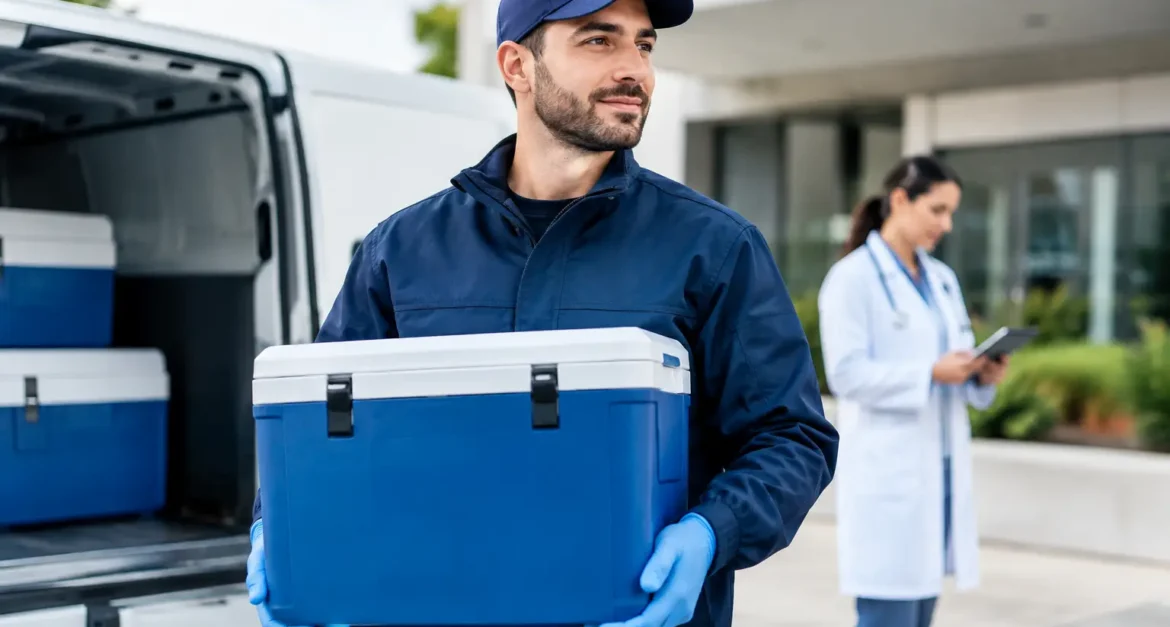
A vaccine delivery can arrive on time and still fail its purpose. If the required temperature was not maintained, the handling record is incomplete, or a delay was not escalated properly, the consignment may be unsuitable for use. That is why selecting the best vaccine courier services is not simply a matter of comparing collection times and delivery prices. It is a decision about product integrity, patient safety and regulatory confidence.
For pharmacies, healthcare providers, laboratories, distributors and clinical teams, the right courier provides control from collection through to documented delivery. The right choice depends on the product, its temperature range, its journey time and the consequences of a deviation.
What vaccine courier transport must protect
Vaccines are biological products with defined storage and handling requirements. Some require chilled transport, commonly within a tightly controlled range such as 2°C to 8°C. Others may have frozen or ultra-low temperature requirements. The specification must always come from the manufacturer, product licence and your quality procedures – not from a courier’s standard service description.
A capable provider plans transport around that specification. This includes selecting an appropriate vehicle or qualified packaging solution, confirming the required set point, allowing for loading and unloading time, and maintaining a clear chain of custody. It also means understanding that external weather, traffic disruption and repeated door openings can all affect temperature stability.
The delivery itself matters just as much. A vaccine cannot be left unsecured at a reception desk, in an unmonitored goods-in area or with an unauthorised person. Named contact arrangements, timed delivery windows and proof of handover protect the final stage of the cold chain.
Best vaccine courier services: the capabilities to assess
The strongest providers do not rely on a refrigerated vehicle alone. Refrigeration is only one control within a managed cold-chain process. When assessing vaccine courier services, look for evidence that the operator can plan, monitor, record and respond throughout the journey.
Validated temperature control
Ask how the vehicle or packaging solution is qualified for the intended temperature range and journey profile. A chilled vehicle may be suitable for one consignment but not another, particularly where a long route, multiple stops or an extended wait at delivery is expected.
You should also establish how temperature is monitored. Continuous digital monitoring is more useful than a manual check at collection and delivery because it gives a complete record of conditions during transit. Confirm whether reports can be supplied after delivery, how often data is recorded and how calibration of monitoring equipment is controlled.
There is no universal vehicle specification that makes a courier right for every vaccine. A dedicated chilled vehicle may offer the best control for urgent, high-value stock, while qualified passive packaging can be appropriate for a planned, lower-volume movement. The decision should be based on risk assessment, not convenience.
Traceability and live operational visibility
A critical consignment should never become a blind spot once it leaves site. GPS tracking, live vehicle status and proactive communication give logistics and quality teams the information needed to manage the delivery with confidence.
Visibility is especially valuable when delivery windows are narrow or when a hospital, pharmacy or clinic needs staff ready to receive the consignment. Ask whether the courier can provide real-time location updates, a named operational contact and immediate notification if the agreed delivery plan changes.
Traceability should extend beyond vehicle position. The records should clearly show collection time, collection condition, route milestones, temperature data, delivery time and recipient details. If a question is raised later, your team needs a defensible delivery record rather than an assumption that everything went to plan.
Trained handling and secure handover
Cold-chain performance can be lost during the shortest parts of a journey. Poor loading practice, doors left open during a stop or an unclear handover can create avoidable exposure. Drivers handling vaccines need clear instructions, product-aware training and escalation routes for exceptions.
Discuss practical arrangements before the first collection. Who is authorised to release the goods? Does the driver need site induction, identification or security clearance? Is there a delivery contact with a contingency contact if the first person is unavailable? These details prevent delays that may compromise product stability.
For high-risk or sensitive deliveries, a dedicated vehicle and direct route reduce handling points and competing priorities. Consolidated transport can be cost-effective, but it introduces additional stops and potential delay. The appropriate model depends on the required delivery time, temperature tolerance and value of the consignment.
Contingency planning that works under pressure
Traffic, vehicle issues and recipient delays are operational realities. What matters is how a courier identifies and controls the impact. The provider should have a clear process for responding to temperature alarms, route disruption, failed delivery attempts and vehicle breakdowns.
Ask what happens if a delay threatens the approved journey time. Can the operator contact your team immediately, use a replacement vehicle, arrange secure interim storage or return the consignment under controlled conditions? A vague assurance is not enough. You need a practical escalation plan with decision-makers available when the issue occurs.
The best response plans are agreed before the consignment is on the road. This includes defining notification thresholds, authorised contacts, alternative delivery locations and whether the product should be quarantined after a deviation. That preparation protects both speed and compliance.
Questions to ask before appointing a courier
Procurement should test the service in the same way quality and operations will rely on it. Begin with the product profile: temperature range, permitted journey duration, packaging requirements, delivery urgency and any manufacturer-specific handling instructions. Then ask the courier to explain how its operation meets each requirement.
Useful questions include whether temperature monitoring is continuous and calibrated, whether data can be retrieved for every movement, how drivers are trained, and how deviations are recorded and escalated. You should also ask about dedicated versus shared transport, service coverage, out-of-hours collections and the availability of urgent same-day support.
For pharmaceutical distribution, assess whether the courier understands Good Distribution Practice expectations and can work within your own quality agreement or standard operating procedures. A provider does not need to replace your quality function, but it must be able to support it with accurate records, controlled processes and prompt communication.
Before committing to a regular service, consider a controlled trial movement. Review the collection process, communication, temperature report, proof of delivery and response to any change in plan. This provides stronger assurance than a sales promise and helps both parties refine the operating procedure.
Avoid choosing on price or speed alone
Competitive pricing matters, particularly for regular distribution, but the cheapest quote can become the most expensive option if it creates a product hold, stock loss, missed clinic appointment or investigation. Similarly, an advertised rapid collection is only valuable when the courier can maintain the correct conditions and provide evidence that it did so.
A dependable service balances responsiveness with control. It confirms the transport requirement before collection, uses suitable equipment, keeps stakeholders informed and supplies the documentation needed to close the delivery properly. For recurring routes, consistency is often more valuable than a one-off promise of exceptional speed.
Building a dependable vaccine delivery process
The courier relationship should form part of your wider cold-chain procedure. Share clear booking information, including product requirements, collection and delivery contacts, access restrictions, required delivery time and escalation instructions. Review performance regularly, particularly after seasonal temperature changes, route alterations or changes to product portfolio.
MT Logistics Group supports time-critical, temperature-controlled transport with monitored vehicles, GPS visibility and documented delivery processes across the UK. For vaccine movements, the operational objective remains straightforward: protect the product condition, maintain traceability and keep every responsible team informed.
The most suitable vaccine courier is the one that can demonstrate control before collection, during transit and at handover – then provide the records to prove it. That level of assurance gives your team the confidence to focus on the patients, services and commitments depending on the delivery.