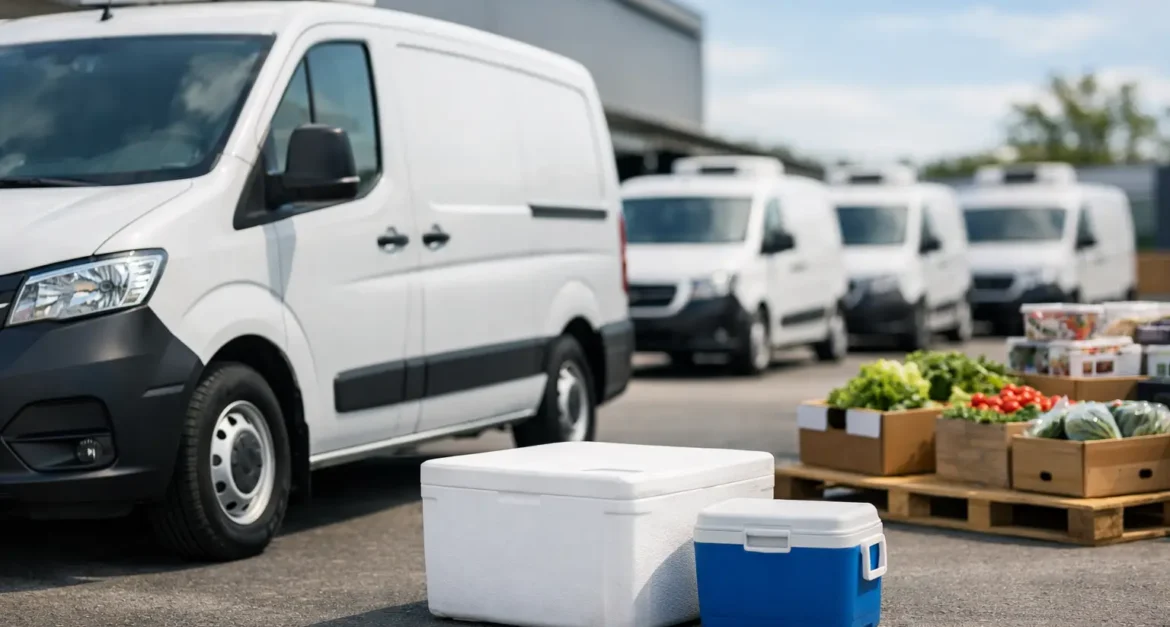
A fridge van is not simply a delivery vehicle with a cooling unit. For businesses moving chilled food, frozen stock, medicines or other temperature-sensitive goods, it is a controlled transport environment. The vehicle selected, the temperature setting, the loading process and the evidence recorded during transit can all affect product quality, compliance and the customer’s confidence in your operation.
When a delivery fails, the cost is rarely limited to a replacement order. It can mean wasted stock, missed retail availability, disrupted production, rejected consignments and difficult conversations with customers or regulators. Choosing the right refrigerated transport partner starts with understanding what the load genuinely requires.
What a Fridge Van Is Designed to Do
A fridge van maintains a specified temperature range while goods are collected, transported and delivered. It is commonly used for chilled goods, but the right vehicle and refrigeration specification can also support frozen, ambient-controlled and multi-temperature consignments.
The key point is control. A suitable vehicle should be capable of reaching and holding the required setpoint for the full journey, including delays, frequent door openings and multidrop work. It must also have enough usable capacity for the consignment without restricting airflow around the load.
For short local journeys, a compact refrigerated van may be appropriate for fresh produce, dairy, prepared food or pharmacy deliveries. For national distribution, higher-volume loads or demanding delivery schedules, a larger refrigerated vehicle may provide the capacity, refrigeration performance and loading access needed to protect the shipment properly.
Start With the Required Temperature Range
The required temperature is the first operational decision, not an afterthought. Different products have different handling requirements, and a vehicle that is suitable for chilled goods may not be suitable for frozen stock or pharmaceuticals requiring a tightly controlled range.
Chilled food often needs to be maintained within a specified range set by the product, customer or food safety plan. Frozen goods need the vehicle to sustain much lower temperatures, particularly when routes involve several stops. Medical and pharmaceutical consignments can require validated handling procedures, continuous monitoring and a clearly defined response if a temperature excursion occurs.
Do not rely on a broad instruction such as “keep it cold”. Confirm the target range, acceptable tolerances, pre-cooling requirement, journey length, delivery sequence and whether the goods can share space with other products. These details determine the correct vehicle, operating method and documentation.
Chilled, Frozen and Ambient Loads Need Different Planning
A chilled load may be compromised by extended door-open periods on a busy multidrop route. Frozen goods may require a vehicle with stronger refrigeration performance and disciplined loading practices to prevent heat entering the cargo area. Controlled ambient products may need protection from excessive heat or cold rather than conventional refrigeration.
The answer is not always a larger vehicle. Oversized capacity can be inefficient for small, urgent consignments, while an undersized vehicle may leave insufficient room for safe loading and airflow. The right fridge van matches the consignment and route, rather than forcing the consignment into the nearest available vehicle.
Capacity, Airflow and Loading Matter as Much as Cooling
Refrigeration units cool the vehicle’s cargo area, not every carton individually. Cold air must circulate around the goods. If a load is packed tightly against vents, stacked too high or loaded before the compartment has reached temperature, the product may not remain within the required range.
This is especially relevant for mixed pallets, insulated packaging and high-density deliveries. A transport plan should account for product dimensions, pallet count, weight distribution, loading equipment and the order in which consignments will be unloaded. The first delivery on the route should not require unloading half the vehicle to reach it.
For businesses supplying restaurants, retailers and hospitality sites, delivery windows can be just as critical as temperature. A fridge van may be technically capable of carrying the load, but the operation also needs to allow for site access, waiting time, tail-lift requirements and a practical unloading process.
Why Real-Time Monitoring Provides Control
A temperature display on the refrigeration unit is useful, but it does not provide a complete record of what happened during the journey. For compliance-driven or high-value loads, real-time digital temperature monitoring gives operations teams greater visibility and a defensible audit trail.
Monitoring should show whether the cargo area remained within the agreed range from collection to delivery. GPS tracking adds another layer of control by confirming vehicle location, route progress and estimated arrival time. Together, these systems allow the carrier and customer to act early if a delay, route issue or temperature concern develops.
The value is not only in proving that a delivery was completed. It is in managing risk while the goods are still in transit. If a problem is identified promptly, the team can assess the situation, communicate clearly and take the most appropriate action before a minor issue becomes a rejected load.
Traceability Supports Food and Healthcare Compliance
For food distribution, temperature records support due diligence and help demonstrate that chilled or frozen products were handled in line with agreed requirements. For healthcare and pharmaceutical distribution, traceability can be central to product integrity, quality systems and customer acceptance.
The level of evidence needed depends on the product and contractual requirements. A same-day delivery of catering stock and a time-critical medical consignment may both travel in refrigerated transport, but their monitoring, documentation and escalation procedures may differ significantly. A specialist provider should understand that distinction before collection takes place.
Consider the Delivery Profile, Not Just the Mileage
Two jobs covering the same number of miles can require very different fridge van operations. A single direct delivery usually exposes the load to fewer door openings and less handling. A multidrop route serving supermarkets, cafés or regional depots creates more opportunities for temperature fluctuation, delay and loading errors.
Route planning should consider traffic patterns, collection readiness, delivery slots, driver hours, depot access and contingency time. Time-critical transport needs a realistic plan, not a best-case estimate. If a delivery must arrive before a production cut-off or event opening, the carrier should understand the consequence of missing that window.
Dedicated day-rate vehicles can be a practical option where demand changes daily, urgent collections are frequent or the business needs a responsive extension of its own fleet. They provide flexibility without the fixed overhead of purchasing, maintaining and operating additional refrigerated vehicles internally.
When Multi-Temperature Capability Is Worth It
A multi-temperature fridge van is useful when a business needs to carry products with different thermal requirements on the same route. This may include chilled ingredients alongside frozen goods, or temperature-controlled products that must be segregated for quality, hygiene or operational reasons.
It is not automatically the best choice for every load. Multi-temperature capability can add cost and reduce available space, so it should be used where it solves a genuine distribution problem. The decision should be based on the products, quantities, route frequency and whether separate deliveries would create unnecessary time, cost or handling risk.
For mixed-load operations, clear consignment information is essential. The transport team needs to know what each product requires, where it should be positioned and which delivery point it is assigned to. Assumptions made at loading are difficult to correct once the vehicle is on the road.
Questions to Ask Before Booking a Fridge Van
Before committing to a provider, establish whether the vehicle can maintain your required temperature throughout the planned route, not merely at collection. Ask how temperature is monitored, what records are available after delivery and what action is taken if a deviation or vehicle issue occurs.
You should also confirm the vehicle’s practical payload and internal dimensions, whether it is suitable for pallets or roll cages, and whether a tail-lift, timed delivery or specialist handling is required. If your load is regulated, ask about the relevant procedures, driver awareness and chain-of-custody requirements.
Reliability also comes down to communication. A responsive transport partner should provide accurate collection and delivery updates, flag risks early and give your team full visibility when the load is time-critical. MT Logistics Group supports temperature-controlled transport across the UK with refrigerated vehicles, live monitoring and traceable delivery management for chilled, frozen, ambient and multi-temperature goods.
The best fridge van arrangement is the one that makes the critical details routine: the right temperature, the right capacity, a realistic route and evidence that the load stayed protected. When those controls are agreed before collection, your team can focus on serving customers rather than chasing a delivery.