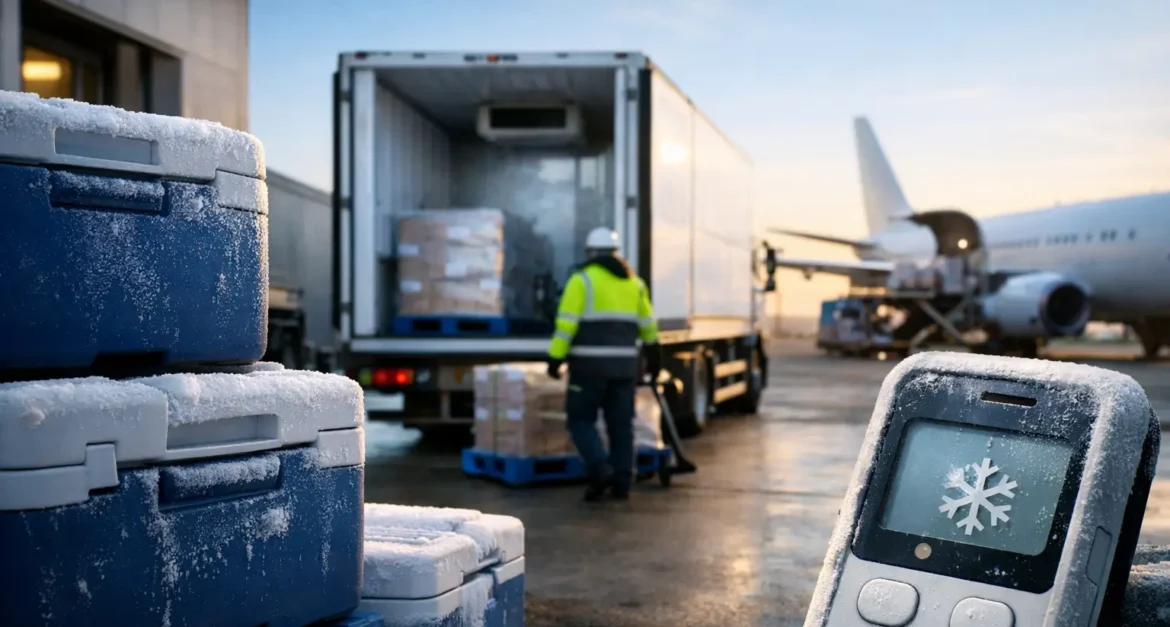
A temperature reading that arrives after a delivery has been signed for is no longer enough. Cold chain trends 2026 point towards a higher standard: live control, documented evidence and the ability to act before a product, patient service or production schedule is put at risk.
For UK food, pharmaceutical and healthcare operators, the priority is not adopting technology for its own sake. It is building a transport operation that protects product integrity under real conditions: traffic delays, waiting time at sites, mixed loads, changing weather and tight delivery windows. The businesses that prepare well will treat cold-chain performance as an operational discipline, not a box-ticking exercise.
Cold chain trends 2026: control must be live
Real-time temperature monitoring is becoming a baseline expectation for sensitive freight. The more meaningful change is what operators do with the information. A system that records a deviation is useful for an investigation. A system that alerts the transport team early enough to check the vehicle, adjust the route, protect the load and inform the customer can prevent a costly incident.
This puts greater focus on exception management. Every alarm should have a defined response: who receives it, what they check, when an escalation is required and how the action is recorded. For a frozen food load, the response may centre on vehicle performance and door openings. For medicines or clinical materials, the approved temperature range, product stability data and quarantine process may require a more tightly controlled decision.
The trade-off is clear. More sensors and more data do not automatically create more control. Poor alert settings can overwhelm a transport desk with notifications, while gaps in mobile coverage can create false confidence. The objective is reliable, calibrated monitoring supported by people who understand what each alert means and can respond without delay.
Proof of condition will matter as much as proof of delivery
Customers increasingly need more than a signature and a delivery time. They need an auditable record that shows the goods remained within the required conditions throughout collection, transit and handover. This is particularly relevant where a temperature excursion could lead to waste, a product recall, rejected stock or a compliance investigation.
In 2026, transport providers will be judged on the quality of this evidence. That includes temperature records, GPS location data, vehicle and driver checks, collection and delivery timestamps, and a clear chain of custody. For pharmaceutical distribution, this must support Good Distribution Practice requirements and the customer’s own quality procedures. For food businesses, it supports HACCP controls, supplier assurance and faster resolution when a question is raised.
The key is to agree the reporting standard before the first load moves. A retailer receiving chilled products may need route-level data and delivery confirmation. A laboratory moving high-value samples may need tighter reporting, defined escalation points and a documented handover process. One format will not suit every product or risk profile.
Validation moves beyond the vehicle specification
A refrigerated lorry can be capable of holding a set temperature, but that does not by itself prove that the full transport process is suitable for a specific product. Validation will increasingly cover the actual operating environment: loading duration, door openings, number of drops, route distance, summer temperatures, waiting time and the effect of adjacent temperature zones.
This is especially important for multi-drop and multi-temperature distribution. A vehicle may carry chilled, frozen and ambient products on the same route, yet each compartment has different controls and risks. Repeated access to one zone, a late customer booking-in slot or an incorrect loading sequence can affect the conditions of the whole delivery operation.
Operators should review whether their existing vehicle configuration matches their route profile. A dedicated frozen run has different requirements from a mixed hospitality route serving several sites within a narrow window. The best solution may be compartmentalised transport, revised loading plans, a different delivery sequence or dedicated day-rate capacity. It depends on the product, volume, delivery frequency and the consequences of a deviation.
Validation also requires disciplined pre-trip checks. Refrigeration equipment, door seals, temperature settings, fuel or power status, calibration records and load securing should be verified before collection. Finding an issue at a customer site is too late. Preventive checks remain one of the most practical ways to protect a cold chain.
Resilience will be planned, not improvised
Supply chain disruption is no longer an occasional event. Congestion, road closures, port pressure, weather events, staffing gaps and late-running collections can all compromise a carefully planned route. In 2026, customers will expect logistics partners to show how they maintain service when the original plan changes.
That means having practical contingency measures in place. Alternative vehicles, reserve drivers, route visibility, responsive control teams and realistic capacity planning all play a part. It also means being honest about the service required. A same-day pharmaceutical collection with a fixed receiving window needs a different operating model from a next-day frozen pallet delivery.
For time-critical work, speed must not displace control. An urgent vehicle should still be correctly pre-conditioned, the consignment should be checked at collection, and the delivery team should have clear instructions on temperature requirements and recipient availability. Fast transport without documented handling creates a different form of risk.
Businesses should also examine their own part in resilience. Clear booking information, accurate collection readiness times, agreed delivery windows and named site contacts give a carrier a stronger chance of protecting the load. Cold-chain reliability is shared across the handover points, not created solely by the vehicle on the road.
Sustainability decisions will be judged by operational reality
Pressure to reduce transport emissions will continue to shape fleet decisions. Electric refrigerated vehicles, lower-emission refrigeration systems, route consolidation and reduced empty mileage all have a role. However, the right approach depends on duty cycle and thermal demand.
Electric vehicles can be a strong fit for predictable urban or regional routes where charging time, payload and range are compatible with the work. They may be less suitable for longer-distance, high-utilisation operations or intensive multi-temperature routes until charging infrastructure and vehicle capability align with the required service level. The refrigeration unit’s energy use must be assessed alongside the vehicle itself.
The immediate opportunity for many operators is better planning. Higher vehicle utilisation, sensible route design, reduced waiting time and fewer failed deliveries lower emissions while also protecting margins. Consolidation can be effective, but only when it does not create excessive dwell time, additional door openings or delivery delays that increase product risk.
Sustainability should therefore be measured alongside temperature performance, on-time delivery and product waste. A lower-emission plan that increases spoilage or failed deliveries is not a successful cold-chain outcome.
Segmented service models will replace one-size-fits-all transport
The needs of food, healthcare, hospitality and specialist manufacturing are becoming more distinct. Food wholesalers may need regular multidrop delivery with carefully managed chilled and frozen zones. Pharmacies and medical distributors may require validated transport, named handovers and full traceability. Restaurants and QSR sites may need urgent replenishment when stock shortfalls threaten service.
This will increase demand for flexible capacity models. Dedicated day-rate vehicles can give businesses control during seasonal peaks, promotions, production changes or periods of unstable demand. They are also useful where a standard network service cannot provide the required collection time, delivery sequence or level of load separation.
For some operations, a scheduled distribution model remains the most efficient option. For others, the cost of a missed delivery window is greater than the cost of a dedicated vehicle. The right decision should be based on product value, shelf life, delivery criticality and the commercial impact of failure, rather than simply the lowest transport rate.
Data will strengthen customer and carrier relationships
Better cold-chain data changes conversations. Instead of debating whether a consignment arrived correctly, both parties can review the journey record, identify where time was lost and agree improvements. Over time, this supports more accurate route planning, better delivery slot management and clearer service-level expectations.
The value comes from using the data consistently. Monthly reviews should look beyond headline on-time performance. They should consider temperature alerts, dwell time, failed delivery causes, recurring access issues, vehicle utilisation and the reasons behind urgent requests. These details reveal where preventable risk is building.
For customers moving regulated or high-value goods, shared reporting also creates confidence during audits and supplier reviews. Evidence should be clear enough to answer a straightforward question: were these goods handled in the required conditions, by the agreed process, from collection to delivery?
The practical next step is to review the journeys that cause the most concern, not only the ones that run smoothly. Identify the routes with the tightest windows, most frequent alerts, highest-value loads or greatest exposure to delay. A specialist partner such as MT Logistics Group can then help shape a transport plan that gives your team full visibility, reliable temperature control and peace of mind when the next critical consignment leaves site.