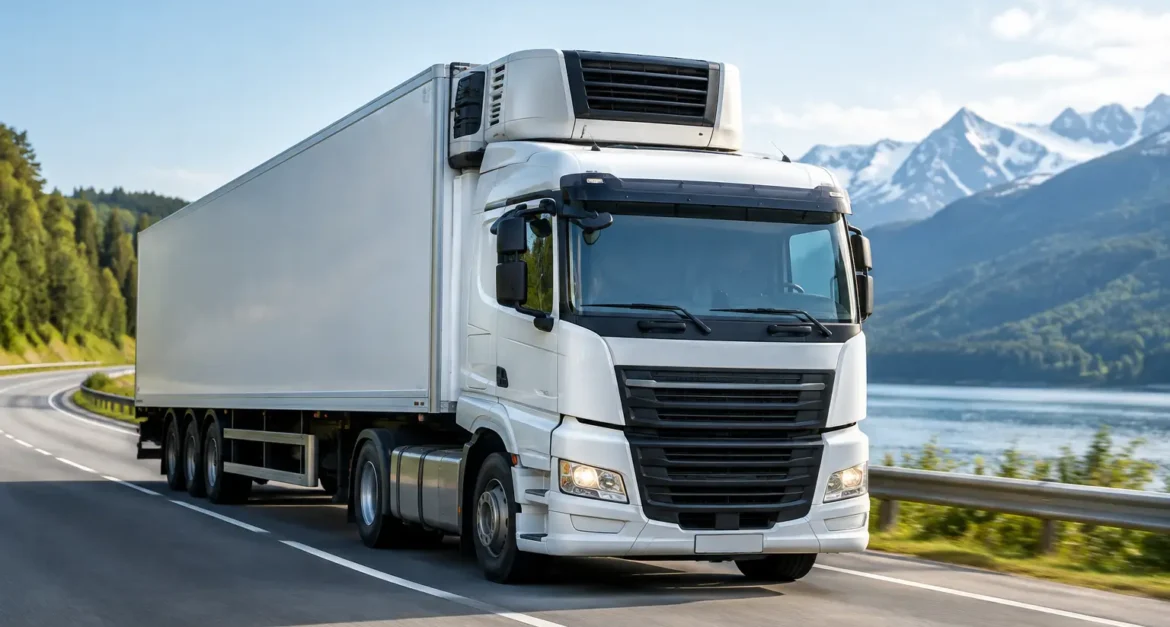
A steep climb can place a refrigerated vehicle under sustained engine load. A long descent can affect braking, journey timing and access to a delivery point. For businesses moving chilled food, frozen stock, medicines or other sensitive goods, hilled transport is not simply a driving consideration. It is a cold-chain planning issue that must be managed before collection.
The objective remains clear: goods must arrive within their required temperature range, on time, with a complete record of the journey. Achieving that outcome on hilly, rural or restricted-access routes requires the right vehicle, a realistic route plan and active control throughout transit.
Why hilled transport needs specialist planning
Hills add variables that are less visible on a flat, direct route. Vehicles may travel more slowly uphill, use more fuel and face greater strain in warm weather. Tight bends, narrow lanes and weight restrictions can remove otherwise suitable routes from the plan. In winter, steep approaches may be affected by ice, snow or local road closures.
For a standard consignment, an unexpected delay may be inconvenient. For a temperature-sensitive load, it can increase the risk of missed delivery slots, door-open exposure and temperature deviation. This matters particularly for fresh produce, dairy, meat, frozen foods, pharmaceutical products and clinical supplies where product quality, shelf life or compliance may be at stake.
A reliable transport provider does not treat the refrigeration unit as a substitute for planning. The unit protects the load, but its performance depends on correct pre-cooling, suitable set points, effective loading and a journey plan that accounts for real operating conditions.
Route planning beyond the fastest journey
The shortest route is not always the most dependable route. A navigation system may favour a steep rural lane, a low bridge, a road with seasonal restrictions or an unsuitable approach to a distribution site. For hilled transport, route selection should consider vehicle dimensions, gross weight, gradient, turning space and the practical access arrangements at both ends of the journey.
Time allowances also need to be realistic. A vehicle carrying a controlled load should not be forced to recover time through rushed driving or unnecessary stops. Planned contingency protects service levels when traffic, weather or a restricted route changes the schedule.
Delivery-point access matters
Many operational problems begin in the final mile. A hospitality site on a hill, a pharmacy within a busy town centre or a rural care setting may have limited unloading space and fixed receiving hours. The vehicle may need to reverse safely, negotiate an incline or wait for a loading area to become available.
These details should be established before dispatch. Knowing whether there is a safe bay, a level unloading area, site contact and agreed arrival window reduces dwell time. It also limits the period for which vehicle doors are open, helping maintain the temperature-controlled environment around the load.
Weather changes the risk profile
Rain, high winds and cold weather can all affect hilly routes. On a steep road, poor weather can slow traffic rapidly or make access temporarily unsafe. Heat can also matter: high ambient temperatures increase the cooling demand on the vehicle, especially where there are multiple deliveries and frequent door openings.
The appropriate response depends on the product, route and delivery commitment. It may mean an earlier departure, a revised route, additional journey time or a different vehicle allocation. What matters is making that decision proactively, with the customer informed where a delivery plan needs to change.
Temperature control must continue at every stage
A cold chain is only as strong as its weakest point. Temperature performance is influenced not only by the vehicle but by how goods are prepared, collected, loaded, transported and handed over. A properly managed operation begins with confirming the product requirement: chilled, frozen, ambient-controlled or a defined multi-temperature specification.
The vehicle should be pre-conditioned before loading so the cargo space is at the required operating range. Goods should be presented at the correct temperature, with packaging suitable for the journey and airflow. Loading must not obstruct air circulation from the refrigeration system. Overloading, poor pallet placement or incompatible product positioning can create warmer or colder zones within the body.
For mixed loads, compartmentalised or multi-temperature capability is often essential. Chilled ingredients, frozen products and ambient-controlled items cannot be managed as an afterthought in the same space. They require defined segregation, suitable set points and a loading sequence that supports the planned delivery order.
Visibility turns control into evidence
When products are sensitive, reassurance should be supported by data. Real-time temperature monitoring and GPS tracking give operations teams visibility over the vehicle and its environment during the journey. If an issue is identified, the response can begin while the vehicle is still in transit rather than after delivery.
Temperature records also provide an auditable account of the transport stage. This is valuable for food businesses protecting shelf life and quality, as well as pharmaceutical and medical organisations operating under strict handling procedures. The level of documentation required will vary by product and customer protocol, but traceability should never be vague.
A complete transport record may include collection and delivery times, temperature data, route status, proof of delivery and exception reporting where relevant. For higher-risk consignments, clear escalation processes are equally important. Teams need to know who assesses a deviation, what action is taken and how the customer is notified.
Vehicle choice affects reliability on hills
The best vehicle is not necessarily the largest available vehicle. A larger refrigerated lorry may offer capacity for regional distribution, yet be unsuitable for narrow roads or constrained premises. A smaller refrigerated van may access difficult sites more easily, but it must still provide sufficient payload, temperature capability and loading protection for the consignment.
Vehicle selection should balance five practical factors:
- the required temperature range and whether separate compartments are needed;
- payload, pallet count and product dimensions;
- route gradients, restrictions and delivery-point access;
- delivery urgency, including same-day or timed requirements; and
- the number of stops and expected door-open activity.
For multidrop work, the delivery sequence is particularly important. A route that appears efficient on a map may create repeated door openings, extended dwell time or avoidable backtracking on steep terrain. A well-built route protects both product condition and driver safety.
Driver capability is part of cold-chain performance
Refrigerated transport relies on experienced drivers who understand more than the road. They need to recognise the importance of maintaining vehicle conditions, following loading instructions, reporting delays promptly and protecting the consignment during collection and delivery.
On hilly routes, safe driving discipline is central. Smooth progress, correct use of gears, appropriate downhill control and safe positioning all help maintain the planned journey. Drivers also need the confidence to raise an issue early if access is unsafe or a delay is likely to affect a time-critical delivery.
This is where communication makes a measurable difference. A customer should not discover a disruption only after a missed delivery. Early updates allow receiving teams to prepare, production sites to adjust and alternative arrangements to be considered where necessary.
A practical approach to booking hilled transport
When requesting temperature-controlled transport for a challenging route, provide the product temperature requirement, collection and delivery postcodes, consignment size, number of drops and delivery window. It is also helpful to flag steep access, narrow roads, restricted sites, tail-lift requirements, booking procedures and any special handling instructions.
From there, the transport plan can be built around the actual operating requirement rather than an assumption. That may involve a dedicated vehicle for an urgent consignment, a multi-temperature service for mixed goods or a planned multidrop run for regular deliveries. The right option depends on risk, volume, urgency and the cost of failure.
MT Logistics Group plans temperature-controlled journeys with these operational details in view, combining suitable refrigerated vehicles, live monitoring and full journey visibility. The aim is straightforward: protect the load, maintain compliance and keep your delivery schedule under control.
If your route includes steep terrain, restricted access or demanding delivery windows, treat that information as part of the product specification. The more accurately the journey is planned before collection, the more confidently your goods can move from vehicle to destination without compromise.