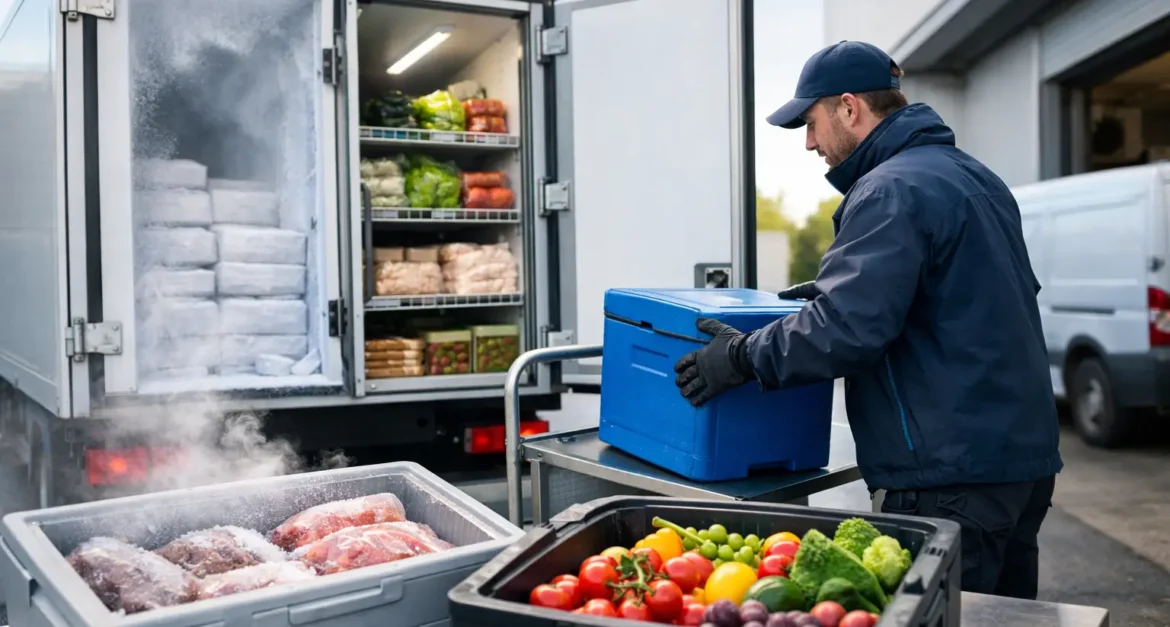
A mixed consignment can fail long before it reaches its destination. Frozen products may soften while chilled ingredients warm during repeated door openings, or ambient stock may be exposed to conditions outside its specified range. A multi temperature courier service is designed to prevent that risk by carrying goods at their required temperatures within one controlled, traceable operation.
For food wholesalers, pharmaceutical distributors, hospitality groups and manufacturers, this is not simply a transport choice. It is a way to protect product quality, meet delivery commitments and keep the cold chain under control when one vehicle needs to serve several product categories or delivery points.
What a multi temperature courier service does
A multi temperature service moves chilled, frozen and ambient goods in the same vehicle while maintaining separate temperature conditions for each consignment. This is typically achieved through partitioned load areas, independently controlled compartments and a vehicle specification matched to the cargo profile.
The operational value is clear. Rather than arranging separate vehicles for frozen, chilled and ambient stock, businesses can consolidate compatible deliveries into one planned route. That can reduce handling, simplify booking and help keep store, kitchen, clinic or warehouse replenishment on schedule. The right solution, however, depends on the products, required ranges, load volume, route duration and delivery windows.
Why mixed-temperature loads need specialist control
Temperature-controlled distribution is not solved by putting refrigerated goods into a refrigerated vehicle. Different products have different tolerances, and every collection, stop and handover creates a potential point of deviation. A specialist operator plans around those risks before the vehicle leaves.
Separate conditions for different product types
Frozen stock may need to remain at or below a defined frozen range, while dairy, fresh produce or prepared foods require chilled conditions. Some medical products may have narrow validated ranges, and ambient goods may need protection from excessive heat or cold rather than refrigeration. Placing all of these products in one uncontrolled load area can compromise at least one of them.
A properly configured vehicle keeps the required zones separate. The compartment arrangement must also allow for safe loading, airflow and access at each stop. Overpacking a compartment or blocking circulation can undermine temperature performance, even when the refrigeration unit is operating correctly.
Traceability when the load is under scrutiny
For regulated, high-value or perishable products, temperature evidence matters as much as temperature control. Digital monitoring provides a record of conditions throughout the journey, while GPS tracking gives dispatch teams visibility of vehicle location and route progress.
If a customer asks when goods were collected, whether the delivery window was met or what conditions the consignment experienced, the answer should be supported by data rather than assumption. This protects the recipient, the supplier and the integrity of the wider supply chain.
Discipline at every delivery point
Multidrop routes are often where temperature risk increases. Doors open repeatedly, stock is moved between compartments and drivers work to strict booking slots. A late stop can affect the next one, especially for restaurants preparing for service, retailers awaiting replenishment or healthcare sites expecting urgent stock.
Experienced planning considers drop sequence, dwell time, access restrictions and the quantity being unloaded at each location. It also accounts for the fact that a city-centre delivery, a regional depot and a rural site create very different operational pressures.
When a multi temperature courier service is the right fit
This service is particularly useful where deliveries contain more than one temperature requirement and timing matters. A food distributor may send frozen lines, chilled meat and ambient packaging to several hospitality customers on a single run. A retailer may need mixed stock replenished across convenience locations. A medical supplier may require temperature-sensitive products and supporting ambient consumables delivered to the same destination.
It can also suit businesses managing fluctuating demand. Seasonal promotions, urgent replenishments, product launches and unexpected stock shortages do not always justify a permanent dedicated fleet. A responsive courier partner can provide the correct vehicle and temperature configuration when demand changes.
There are limits. If products have exceptionally narrow temperature requirements, need separate validated handling processes, or require large volumes in each range, dedicated transport may be the safer option. The goal is not to consolidate every load at any cost. It is to select a transport plan that protects goods without creating avoidable complexity.
What to confirm before booking
A reliable booking starts with accurate information. The courier needs to understand each product’s specified temperature range, not merely whether it is described as chilled or frozen. Collection and delivery times, pallet or parcel dimensions, total weight, number of drops and site access requirements all affect vehicle choice and route planning.
Clarify whether the goods need continuous monitoring, delivery temperature records, proof of delivery, security controls or a specific chain-of-custody process. For pharmaceutical and medical consignments, ask how the service supports your internal quality requirements and whether the vehicle and monitoring process are appropriate for the product profile.
You should also establish what happens if conditions change. Clear escalation procedures, live communication and a practical contingency plan are signs of a provider that understands time-critical work. Traffic, vehicle access issues and rejected deliveries can occur. The difference is how quickly the team identifies the issue and protects the consignment.
How the transport process should work
The strongest operations are controlled before collection, not improvised on the road. First, the load is assessed against its temperature bands, volume, priority and destination schedule. A suitable refrigerated vehicle is then allocated, with compartment capacity and temperature settings prepared for the consignment.
At collection, goods should be checked against the agreed requirements and loaded into the correct zone. During transit, live temperature and location monitoring support active oversight. Dispatch can track progress, respond to route disruption and keep customers informed where necessary.
At delivery, the driver completes the handover in line with site procedures, obtains proof of delivery and closes the journey with the relevant records available. For multidrop work, this process is repeated with the same care at every location. Consistency is what protects a route with ten stops just as effectively as an urgent direct delivery.
Choosing a provider for mixed-temperature distribution
Vehicle availability matters, but it should not be the only measure. Ask whether the provider has experience with your sector and understands the consequences of a temperature deviation. A general courier may be able to move a box from A to B; a cold-chain specialist is equipped to manage the conditions, evidence and urgency around that movement.
Look for real-time temperature monitoring, GPS visibility, clear communication and a fleet capable of supporting chilled, frozen, ambient and mixed loads. Confirm nationwide coverage if your deliveries extend beyond one region, and check whether same-day, next-day, multidrop and dedicated day-rate options are available when operating needs change.
Questions worth asking
Ask how temperature zones are separated, how readings are monitored, what documentation is supplied and who contacts you if an issue arises. It is also sensible to ask how drivers are briefed for your goods and delivery sites. The answers should be specific and operational, not generic assurances.
The value of one accountable partner
Using one specialist provider for collection, transport, monitoring and delivery reporting reduces the gaps that can appear when multiple parties handle a mixed load. It gives your operations team a single point of contact and a clearer view of responsibility from collection through to final handover.
Keep every temperature requirement in view
A multi temperature courier service should make mixed-load distribution more controlled, not more complicated. With the correct vehicle configuration, active monitoring and disciplined route management, businesses can move products with different requirements while maintaining full visibility and protecting the quality their customers expect.
MT Logistics Group supports temperature-sensitive, time-critical deliveries across the UK with specialist refrigerated transport and a practical focus on traceability, compliance and reliable execution. When your stock cannot absorb delays or compromise, the transport plan needs to be ready before the first item is loaded.