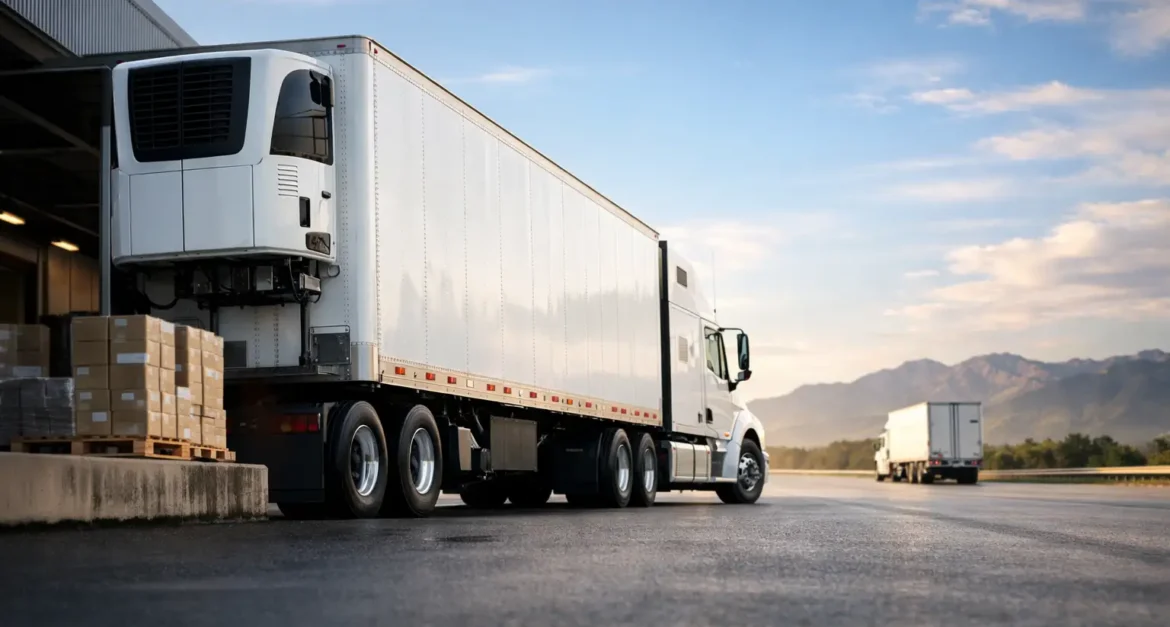
A missed delivery slot can leave a restaurant short for service. A temperature excursion can put a pharmaceutical consignment on hold. For businesses moving sensitive stock, nationwide refrigerated delivery is not simply transport between two postcodes – it is a controlled operation that protects product quality, safety and compliance at every point.
The right service must do more than provide a refrigerated vehicle. It needs to account for the product’s required temperature range, collection readiness, journey time, delivery restrictions, handling requirements and the evidence needed after delivery. When any one of these elements is overlooked, the commercial cost can be far greater than the cost of the load itself.
What nationwide refrigerated delivery needs to control
A refrigerated journey begins before the vehicle arrives. Goods need to be correctly packed, labelled and ready for loading within the agreed collection window. The vehicle must be suitable for the temperature requirement and pre-conditioned where necessary. Once loaded, the consignment needs to remain protected from collection through to proof of delivery.
For chilled food, the priority may be maintaining a narrow range while meeting early-morning retail or hospitality delivery slots. For frozen goods, the focus is on sustained sub-zero conditions, careful door management and avoiding delays that create unnecessary exposure. For medical, laboratory or pharmaceutical goods, a validated process, temperature records and clear chain-of-custody evidence may be essential.
These requirements change from job to job. A single urgent pallet for a hospital is not planned in the same way as a multi-drop route supplying restaurants across several regions. A dependable provider assesses the load and builds the transport plan around the risk, rather than treating every consignment as standard freight.
Temperature control is only one part of the cold chain
Refrigeration protects goods only when the full cold chain is properly managed. A vehicle can be operating at the correct set point while a poorly planned collection, excessive waiting time or unsuitable loading process still creates risk.
This is why real-time digital temperature monitoring matters. It gives the operator visibility of conditions throughout the journey and creates an auditable record. GPS tracking adds another layer of operational control, allowing teams to monitor route progress, react to traffic disruption and keep customers informed when timing is critical.
Traceability is particularly valuable when handling regulated or high-value stock. If a customer needs confirmation of collection, transit conditions and delivery, that information should be available without uncertainty. Full visibility supports faster decisions during an exception and provides the evidence needed to protect quality assurance processes.
The value of vehicle and route suitability
Not every refrigerated vehicle is right for every load. Load volume, pallet configuration, access restrictions and temperature needs all affect the vehicle choice. Sending an oversized lorry to a constrained city-centre site can create avoidable delivery problems. Equally, a vehicle with insufficient capacity or unsuitable compartment control can put the consignment at risk.
Multi-temperature capability is important for businesses moving products with different requirements in the same run. A wholesaler may need chilled ingredients, frozen lines and ambient packaged goods delivered together. With correctly managed compartments, those goods can travel in one coordinated operation without compromising their individual requirements.
Route planning also needs to reflect the reality of the delivery. Congestion, timed booking slots, driver access, loading-bay limitations and the order of multiple drops all influence temperature exposure and service performance. The shortest route is not always the most reliable route.
When speed matters, planning matters more
Same-day refrigerated delivery is often required because a supply chain has already experienced an interruption. A vehicle breakdown, stock shortfall, rejected load or last-minute event requirement can create an immediate problem. In these cases, rapid response is essential, but speed without control is not a solution.
A time-critical booking should establish the collection location, product type, quantity, temperature range, packaging, delivery deadline and site contact before the vehicle is dispatched. This allows the right vehicle and driver to be allocated from the outset, reducing the risk of a second delay caused by missing information or unsuitable equipment.
For planned next-day and recurring work, consistency becomes the priority. Regular lanes benefit from agreed collection cut-offs, delivery schedules, escalation contacts and documented handling instructions. This creates a more predictable operation for both the transport team and the receiving site.
Choosing a nationwide refrigerated delivery partner
The strongest logistics partner is not necessarily the one promising the lowest rate or the fastest collection in every situation. The right choice depends on the level of product risk, the delivery frequency, the geographic coverage required and the operational support your team needs.
Ask how temperature is monitored and recorded, not just whether a vehicle is refrigerated. Clarify whether the provider can support chilled, frozen, ambient and multi-temperature loads. For urgent work, establish how quickly they can allocate a suitable vehicle and how progress will be communicated. For regular distribution, review their ability to manage multi-drop routes, booked slots and changing volumes.
It is also worth examining how exceptions are handled. Delays can occur through traffic incidents, site closures or late-ready goods. A specialist operator should communicate early, assess the impact on the product and delivery commitment, then act decisively to protect the consignment. Silence or vague updates leave your operations team carrying unnecessary risk.
Dedicated vehicles versus shared distribution
There is a practical choice between dedicated transport and shared distribution. A dedicated vehicle gives greater control over timing, route, load security and handling. It is often the best option for urgent consignments, high-value products, sensitive pharmaceutical loads or sites with strict delivery windows.
Shared or consolidated distribution can be more cost-effective where volumes are lower and delivery timing is flexible. However, it requires careful planning, particularly where multiple drops, differing temperature requirements or long dwell times are involved. The appropriate model depends on the consequence of delay, not simply the number of pallets.
Dedicated day-rate vehicles can also give businesses useful flexibility during peak periods, seasonal demand or temporary fleet shortages. They provide access to refrigerated capacity without the fixed costs of owning and operating additional vehicles, while retaining direct control over the day’s collection and delivery priorities.
Protecting product integrity at the handover points
The collection and delivery handovers are among the most sensitive stages of a refrigerated movement. Goods may be moved through yards, loading bays or waiting areas where the temperature cannot be controlled. Clear coordination keeps these periods short and ensures that drivers, warehouse teams and receiving staff understand what is required.
At collection, the consignment should be checked against the booking details, including quantity, packaging condition and any special instructions. At delivery, proof of delivery should be captured promptly, alongside any relevant observations. If there is an issue with access, refusal or product condition, it needs to be recorded and escalated immediately.
For food businesses, this discipline helps reduce spoilage, waste and customer complaints. For pharmaceutical and healthcare supply chains, it supports quality systems and patient safety. Across every sector, it protects the reputation built into the product long before it reaches the vehicle.
Building a more dependable cold-chain operation
Reliable refrigerated transport is easier to achieve when logistics is treated as part of product quality rather than a final dispatch task. Share accurate forecasts with your transport partner, particularly around promotional activity, seasonal peaks and new site openings. Provide complete delivery instructions, including booking requirements, access limitations and named contacts.
Review performance using the measures that matter: on-time collection, on-time delivery, temperature compliance, exception response and proof-of-delivery accuracy. A low headline transport cost offers little value if a failed delivery creates waste, production downtime or a damaged customer relationship.
MT Logistics Group supports UK businesses with controlled refrigerated transport, real-time monitoring, GPS visibility and responsive support for planned and time-critical movements. The aim is straightforward: keep sensitive goods protected, keep stakeholders informed and keep the supply chain moving.
When your products cannot tolerate delay or temperature deviation, set the transport standard before the booking is made. Clear requirements, suitable equipment and accountable communication give every consignment the protection it deserves.