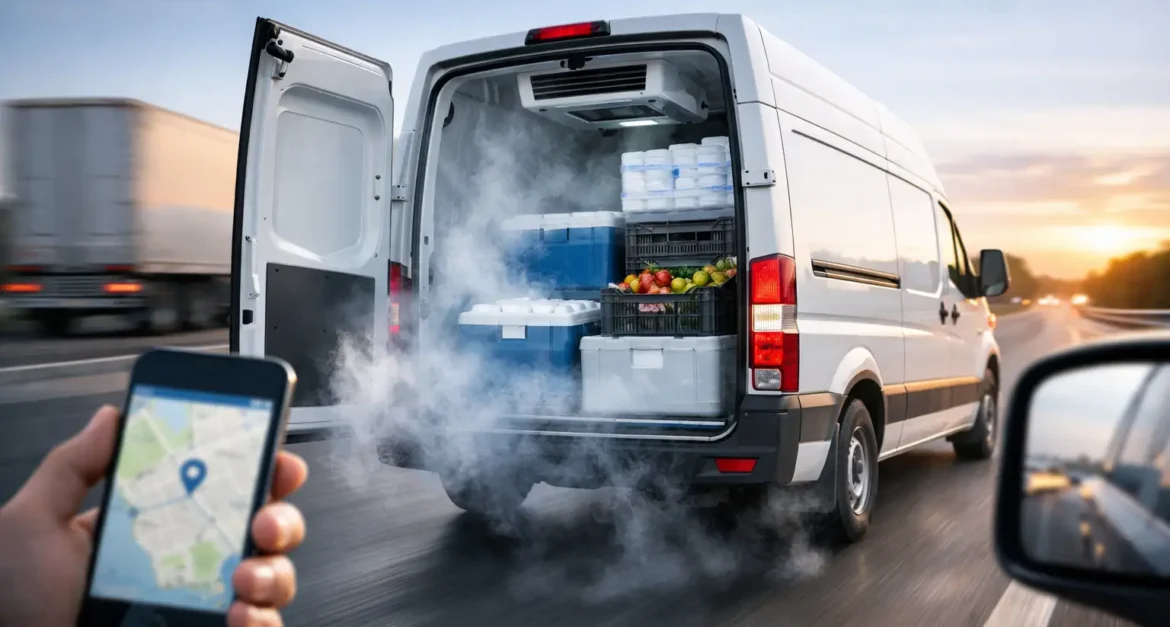
A rejected pallet, an empty pharmacy fridge or a missed production slot can become expensive within hours. Urgent refrigerated delivery is not simply a faster courier booking. It is a controlled response that protects the required temperature, confirms the delivery window and provides evidence of what happened throughout the journey.
For chilled food, frozen stock, medicines, samples and other sensitive goods, speed without temperature control creates a different kind of risk. The right response must keep products within their specified range while moving quickly enough to protect operations, compliance and customer confidence.
When urgent refrigerated delivery is the right response
Urgent temperature-controlled transport is needed when the commercial or clinical consequences of delay are immediate. A retailer may need stock replenished before a busy trading period. A restaurant group may need emergency replacement ingredients after a vehicle breakdown. A laboratory may have time-sensitive samples that cannot wait for a routine collection. A pharmaceutical distributor may need to prevent a supply interruption while maintaining a documented cold chain.
In these situations, a standard same-day courier is often not enough. Even if a vehicle can collect quickly, it may not have the correct refrigeration capability, temperature monitoring or handling process for the consignment. The question is not only, “Can it arrive today?” It is, “Can it arrive today in an acceptable condition, with full traceability?”
Urgent work also suits businesses facing short-notice changes: a failed fridge at a customer site, a delayed inbound consignment, an unexpected order spike or a production line waiting for a temperature-sensitive component. A dedicated refrigerated vehicle removes the uncertainty of consolidating a critical load with general freight.
Speed must not compromise the cold chain
The pressure to move quickly can encourage poor decisions. Loading goods into an unsuitable vehicle, leaving them on a loading bay while a driver is sourced or treating a chilled consignment as ambient freight can create temperature excursions before the journey has properly begun.
A reliable urgent refrigerated delivery plan starts at collection. The required set point, product type, packaging, quantity, collection readiness and delivery deadline should be confirmed before dispatch. This allows the correct vehicle and compartment arrangement to be allocated, particularly where chilled, frozen and ambient goods must travel separately.
Pre-cooling matters. A refrigerated vehicle should be operating at the required temperature before goods are loaded, rather than attempting to pull down product temperature during transit. Refrigeration maintains a controlled environment; it is not a substitute for correct product preparation or validated packaging.
Door openings also need managing. Each unnecessary opening introduces warmer air and places extra demand on the refrigeration unit. For high-risk or tightly controlled consignments, direct point-to-point transport with minimal handling is often the most appropriate option.
What a controlled urgent service should include
The strongest urgent response combines operational pace with evidence and accountability. At a minimum, businesses should expect a suitable temperature-controlled vehicle, a confirmed collection and delivery plan, live vehicle visibility and a clear proof-of-delivery process.
Real-time digital temperature monitoring is particularly valuable when product integrity must be demonstrated. It gives the transport team visibility while the consignment is moving and creates a record that can support internal quality procedures, customer assurance or investigation should an issue arise. GPS tracking adds a second layer of control by showing location and progress against the agreed delivery window.
The level of control should reflect the product and the risk. A pallet of chilled retail food and a consignment supporting a clinical supply chain may both require refrigeration, but their documentation, handling instructions and escalation requirements can differ considerably. A specialist provider should ask the right questions rather than apply a generic courier process.
Choosing the right vehicle and temperature setting
There is no single refrigerated vehicle specification that suits every urgent consignment. Vehicle choice depends on the load size, access restrictions, product temperature range, required delivery time and whether the delivery is direct or multidrop.
A small refrigerated van may be ideal for urgent samples, pharmacy deliveries or a limited number of food cases. Larger refrigerated vehicles are better suited to pallets, wholesale replenishment and time-critical transfers between depots or distribution centres. Where goods have different requirements, multi-temperature capability can protect chilled and frozen stock in separate controlled zones during the same movement.
Temperature requirements must be specific. “Keep it cold” is not an instruction a professional operator can work from. The transport team needs the required range, acceptable tolerances, any product-specific instructions and whether the goods must remain frozen, chilled, ambient-controlled or protected from excessive heat.
It also depends on route and timing. A short journey with multiple drops may create more exposure than a longer direct run, because each stop involves door activity and waiting time. For a critical consignment, the fastest route is not always the safest operational choice if it introduces access problems, congestion or unplanned handovers.
A practical process for urgent collection and delivery
When time is limited, clear information prevents avoidable delays. The booking process should establish collection and delivery addresses, site contacts, vehicle access, goods dimensions, weight, pallet count, required temperature, ready time and latest acceptable arrival time. Any booking references, security procedures or delivery restrictions should be identified at the outset.
Once a vehicle is allocated, collection should be coordinated around product readiness. Goods should be packed, labelled and available for loading, with the sender ready to confirm quantity and condition. If a collection point is not ready, an urgent vehicle can lose valuable time while the product sits outside its intended environment.
During transit, the operator should actively monitor progress and communicate early if a genuine disruption arises. Traffic, road closures and restricted delivery sites cannot always be avoided, but they can be managed through route planning, realistic timing and prompt escalation. Silence is not a contingency plan.
At delivery, the handover should confirm that the correct goods have reached the correct recipient within the agreed window. Proof of delivery, temperature records where required and any exception notes should be retained. This provides a complete chain of custody, not merely a completed journey.
Reducing repeat emergency transport costs
Urgent refrigerated transport is essential when circumstances demand it, but recurring emergencies may point to a wider planning issue. Frequent last-minute bookings can result from unreliable linehaul, insufficient safety stock, poor communication between sales and operations, or a lack of contingency capacity during peak periods.
That does not mean urgent services should be avoided. It means they should be built into a practical resilience plan. Businesses with regular temperature-controlled demand may benefit from agreed response procedures, known product profiles and access to dedicated day-rate vehicles when volumes or operational risk increase.
For hospitality, retail and food distribution, scheduled multidrop services can cover normal replenishment while a dedicated vehicle protects exceptional requirements. For pharmaceutical and medical customers, pre-agreed collection protocols and temperature documentation requirements can reduce decision time when an urgent movement is triggered.
MT Logistics Group supports time-critical, temperature-controlled movements across the UK with refrigerated vehicles, GPS tracking and digital temperature monitoring. The objective is straightforward: respond quickly while keeping control of the conditions that protect the load.
Questions to ask before booking an urgent refrigerated courier
Before releasing a critical consignment, confirm whether the provider can meet the precise temperature requirement, not just supply a refrigerated vehicle. Ask how temperature is monitored, what evidence is available after delivery, whether the vehicle is dedicated to your load and how exceptions are communicated.
It is also sensible to clarify collection readiness, loading equipment, delivery-site access and the latest safe delivery time. A realistic deadline is more useful than an optimistic one, especially when the product has a defined temperature limit or the receiving site has restricted acceptance hours.
The best urgent delivery partner brings calm control to a fast-moving problem. When product quality, patient care, service continuity or regulatory compliance is on the line, the priority is to move without losing sight of the conditions that make the delivery acceptable.