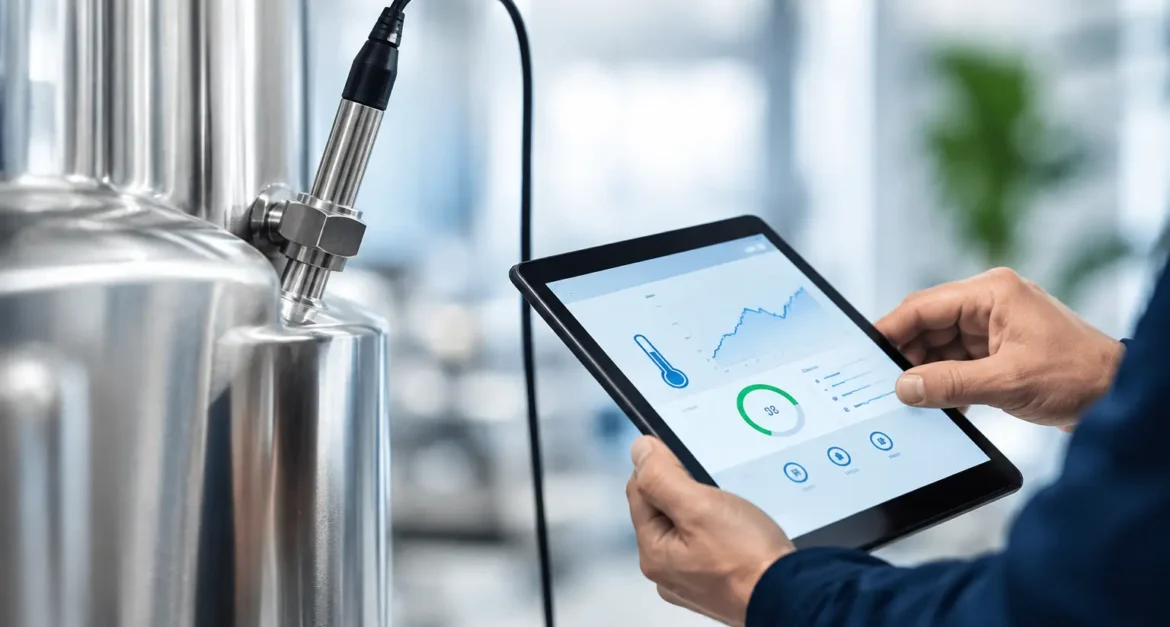
A temperature reading taken at the point of delivery can confirm a shipment arrived within range. It cannot, on its own, prove what happened during the previous six hours on the road. For businesses moving medicines, fresh produce, frozen food or sensitive commercial goods, that gap is exactly why temperature monitoring technology trends matter.
Cold-chain monitoring is moving beyond periodic checks and retrospective paperwork. The priority is now continuous visibility: knowing the temperature, location and status of a consignment while there is still time to protect it. The right technology does not replace experienced transport planning, correctly specified vehicles or trained drivers. It gives operators the information needed to act quickly when conditions change.
Temperature monitoring technology trends changing cold chains
The strongest developments are not necessarily the most complex. They are the ones that make control more reliable, exception management faster and records easier to defend during an audit, investigation or customer query.
Real-time telemetry is becoming the operational baseline
Traditional data loggers remain useful, particularly where a tamper-evident journey record is required. However, a device that is only reviewed after delivery has a clear limitation: it can evidence a deviation, but cannot help prevent one.
Real-time telemetry sends temperature readings from the vehicle or load space at defined intervals through a mobile network. Paired with GPS, it gives transport teams a live view of where a vehicle is and whether the refrigerated unit is maintaining its set point. This allows a control team to distinguish between a genuine temperature risk, a door-opening event during a multidrop run, and a sensor issue that needs checking.
The practical value is speed. If a refrigeration unit alarms on a time-critical pharmaceutical delivery, the operator can contact the driver, verify the compartment condition, direct the vehicle to a suitable location or arrange a contingency vehicle before the shipment is compromised. That is a very different position from discovering the issue once the goods have been signed for.
Real-time data is not automatically better in every situation. It relies on reliable device installation, network coverage, sensible reporting intervals and people who are responsible for responding to alerts. A stream of readings without a defined escalation process can create noise rather than control.
Alerts are becoming more intelligent, not simply more frequent
An alert at every minor fluctuation can overwhelm a transport desk. Refrigerated compartments naturally respond to loading activity, frequent door openings and changing ambient conditions. The goal is not to treat every movement as a failure. It is to identify the events that require action.
More advanced monitoring platforms use alert rules based on temperature thresholds, duration outside the permitted range, compartment set point, location and journey stage. For example, a short rise while unloading at an approved delivery point may be expected and recorded. A sustained rise while a vehicle is stationary away from its planned route requires immediate investigation.
This approach supports a more proportionate response. It also creates clearer evidence of how an exception was handled: when the alert was raised, who acknowledged it, what checks were completed and whether the product remained suitable for release. For regulated goods, that decision trail can be as important as the raw temperature graph.
Multi-compartment monitoring supports mixed-load distribution
Food wholesalers, healthcare suppliers and retail distribution teams increasingly need fewer vehicles to do more. A single run may carry chilled, frozen and ambient-controlled products to several locations, each with different handling requirements.
That makes compartment-level monitoring essential. One vehicle-wide reading cannot demonstrate that every product was transported correctly. Sensors need to be positioned and mapped to the relevant compartment, with clear set points and records that show conditions throughout the journey.
The technology must match the operation. A multi-temperature lorry serving a fixed route may need permanent sensors integrated with the refrigeration system. A dedicated vehicle working varied assignments may benefit from flexible, validated monitoring equipment. In both cases, the key question is whether the data can clearly connect a particular load and compartment to its required temperature range.
Data integrity is receiving closer scrutiny
A temperature record is only useful if customers, quality teams and regulators can trust it. As more monitoring moves to cloud-based platforms, data integrity has become a central part of cold-chain assurance.
Businesses should be able to establish where readings came from, whether a sensor was within calibration, who can access the system and how records are protected from alteration. Time stamps, audit trails, user permissions and retained historical records all contribute to a defensible chain of evidence.
For pharmaceutical and medical distribution, these controls support quality systems and GDP-aligned expectations. For food transport, they strengthen due diligence by demonstrating that chilled or frozen goods remained under controlled conditions. The exact documentation required depends on the product, contractual terms and applicable regulations, but the principle remains consistent: records must be accurate, available and meaningful.
Calibration also deserves attention. Even the most capable platform cannot compensate for a sensor that has drifted beyond its acceptable accuracy. Monitoring programmes should define calibration intervals, checks after damage or repair, and what happens if equipment is found to be out of tolerance.
From data collection to exception management
The next stage in temperature monitoring is not simply collecting more data. It is using data to make better transport decisions.
When temperature history, vehicle location, route progress, door status and refrigeration performance are viewed together, patterns become easier to spot. Repeated alert activity at the same delivery point may indicate an inefficient unloading process. A recurring issue on a particular route may point to journey timing, traffic exposure or vehicle capacity. Repeated high temperatures in one compartment may signal a maintenance requirement before it becomes a breakdown.
This is where monitoring supports preventative action. Rather than reacting to each isolated alarm, transport managers can improve loading plans, review delivery windows, adjust vehicle allocation and schedule maintenance based on evidence. It reduces avoidable waste while protecting service continuity.
Predictive maintenance is likely to become more widely used as fleet systems become better connected. Refrigeration-unit performance data can help identify warning signs such as unusual run times, poor pull-down performance or repeated fault codes. The technology cannot guarantee that equipment will not fail, but it can give fleet teams more opportunity to intervene before a critical journey is affected.
What customers should expect from a monitored cold chain
Monitoring technology should support a controlled service, not become a technical feature with no operational value. When appointing a temperature-controlled transport partner, businesses should ask practical questions.
Can the provider show live or near-real-time temperature information where the service requires it? Are alerts monitored outside standard office hours? How are temperature excursions assessed and documented? Can records be supplied promptly for a specific journey, vehicle, compartment or delivery? Is monitoring equipment maintained and calibrated to an appropriate schedule?
The answer will vary according to risk. A same-day emergency movement of clinical material calls for a different level of oversight from a planned ambient-controlled commercial delivery. Likewise, a frozen multidrop route may need particular focus on compartment control and door-opening discipline, while a high-value pharmaceutical consignment may require validated equipment, tighter escalation and more detailed reporting.
The right service begins with a clear transport specification. That includes the required temperature range, permitted excursion criteria where applicable, loading and delivery arrangements, monitoring frequency, evidence requirements and named contacts for escalation. If these points are vague at the start, monitoring data may reveal a problem without providing a clear basis for decisions.
Why visibility still depends on people
Technology can report a rising temperature within seconds. It cannot inspect a door seal, confirm whether stock has obstructed airflow, communicate with a receiving site or decide whether a product can be released. Those actions still rely on trained people following a defined process.
For this reason, the best monitoring systems are supported by operational discipline: pre-cooling before loading, correct product segregation, careful loading that preserves airflow, secure door management, route planning and immediate escalation when an exception occurs. The vehicle, the monitoring platform and the control team must work as one system.
At MT Logistics Group, real-time digital monitoring and GPS tracking are used to support full journey visibility, but the value lies in the response behind the data. A controlled cold chain is built through preparation, active oversight and clear communication from collection through to proof of delivery.
As monitoring becomes more connected, the competitive advantage will not come from having the most dashboards. It will come from having the clearest plan for protecting product when the dashboard identifies a risk. Choose technology and transport processes that give your team time to act, evidence to make sound decisions and confidence that every consignment remains under control.