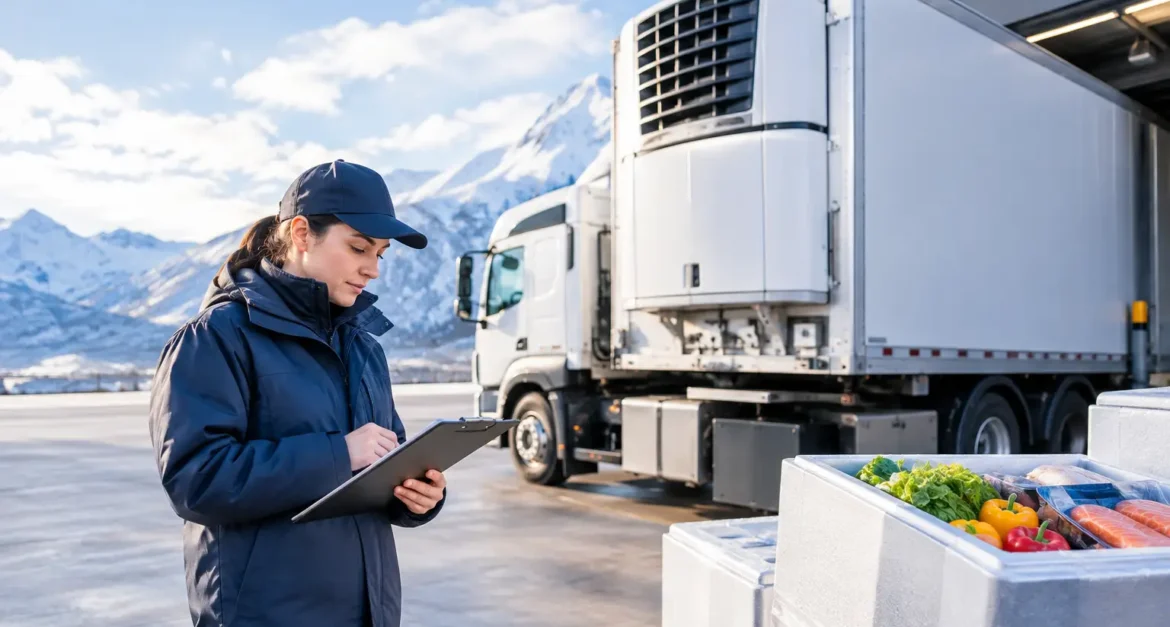
A delivery can arrive on time and still fail. If chilled produce has warmed, frozen stock has partially thawed, or a medicine has moved outside its approved range, the commercial impact can be immediate. Cold chain logistics is the controlled process that prevents this: protecting temperature-sensitive goods from collection through to proof of delivery.
For food, pharmaceutical, healthcare and specialist commercial businesses, temperature control is not an added feature. It is part of product quality, safety and compliance. The right transport partner provides the equipment, procedures and visibility needed to keep every consignment within specification, even when schedules change or delivery windows are tight.
What cold chain logistics needs to control
Cold chain logistics covers far more than putting goods in a refrigerated vehicle. It is an end-to-end operational discipline built around maintaining an agreed temperature range throughout transport, handling and delivery.
That starts before collection. The vehicle must be suitable for the consignment, pre-cooled where required and capable of sustaining the required conditions for the route, payload and number of stops. A frozen pallet, fresh fish delivery and pharmaceutical shipment may all require controlled transport, but their acceptable ranges, handling requirements and risk profiles are very different.
During the journey, temperature must be measured and recorded accurately. Real-time digital monitoring gives operators visibility of vehicle conditions while GPS tracking confirms where the consignment is and helps the team respond quickly if a delay, road closure or unplanned stop threatens the schedule.
At delivery, the process remains controlled. Goods should be handled efficiently, delivery windows observed and documentation completed so the customer has a clear record of collection, transit conditions and handover. For regulated products, this traceability can be central to audit readiness and quality assurance.
Temperature control is only part of the job
A stable set point matters, but it does not guarantee product integrity by itself. Cold chain performance depends on the decisions made around the load.
Loading practices are a common pressure point. Goods need enough airflow for the refrigeration system to work effectively, while doors should not be held open longer than necessary. A vehicle that is correctly set but poorly loaded can still create temperature variation. Equally, mixed consignments require proper separation and a vehicle specification that can maintain each required zone without compromise.
Route planning also has a direct effect on temperature protection. A single direct delivery may need a different approach from a multidrop run serving supermarkets, restaurants or pharmacies. More stops can improve distribution efficiency, but each opening of the doors introduces risk. The answer is not always fewer drops. It is planning the route, load order and delivery sequence around the product and its permitted exposure.
Time-critical work adds another layer. If a production site is waiting for ingredients, a clinic requires urgent stock or a retailer faces an empty freezer, speed matters. However, fast transport without controlled handling is not a solution. The best response combines a suitable refrigerated vehicle, a confirmed collection plan, live visibility and proactive communication from dispatch to delivery.
Choosing the right temperature-controlled service
The right model depends on what is being moved, how often it moves and what happens if a delivery is late or outside range. Businesses should define the operational requirement before selecting a provider.
For recurring distribution, scheduled refrigerated transport and multidrop delivery can provide dependable coverage across regular routes. This is often suitable for food wholesalers, retailers, hospitality groups and manufacturers that need consistent replenishment without operating their own fleet.
For urgent demand, same-day or next-day temperature-controlled courier services are better suited to stock recovery, critical replacement deliveries and short-notice orders. The priority is rapid mobilisation without losing control of the shipment.
Dedicated day-rate vehicles can offer a practical middle ground for businesses with fluctuating demand. They provide access to a vehicle and professional driver for a defined period, giving operations teams flexibility for multiple collections, site transfers or changing delivery requirements.
Multi-temperature transport is essential when chilled, frozen and ambient products must travel together. It can reduce vehicle movements and simplify distribution, but only when each compartment is independently managed and the load plan is realistic. Combining products may be efficient; combining incompatible temperature requirements in an unsuitable vehicle is not.
Visibility turns a journey into a controlled process
When a consignment is high value, perishable or regulated, uncertainty creates risk. Operations teams need to know that a vehicle has arrived, departed and remained within the required conditions, not simply receive reassurance after the event.
Real-time temperature monitoring provides a live operational view of thermal conditions. GPS tracking adds location and route status. Together, these tools give logistics teams the information to manage exceptions early, whether that means checking an unexpected delay, arranging a revised receiving slot or communicating with the customer before the issue escalates.
Data also supports accountability. Temperature records can demonstrate that handling conditions were maintained, help investigate an incident and identify opportunities to improve future routes. The value is especially clear in pharmaceutical and medical distribution, where evidence of controlled transport may be required as part of quality procedures.
Technology is only as useful as the response behind it. Alerts, records and tracking must be supported by an operations team that understands the product requirement and has a defined escalation process. Visibility without action is just information.
Questions to ask a cold chain provider
A capable provider should be able to explain how it protects goods in practical terms, not only state that its fleet is refrigerated. Ask how temperatures are monitored, whether records are available, how vehicles are maintained and what happens if a deviation or delay occurs.
It is also worth discussing the specific load. Confirm the required temperature range, pallet or parcel quantities, collection and delivery restrictions, product sensitivity, shelf-life implications and whether the shipment needs chilled, frozen, ambient or multiple zones. The more precise the brief, the more accurately the transport can be planned.
For businesses moving regulated goods, ask about traceability, handling procedures and the evidence available after delivery. For food distribution, discuss delivery windows, multidrop capability, access restrictions and how the service manages repeated door openings. A good provider will treat these details as core operational requirements, not afterthoughts.
MT Logistics Group supports UK businesses with refrigerated, frozen, ambient and multi-temperature transport designed around these practical demands. That includes time-critical collections, nationwide distribution and monitored vehicles that provide full visibility throughout the journey.
Protecting product, reputation and continuity
The cost of a temperature failure is rarely limited to one rejected delivery. It can mean wasted stock, missed production, lost sales, compliance exposure and a customer questioning whether your business can be relied upon. In sectors where quality is closely tied to trust, prevention is more valuable than recovery.
Effective cold chain logistics creates confidence because it makes the process measurable. The required conditions are agreed, the vehicle is selected for the job, the journey is monitored and the delivery is evidenced. If circumstances change, there is a clear basis for making the right decision quickly.
Treat temperature-controlled transport as part of your product protection plan. When every degree, deadline and delivery record matters, choose a logistics operation that is prepared to control them from the first mile to the final handover.