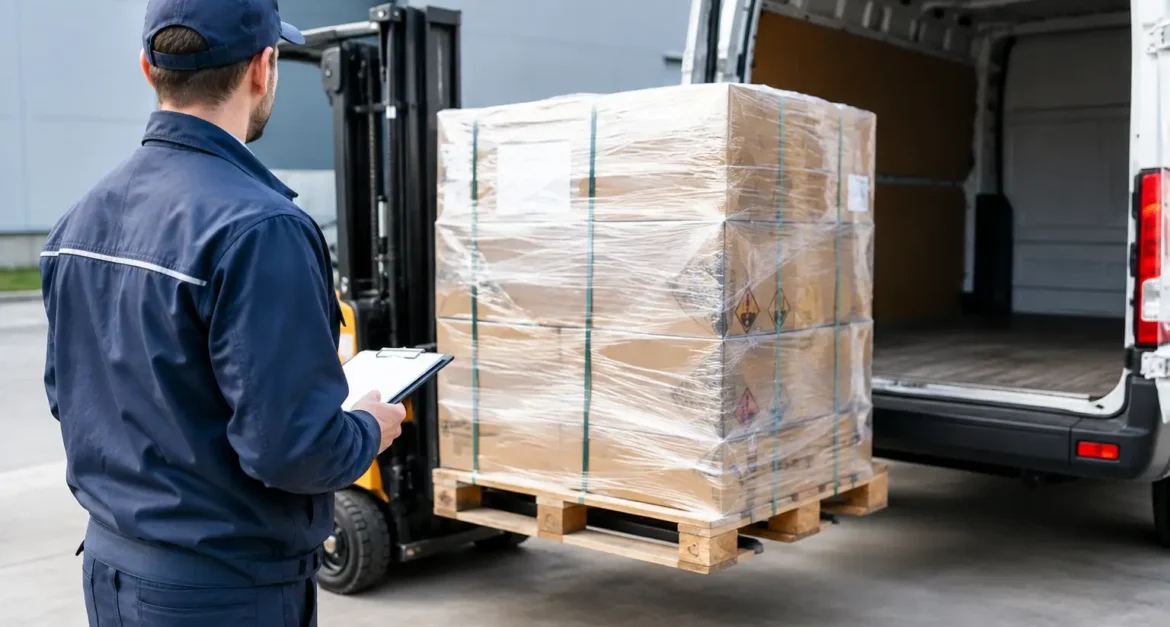
A pallet of chilled products can be commercially worthless long before it looks damaged. A delayed collection, an unsuitable vehicle, a missed booking slot or an unrecorded temperature excursion can create waste, rejected stock and difficult compliance questions. Courier pallet distribution must therefore do more than move freight from A to B. For temperature-sensitive goods, it must protect product integrity at every handover.
For food, pharmaceutical, healthcare and specialist commercial businesses, the right distribution model depends on the product, its temperature range, delivery deadline and the consequences of failure. A standard pallet network may suit stable, non-urgent freight. Controlled goods often require a more direct, visible and accountable service.
What courier pallet distribution involves
Courier pallet distribution is the collection, consolidation or direct movement, and delivery of palletised goods through a planned transport service. It is commonly used for consignments that are too large for parcel delivery but do not require a full vehicle load.
The model can support single pallets, multiple pallets and regular distribution runs. Deliveries may be made to distribution centres, wholesalers, retail stores, hospitals, pharmacies, foodservice sites or manufacturing facilities. The operational detail matters: a pallet delivery is only complete when the consignment arrives within its agreed window, in the required condition and with the documentation needed by the receiving site.
Where chilled, frozen, ambient-controlled or mixed-temperature stock is involved, the service must be designed around more than pallet dimensions and postcode. Vehicle suitability, set-point control, load segregation, monitoring, route planning and proof of delivery all become part of the transport requirement.
Why temperature-controlled pallets need a specialist approach
A general freight operation is built for efficiency across many types of cargo. That does not automatically make it appropriate for products with strict temperature, handling or time requirements. Every additional depot transfer, cross-dock operation or waiting period introduces another point at which product condition and chain of custody can be affected.
For chilled food, the risk may be reduced shelf life or a retailer rejection. For frozen goods, it may be evidence of thawing or a compromised product. For pharmaceuticals, clinical samples and medical products, a temperature deviation can trigger quarantine, investigation and potential disposal. The cost is not limited to the goods on the pallet. It can include production disruption, replacement transport, customer claims and reputational damage.
A specialist service provides controlled collection and delivery using refrigerated vehicles, defined operating procedures and live operational oversight. It gives the consignor confidence that the journey has been planned for the product rather than fitted around a generic network.
Direct delivery versus pallet network distribution
There is no single answer for every consignment. Network distribution can be cost-effective for non-temperature-sensitive, non-urgent pallet freight where next-day timing is acceptable and goods can tolerate normal hub handling. It is often the right choice for durable ambient products.
Direct courier transport is usually the stronger option where timing is critical, temperature control must be maintained, the consignment is high value or the delivery point has a narrow booking window. A dedicated vehicle reduces handling points and gives the transport team greater control over collection times, route changes and delivery status.
The decision should be based on risk as well as price. The lowest carriage rate is rarely the lowest overall cost if a failed delivery results in product loss or lost trade.
Planning a controlled pallet delivery
Reliable delivery begins before the vehicle arrives. The transport provider needs accurate information to assign the right vehicle, driver instructions and journey plan. A vague booking request creates avoidable risk, particularly when the load is temperature-sensitive or the receiving site operates strict procedures.
The most useful instruction set includes the pallet count, dimensions, gross weight, collection and delivery addresses, required temperature range, available collection times, delivery booking reference and any site restrictions. It should also confirm whether a tail lift, pallet truck, forklift access or timed delivery is required.
For regulated or sensitive goods, the booking should identify any product-specific requirements. This may include validated temperature ranges, documentation, tamper-evident controls, segregation from other products, delivery to a named recipient or immediate escalation if the site cannot accept the freight.
Vehicle and equipment selection
The correct vehicle is determined by more than load size. A refrigerated van may be suitable for an urgent small pallet movement, while larger consignments may require a refrigerated lorry with appropriate capacity and loading arrangements. Access restrictions at city-centre premises, hospitals, retail units and hospitality sites can also determine the practical vehicle choice.
Temperature capability must match the consignment. Chilled, frozen and ambient-controlled products may require different settings, while multi-temperature loads need physical separation and independently managed compartments where appropriate. Loading must allow air circulation and prevent damage in transit. Poor pallet stability can create both a safety issue and a temperature-control issue if airflow is obstructed.
Visibility protects the cold chain
Visibility is not a marketing extra. It is the operational evidence that allows a business to act quickly when a journey is under pressure. GPS tracking provides location and progress information, while digital temperature monitoring records conditions inside the load space throughout transport.
If traffic, a vehicle issue or an access problem threatens a delivery slot, early communication gives the customer options. They may be able to alert the receiving site, adjust labour planning or arrange an alternative acceptance process. Without timely visibility, a manageable disruption can become a failed delivery.
Temperature data is equally valuable. It supports quality assurance, customer audits and internal investigations when questions arise after delivery. For pharmaceutical and medical freight, recorded evidence may be essential to demonstrate that storage and transport conditions remained within the agreed range.
A reliable operator should have clear escalation procedures. Monitoring only has value if trained people are ready to respond to an alert, assess the risk and take appropriate action.
Delivery windows, multidrops and handovers
Many pallet consignments are delivered into environments where timing is tightly controlled. Retail distribution centres may refuse early or late arrivals. Restaurants and foodservice locations may only accept deliveries outside service periods. Healthcare sites can have security, named-contact and goods-in requirements that cannot be ignored.
Multidrop courier distribution adds another layer of planning. Route order must protect the required temperature, respect each delivery window and account for unloading time at every location. A route that looks efficient on a map may not be viable if its first delivery requires a tail lift, its second has restricted access and its final stop closes before the planned arrival.
Proof of delivery should capture more than a signature where the consignment warrants it. Delivery time, recipient details, pallet quantity and any noted exceptions provide a clear completion record. If a site refuses stock, the transport team needs immediate instructions on whether to wait, redirect, return or protect the goods in controlled storage.
Common risks that compromise pallet freight
The most serious failures are often preventable. They arise when a service is chosen without considering the actual operating conditions of the consignment. Four risks deserve particular attention:
- Using a standard carrier for stock that requires controlled temperatures or minimal handling.
- Booking without confirming delivery slots, vehicle access, unloading equipment or site contact details.
- Treating temperature monitoring as sufficient without a response plan for alerts or delays.
- Failing to communicate product sensitivity, segregation requirements and acceptable delivery tolerances.
These issues are not administrative details. They influence whether goods remain saleable, compliant and ready for use at the point of delivery.
When dedicated pallet transport is the right choice
Dedicated transport is particularly valuable for urgent replenishment, product launches, production-critical ingredients, clinical or pharmaceutical freight, high-value frozen stock and deliveries where a missed slot would have immediate operational consequences. It is also a practical option for businesses that need regular capacity without operating their own fleet.
A day-rate vehicle can give an organisation controlled access to refrigerated transport for a full shift, supporting multiple collections, deliveries or route changes as demand develops. This is useful for wholesalers, retail suppliers and food businesses managing fluctuating volume, seasonal demand or last-minute requirements.
MT Logistics Group supports temperature-controlled pallet movements with refrigerated vehicles, real-time monitoring, GPS tracking and nationwide operational coverage. The objective is straightforward: maintain control from collection through to confirmed delivery, with full visibility when the journey matters most.
Before booking your next pallet movement, assess the product risk, not only the pallet rate. A transport plan that protects the required temperature, delivery window and chain of custody gives your team a stronger basis for protecting stock, compliance and customer confidence.