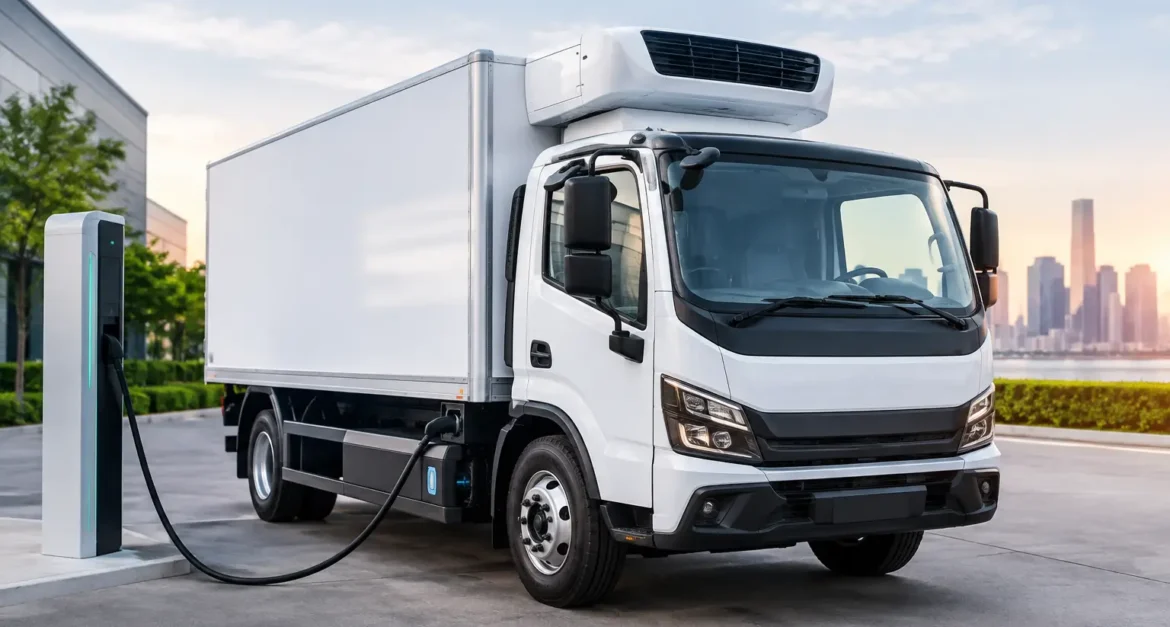
A refrigerated vehicle can complete a route on battery power and still fail the job if the refrigeration unit, charging plan or payload allowance has not been properly assessed. That is why electric refrigerated vehicles trends matter to cold-chain operators: the change is not simply about replacing diesel vehicles. It is about maintaining temperature control, delivery reliability and full traceability while changing the way fleet capacity is planned.
For UK businesses moving chilled, frozen, ambient or multi-temperature goods, electric refrigeration is becoming a practical option on selected routes. It is not yet the right answer for every operation. The strongest results come from matching the vehicle, refrigeration system and charging model to the real working day.
What is driving electric refrigerated vehicle trends?
Pressure to reduce tailpipe emissions is a clear driver, particularly for fleets operating in urban areas and serving customers with formal sustainability targets. Clean-air policies, access restrictions and rising expectations from retailers, foodservice groups and pharmaceutical supply chains are all accelerating the discussion.
However, operational economics are just as relevant. Electric vans can offer lower energy and maintenance costs on predictable stop-start work, especially where vehicles return to a depot and can charge overnight. Refrigerated multidrop distribution, local wholesale deliveries and scheduled pharmacy routes may suit this model well.
The critical distinction is between an attractive environmental claim and a dependable operating model. A cold-chain vehicle has two energy demands: propulsion and temperature control. Operators need confidence that both can be delivered across the full shift, including traffic, door openings, waiting time and adverse weather.
Refrigeration is the real operational test
A standard electric van assessment often focuses on advertised driving range. For refrigerated transport, that figure alone is not enough. The refrigeration unit draws energy throughout the journey, and its consumption can increase when the vehicle makes frequent drops, doors are opened repeatedly or outside temperatures are high.
Frozen distribution is generally the most demanding use case because the vehicle must sustain a lower setpoint. Multi-temperature work adds further complexity, as separate compartments or temperature zones may require more sophisticated equipment and monitoring. Chilled work on a tightly planned local route may be a more straightforward starting point, but even then the load profile matters.
Teams should assess route performance against real conditions rather than ideal laboratory figures. That means considering average mileage, dwell time, number of drops, loading-bay access, delivery windows, gradients, traffic patterns and the temperature required for each product category. A vehicle that appears capable on paper may have limited operational contingency once refrigeration energy use is included.
Payload remains a commercial consideration
Battery packs and insulated conversions add weight. Depending on the vehicle and body specification, this can reduce usable payload compared with an equivalent diesel vehicle. For a business carrying lightweight pharmaceutical consignments, the effect may be manageable. For frozen food, catering supplies or dense wholesale loads, payload can directly affect revenue per run.
The right question is not whether an electric refrigerated vehicle carries less in every case. It is whether it can carry the planned load safely and profitably while retaining sufficient range reserve. A lower-payload vehicle may still work for local, high-frequency deliveries, while a heavier long-distance route may remain better suited to another solution.
Temperature assurance cannot be compromised
The cold chain does not become less strict because the vehicle is electric. Product temperatures must remain within the required range from collection to delivery, with a clear record available where required by customers, quality systems or regulation.
Digital temperature monitoring, GPS visibility and exception alerts should be specified as core operational controls, not optional extras. For pharmaceutical and medical movements, the transport plan should also align with the applicable product handling requirements, including validated processes where necessary. The same principle applies to food transport: the operator must be able to demonstrate control, not merely state that refrigeration was available.
Charging strategy will determine fleet readiness
Most successful early deployments are based around depot charging. Vehicles leave from a known location, complete a defined route and return with adequate time to recharge. This gives fleet managers control over energy availability and reduces dependence on public charging infrastructure.
Before adding vehicles, operators need to understand the site’s electrical capacity, charging speed, vehicle return times and likely future demand. A single electric refrigerated van may be simple to accommodate. A growing fleet can require upgraded electrical infrastructure, load management and careful scheduling to avoid expensive peak demand.
Public charging can support occasional top-ups, but it is less predictable for time-critical refrigerated work. Charger availability, vehicle height restrictions, bay access and charging duration can all create operational risk. A delivery that relies on a public charger to complete its route needs a clear contingency plan, particularly when the vehicle is carrying temperature-sensitive stock.
Charging also needs to be coordinated with pre-cooling. If the body must be brought down to its required setpoint before loading, the energy requirement begins before the first mile is driven. Planning should account for vehicle preparation, not just the time between return and departure.
Which cold-chain routes are best suited to electrification?
Electric refrigerated vehicles are most compelling where mileage is controlled and routes are repeatable. Examples include urban and regional multidrop deliveries, supermarket or hospitality replenishment from a local depot, scheduled healthcare routes and dedicated day-rate work operating within a known area.
They can also be suitable for businesses that value quieter operation. Early-morning deliveries in built-up areas may benefit from reduced vehicle noise, subject to the specific refrigeration equipment fitted and site requirements.
Long-distance trunking, variable same-day work and high-payload frozen distribution can be more difficult. This does not mean they are permanently unsuitable for electrification. It means the planning margin needs to be wider, and the business case must reflect the actual route rather than an average fleet figure. Some operations may use electric vehicles for local collection and final-mile distribution while retaining other vehicle types for longer or less predictable journeys.
The next trend is better integration, not just bigger batteries
Battery development will continue to improve vehicle capability, but cold-chain progress will not be defined by range alone. The more meaningful shift is integration between vehicle telematics, refrigeration controls, temperature data and route planning.
Fleet teams increasingly need one operational view that answers practical questions quickly: Where is the vehicle? What is the compartment temperature? How much charge remains? Has the driver encountered an exception? Can the route still be completed within the delivery window? When data is connected, managers can act before a small delay becomes a product-risk event.
This also strengthens customer communication. A retailer, laboratory or food supplier does not simply need an estimated arrival time. They need confidence that their goods have remained protected throughout the journey. Reliable reporting and traceability make that assurance easier to provide.
How to assess an electric refrigerated vehicle properly
A controlled trial is usually more valuable than a broad fleet commitment. Select a route with stable mileage, known delivery patterns and manageable charging access. Run it long enough to capture different weather conditions, seasonal load profiles and normal operational disruption.
During the trial, measure delivered payload, energy used for propulsion and refrigeration, charge time, route completion rate, temperature performance, driver feedback and unplanned downtime. Compare these results with the diesel operation being replaced, including fuel, servicing, access charges and the cost of any missed capacity.
It is equally important to involve drivers, transport planners and site teams from the outset. Drivers need practical training on efficient operation, charging and escalation procedures. Planners need realistic range assumptions. Warehouse teams need to understand loading times, pre-cooling requirements and how door discipline affects energy use and temperature stability.
For businesses that cannot tolerate deviation, the vehicle specification should include an escalation process from day one. If a refrigeration alarm, charging issue or traffic delay occurs, who receives the alert, what action is taken and how is product protection maintained? Clear answers protect both the consignment and the customer relationship.
Electric refrigerated transport is moving from pilot project to operational reality, but only where it is built around disciplined route design and uncompromised temperature control. The sensible next step is to identify the routes where electric capability can strengthen reliability now, then scale with evidence rather than assumption.