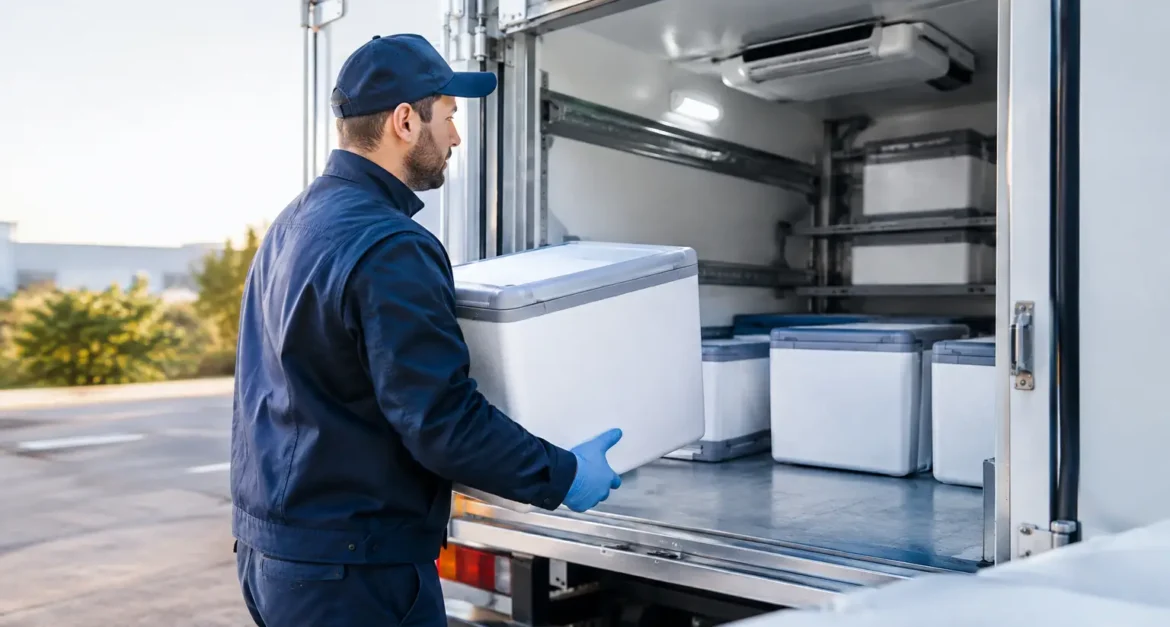
When a chilled consignment is due at a retailer before opening, a frozen order is needed for the next production run, or a medical product has a defined temperature range, tomorrow is not simply a delivery date. It is a controlled operational deadline. Next-day temperature-controlled delivery gives businesses a dependable way to move sensitive goods quickly while protecting their condition, safety and compliance throughout the journey.
The service is not interchangeable with standard next-day freight. Speed matters, but it cannot come at the expense of thermal stability, documented handling or delivery visibility. The right transport plan keeps the product within its required range from collection to handover, with a clear record of what happened in between.
What next-day temperature-controlled delivery involves
A temperature-controlled next-day service combines planned collection, a suitable refrigerated vehicle, monitored transit and confirmed delivery within an agreed timescale. Depending on the product, that may mean chilled, frozen, controlled ambient or separate temperature zones for mixed loads.
For food businesses, the objective is to preserve shelf life, quality and food safety. For pharmaceutical, medical and laboratory customers, it may be to maintain product efficacy and meet strict handling requirements. For commercial products such as cosmetics, chemicals or specialist components, stable conditions can prevent damage, degradation or rejected stock.
The required temperature is only one part of the brief. Collection and delivery windows, load size, packaging, route distance, access restrictions and the number of delivery points all influence how the service should be organised. A single urgent pallet travelling directly to a distribution centre needs a different approach from a multi-drop load serving restaurants, pharmacies or retail sites.
Why a standard courier may not be enough
A general courier can offer next-day timing, but cannot always provide the controls required for goods that are temperature-sensitive. Without suitable refrigeration, active temperature monitoring and traceability, a shipment may arrive on time while still being unsuitable for use or sale.
This risk is often underestimated when products are moving over a short distance. Temperature deviation can happen during loading, waiting time, route disruption and unloading, not just on long journeys. A vehicle that has not been prepared for the required setpoint, or a delivery that sits unattended after arrival, can compromise the cold chain.
Specialist transport reduces this exposure by treating temperature as an active operational requirement rather than a vehicle feature. That means selecting the right vehicle, setting and checking the compartment conditions, planning realistic timings, and maintaining visibility until the consignee receives the goods.
The value of continuous visibility
Real-time digital temperature monitoring and GPS tracking give operations teams more than reassurance. They provide practical control. If a route is delayed, a site is inaccessible or a delivery window changes, the transport provider can respond with accurate information rather than assumptions.
For compliance-led sectors, traceability also supports quality processes. Temperature records, collection details, delivery confirmation and journey data can help demonstrate that agreed conditions were maintained. The precise documentation needed will depend on the product, customer requirements and applicable regulations, but the principle is consistent: evidence matters.
Planning the right service for the load
The most reliable next-day solution begins before collection. A clear transport brief allows the provider to allocate the correct vehicle and build a plan around the real operating conditions, rather than trying to resolve preventable issues en route.
Start with the product temperature range and whether it must remain chilled, frozen, ambient or within more than one range. A mixed consignment may require multi-temperature capability rather than a single-compartment refrigerated vehicle. Then confirm the volume, pallet configuration, packaging and any special handling needs. Products that are safely packed for chilled transport may not be suitable for frozen conditions, and the vehicle cannot compensate for inadequate packaging.
Next, establish the critical times. Is collection fixed? Must goods arrive before a production line starts, within a retail booking slot or ahead of a clinical appointment? A next-day service should be scheduled around the required delivery window, not merely the calendar date.
Finally, provide the practical site details: vehicle access, loading arrangements, named contacts, opening hours and any security or booking procedure. These details protect delivery performance, especially for hospitals, city-centre sites, distribution hubs and hospitality locations with restricted access.
Where next-day cold-chain transport adds value
Next-day temperature-controlled delivery is particularly useful where stock levels are tight and product integrity cannot be recovered once lost. Fresh food wholesalers may need overnight replenishment to maintain availability without overstocking. Frozen food suppliers may need a reliable route into retail or foodservice sites. Meal-prep companies and caterers may require timed deliveries that protect product quality before preparation or service.
In healthcare, the stakes can be higher still. Pharmacies, laboratories, medical distributors and clinical operations need confidence that sensitive consignments are handled with the appropriate care and records. A delayed or unverified delivery can affect patient services, testing schedules and compliance obligations.
Manufacturers also benefit when a temperature-sensitive component or material is needed to prevent downtime. In these cases, a direct, dedicated vehicle may be more appropriate than a consolidated network service. It can cost more, but the trade-off may be justified when the alternative is a missed production shift or a rejected load.
Managing the trade-off between speed, cost and control
Not every shipment needs the same level of urgency or service specification. The right solution depends on the consequence of delay, the permitted temperature tolerance and the value of the goods.
A planned next-day multi-drop service can be cost-effective for regular distribution where delivery windows are workable and volumes are predictable. A dedicated next-day vehicle offers greater control for urgent, high-value or operationally critical consignments. It removes many of the handling points associated with shared transport and allows the route to be built around one customer’s requirements.
There is also a distinction between next-day and guaranteed timed delivery. If a product must be at site by 08:00, before a retail receiving cut-off or within a narrow medical delivery slot, the timing should be explicitly agreed. “Next day” alone can mean different things to different operators. Clear service parameters prevent avoidable misunderstandings.
What good delivery performance looks like
Reliable cold-chain transport is measured by more than a successful handover. It means the vehicle arrives appropriately prepared, the load is handled efficiently, agreed temperature conditions are maintained, and the recipient receives the correct goods within the required window.
It also means communication is proactive. If road conditions, site delays or unexpected access issues threaten the plan, the customer should receive a clear update and a practical response. Silence creates uncertainty. Accurate information allows supply chain teams to adjust staffing, stock allocation or customer communication before disruption escalates.
At MT Logistics Group, next-day services are supported by refrigerated vehicles, real-time temperature monitoring, GPS tracking and end-to-end traceability. This provides the control needed for businesses moving chilled, frozen, ambient and multi-temperature goods across the UK.
Questions to ask before booking
Before selecting a provider, establish whether they can transport your product at the required setpoint, produce appropriate temperature and delivery records, and meet your specific collection and delivery windows. Ask how they manage mixed-temperature loads, what visibility is available during transit, and how they respond if a route or site issue occurs.
It is equally useful to ask about continuity. Regular customers need more than a vehicle for one delivery. They need a transport partner that understands recurring routes, seasonal peaks, changing volumes and the commercial impact of failed delivery. Consistency is what turns a next-day service into a dependable part of the supply chain.
The best next-day temperature-controlled delivery plan is the one that matches the real risk of the consignment. When the product, route, timing and evidence requirements are all defined before the vehicle moves, tomorrow’s delivery becomes a controlled operation rather than a last-minute gamble.