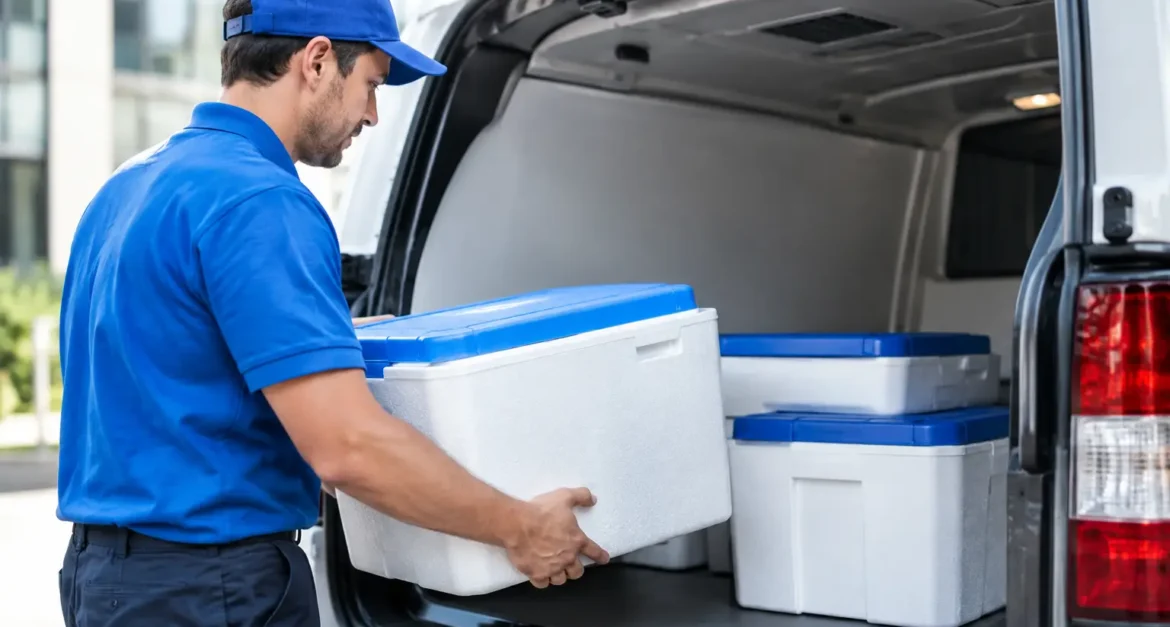
A production line is waiting for an ingredient. A pharmacy needs a temperature-sensitive consignment before a clinical deadline. A restaurant group has lost stock at a regional site. In these situations, a same day courier is not simply a faster delivery option. It is a controlled operational response that must protect the product as carefully as it protects the delivery time.
For chilled, frozen, pharmaceutical and other sensitive goods, speed without control creates a different risk. A vehicle may arrive on time, yet the consignment may be compromised by a temperature excursion, poor handling, incomplete records or an unsuitable vehicle. The right service brings urgency, thermal stability and full visibility together.
What a same day courier service should deliver
A business-grade same day service starts with a clear collection plan. The courier needs to understand what is being moved, its required temperature range, packaging requirements, collection readiness, destination restrictions and delivery deadline. That information determines the vehicle, route and handling process.
For ambient commercial goods, a direct vehicle and confirmed proof of delivery may be sufficient. For frozen food, chilled ingredients or medical products, the requirement is more demanding. The vehicle must be capable of holding the specified set point throughout the journey, while the consignment is loaded, secured and unloaded in a way that limits unnecessary exposure to external conditions.
A specialist provider should also give the sending business confidence that the vehicle is dedicated to the job where required. Direct transport reduces unnecessary handling, cross-docking and waiting time. It also gives the operator greater control when a collection runs late, a delivery site is congested or a route needs to change at short notice.
Why urgent deliveries need more than speed
Same-day transport is often requested when the original plan has failed. A supplier has missed a scheduled delivery, stock has been held at the wrong location, demand has exceeded forecast, or equipment failure has put a consignment at risk. These are high-pressure moments, but rushing without a defined process can turn a recoverable issue into waste, downtime or a compliance concern.
The commercial impact varies by sector. A missed frozen delivery can leave a retailer with empty cabinets and lost sales. A delayed chilled ingredient shipment can interrupt a food production schedule. In healthcare, a late or incorrectly handled delivery may affect laboratory work, patient treatment or clinical trial activity. The cost is not limited to the value of the goods. It can include labour disruption, customer dissatisfaction, reputational damage and the time needed to investigate an incident.
That is why the best urgent courier operation works from verified facts, not assumptions. It confirms the required delivery window, validates the vehicle specification, monitors progress and communicates early if an issue requires a decision. Fast action matters, but controlled action is what protects the outcome.
Temperature control is part of the delivery, not an add-on
A refrigerated vehicle is not automatically suitable for every cold-chain movement. The required temperature range, product sensitivity, journey duration, external weather and number of drops all matter. A consignment of frozen goods may need a different operating profile from chilled dairy, while pharmaceuticals may require a narrow validated range and detailed evidence of compliance.
Pre-cooling is an essential part of the process. A vehicle should be brought to the correct operating temperature before loading, rather than relying on the refrigeration unit to recover conditions once goods are on board. Products should be loaded promptly, with airflow and safe load restraint considered. Door openings should be kept controlled, particularly during multi-drop work or collections from busy loading areas.
Real-time digital temperature monitoring provides evidence that conditions were maintained. GPS tracking adds location and journey visibility, helping logistics teams respond quickly if there is congestion, site access delay or a change to the receiving schedule. Together, these controls create traceability rather than a simple assurance that the goods were collected and delivered.
For mixed loads, multi-temperature capability is particularly valuable. It allows chilled, frozen and ambient products to travel in segregated zones under the conditions each product requires. This can reduce the need for multiple vehicles, but only where vehicle capacity, product compatibility and delivery sequence have been planned properly.
Choosing the right same day courier for sensitive goods
Not every urgent delivery needs a temperature-controlled vehicle, and not every temperature-controlled shipment needs a dedicated same-day service. The right solution depends on the consequences of delay, the product’s thermal tolerance, the delivery window and whether other handling points are acceptable.
Before booking, establish the product temperature requirement and whether it is a target set point or a permitted range. Confirm the quantity, pallet or carton dimensions, weight, packaging condition and any special handling instructions. The courier also needs accurate collection and delivery contact details, site opening hours, booking references and access requirements. Small gaps in this information are a common cause of preventable delay.
Ask how the temperature is monitored and what records are available after delivery. For regulated or high-value consignments, evidence may be as important as the journey itself. You should also understand the escalation process. If the receiving site is closed, a vehicle is delayed by an incident or a consignee changes the delivery instruction, who has authority to make a decision and how quickly will you be informed?
A dependable partner will be direct about what can be achieved. For example, an urgent run from London to Scotland may be possible within the day, but the collection time, driver hours, traffic conditions, product specification and receiving window must be assessed honestly. Promising an unrealistic ETA helps nobody. A clear plan, backed by live updates, gives operations teams the control they need.
The operational steps that protect an urgent consignment
Once the job is accepted, the process should move quickly without losing discipline. The transport team confirms the collection time, assigned vehicle, temperature set point and delivery instructions. The driver arrives with the vehicle prepared for the load and checks the consignment against the agreed details before departure.
During transit, the vehicle is tracked and temperature conditions are monitored. If the delivery is time-critical, the route should be actively managed rather than treated as a fixed instruction. Traffic, road closures and restricted delivery sites can all affect the plan. A responsive control team can assess alternatives and keep the customer informed before a minor delay becomes a serious disruption.
At delivery, the consignee receives the correct goods at the agreed location, with proof of delivery recorded. Where required, temperature data and journey documentation support internal quality procedures, customer requirements and audit readiness. This level of control is particularly useful for businesses managing recurring urgent movements, because it creates a reliable record of performance rather than relying on informal updates.
When dedicated vehicles offer better control
For frequent urgent requirements, dedicated day-rate vehicles can be more effective than booking individual collections. A vehicle and driver are allocated to your operation for an agreed period, allowing stock movements, emergency transfers and scheduled drops to be handled with greater flexibility.
This approach works well for food wholesalers managing variable demand, hospital suppliers supporting multiple sites, and retailers needing rapid regional replenishment. It can also reduce the time spent sourcing transport each time an issue arises. The vehicle is already planned into the operation, with the appropriate temperature capability and a driver who understands the collection points, products and delivery standards.
There is a trade-off. A dedicated vehicle is not always the most economical option for occasional, predictable consignments. However, where missed deadlines, product loss or site disruption carry a high cost, the additional control can represent better value than reacting to each incident separately.
Build urgency into the plan before it becomes an emergency
The strongest same-day service is one that fits into a wider contingency plan. Identify the products that cannot tolerate delay, define the temperature requirements and nominate the people authorised to approve emergency transport. Keep collection addresses, delivery contacts and site access information current. This allows a courier to act immediately when time matters.
MT Logistics Group supports urgent UK-wide movements with refrigerated, multi-temperature and dedicated vehicle options designed around product integrity, traceability and delivery control. For businesses moving sensitive goods, the objective is simple: when the call comes, the transport response should already be ready to protect what is on board.