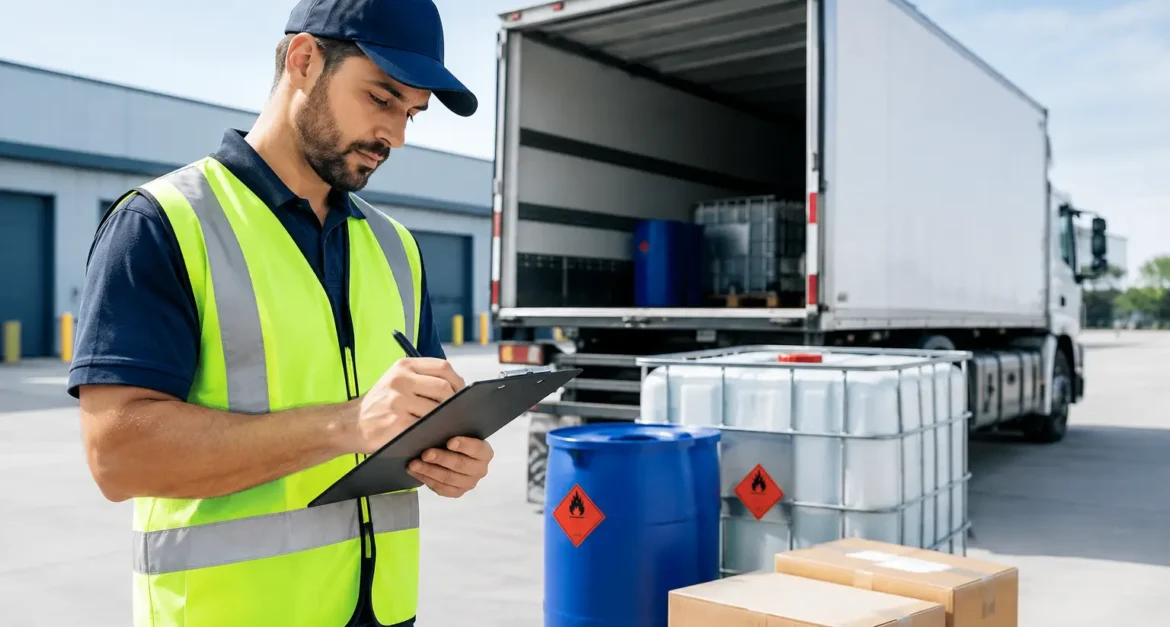
A production line is waiting for an ingredient. A pharmacy needs a monitored collection completed before a treatment window closes. A restaurant group has a freezer failure ahead of evening service. In each case, a standard delivery slot is not enough. This same day freight guide explains how to move urgent goods quickly while protecting temperature, traceability and delivery certainty.
Same-day transport is not simply a faster version of general freight. For chilled, frozen, ambient and multi-temperature consignments, speed must work alongside controlled handling. The right service keeps the product within its required range, provides full visibility during transit and creates a clear record of what happened from collection to proof of delivery.
What same-day freight should include
Same-day freight is a dedicated, time-critical transport service where collection and delivery are completed within the same operating day. The vehicle, route and handling plan are assigned around the consignment rather than fitted around a standard parcel network. That matters when stock has a short shelf life, an agreed receiving slot or a strict temperature requirement.
For temperature-sensitive goods, the service should begin before the vehicle arrives. The operator needs to confirm collection and delivery postcodes, ready time, required arrival time, pallet count or dimensions, weight, product temperature, packaging and any site restrictions. This information determines the vehicle type, the temperature set point and whether a direct delivery is appropriate.
A properly managed same-day consignment should provide a confirmed collection plan, suitable refrigerated vehicle capacity, GPS tracking, digital temperature monitoring where required, proactive updates and recorded proof of delivery. If the load is sensitive, the delivery record should support the customer’s quality and compliance process rather than merely confirm that a driver reached the address.
Same day freight guide: deciding when to use it
Same-day freight is most valuable when the cost of delay is higher than the cost of a dedicated vehicle. That calculation is rarely limited to the transport charge. A missed delivery can stop production, create food waste, leave a retail site without saleable stock or expose a healthcare supply chain to avoidable risk.
It is commonly used for urgent replenishment, stock recovery, missed linehaul connections, last-minute customer orders, replacement parts and controlled product transfers. For food and beverage businesses, this may mean moving chilled ingredients to a distributor or frozen stock to a retail depot. For pharmaceutical and medical teams, it may involve time-sensitive samples, medicines or clinical materials requiring documented temperature control.
Before booking, establish five operational facts:
- The latest safe collection time and the non-negotiable delivery deadline.
- The required temperature range, including whether the goods are chilled, frozen, ambient or mixed temperature.
- The load profile, including pallets, cases, loose items, weight and any loading equipment needed.
- The destination requirements, such as booking references, security procedures, timed slots or driver identification.
- The evidence required at delivery, including a signed proof of delivery, temperature data or named-receiver confirmation.
A same-day service is not always the correct answer. If the delivery can be planned for the following morning without operational impact, next-day transport may offer better value. Similarly, a small consignment travelling to an accessible location may suit an urgent courier vehicle, while a palletised load with multiple temperature zones may need a larger, purpose-configured refrigerated lorry. The service must fit the risk, not just the clock.
How a controlled same-day movement works
1. Assess the consignment before dispatch
The first decision is whether the product can travel safely in the proposed vehicle and within the available time. Product temperature at collection matters, as does packaging performance. A refrigerated vehicle maintains a controlled environment, but it is not a substitute for correctly prepared goods, secure packaging or appropriate loading practice.
The transport team should also identify whether the consignment can travel directly or needs a multi-drop route. Direct delivery reduces handling and transit uncertainty. Multi-drop distribution can be efficient for planned regional deliveries, but it introduces more door openings, more waiting time and more points of potential delay. For an urgent, high-value or tightly controlled load, a dedicated direct service is usually the stronger option.
2. Allocate the right vehicle and set point
Vehicle selection should be based on the product requirement, not only the available load space. Chilled goods, frozen goods and ambient-sensitive products each need a defined operating range. Mixed loads may require multi-temperature capability with segregated compartments, especially where frozen and chilled products must travel together.
The vehicle must be clean, suitable for the product and pre-set to the agreed temperature before loading. Loading should be organised so the consignment is stable, accessible at delivery and protected from unnecessary exposure. This is particularly important at busy loading bays, where open doors and delayed loading can affect product conditions.
3. Monitor the journey and manage exceptions
The most reliable same-day freight operation combines route planning with active monitoring. GPS tracking provides location visibility, while temperature monitoring provides evidence that the controlled environment is being maintained. Together, they allow the operator to respond quickly if traffic, a site delay or another exception threatens the agreed plan.
Communication should be practical and timely. Operations teams need to know if a vehicle is collected, en route, delayed at a gatehouse or delivered. They do not need vague assurances after the event. Early information gives the receiving site time to adjust labour, loading arrangements or production plans where necessary.
If a delay occurs, the response should be proportionate to the product risk. A short traffic hold may have little impact on a well-controlled chilled consignment. A prolonged wait outside a site with repeated door openings is different. The carrier should understand the product tolerance, record relevant events and communicate a clear recovery plan.
4. Complete delivery with evidence
Arrival is only one part of a successful delivery. The goods should be handed over to the correct person, at the correct site, within the required window and with the agreed documentation. Signed proof of delivery, named-receiver details and available temperature records give the customer an auditable chain of custody.
For regulated or quality-sensitive products, this evidence can be essential for internal investigations, customer queries and compliance records. A delivery that cannot be evidenced may still create a commercial problem, even when the goods physically arrive on time.
Protecting the cold chain under time pressure
Urgency can expose weaknesses in a cold chain. The pressure to move quickly must never encourage shortcuts in temperature settings, load checks or delivery documentation. The priority is to move at pace while maintaining control.
Ask whether the required range is a product preference or a validated condition. Some goods can tolerate brief variation within defined limits; others cannot. Pharmaceutical products, clinical materials and certain frozen foods may require tighter controls, more frequent monitoring or documented handover procedures. The appropriate approach depends on the product specification, packaging, journey duration and customer quality requirements.
Temperature control also involves more than the air temperature inside the vehicle. Pre-cooling, loading duration, door discipline, product placement and delivery-site readiness all affect the result. A reliable operator plans these factors into the movement rather than treating them as issues for the driver to solve at the kerbside.
MT Logistics Group supports urgent UK movements with refrigerated vehicles, real-time monitoring and traceable delivery processes designed for businesses where product integrity cannot be left to chance.
Choosing a same-day freight partner
A capable provider should be able to give a direct answer to operational questions: when can the vehicle collect, what vehicle will be used, how will temperature be controlled, who is monitoring the movement and what evidence will be available after delivery?
Look for experience in your specific product category. Food distribution, healthcare logistics and commercial temperature-sensitive freight can all require different handling controls. A general courier may be able to move an item quickly, but may not have the equipment, procedures or operational understanding needed to protect it properly.
It is also worth testing how the provider handles exceptions before an urgent situation arises. Ask what happens if the collection is not ready, a delivery site refuses the load or a route is disrupted. Dependable same-day transport is built on preparation, communication and informed decision-making when the plan changes.
When a critical consignment needs to move, provide complete information early and choose control over assumptions. The fastest journey only has value when your goods arrive safe, compliant and ready to use.