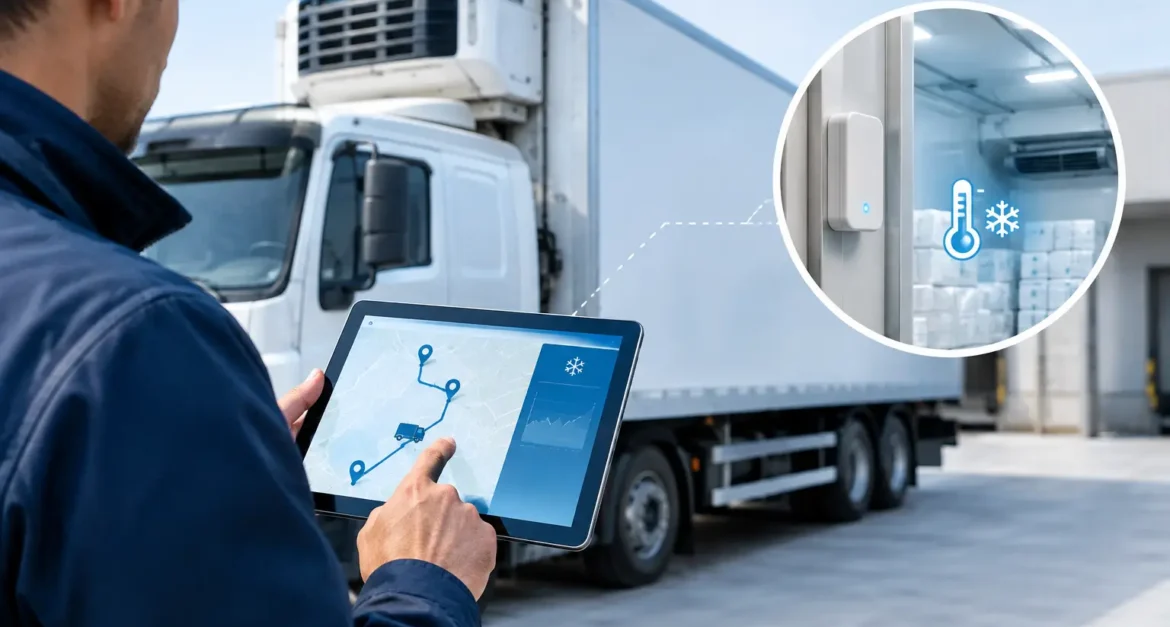
A missed delivery slot is costly. A missed slot involving chilled ingredients, frozen stock, medicines or laboratory samples can also create waste, delay operations and put compliance at risk. A tracked delivery service gives operations teams the visibility to manage that risk while the vehicle is on the road, not after a problem has already reached the consignee.
For temperature-sensitive distribution, tracking is more than a map showing where a vehicle happens to be. It is part of the control system around each consignment: confirming collection, monitoring progress, supporting communication around delays and providing an auditable delivery record. When combined with validated temperature control, it helps protect product integrity from collection through to handover.
What a tracked delivery service should provide
Standard parcel tracking may show a small number of scan events: collected, in transit and delivered. That level of information is rarely enough for a commercial cold chain. Food distributors, healthcare suppliers and retail operations need timely, usable information that supports a decision when delivery windows are tight.
A specialist tracked delivery service should provide live GPS vehicle visibility, clear collection and delivery milestones, electronic proof of delivery and direct operational updates where an exception needs attention. For controlled loads, the service should also support temperature monitoring and access to journey records appropriate to the goods, customer requirements and agreed operating procedures.
These elements answer different questions. GPS tracking establishes where the consignment is and whether it is likely to meet its slot. Temperature data demonstrates whether the required thermal conditions have been maintained. Proof of delivery confirms the handover, including the time, location and recipient details where required. Together, they create traceability rather than a vague assurance that the goods have left the depot.
Why visibility matters when temperature is critical
Cold-chain risk often grows in small increments. A vehicle held at a motorway closure, a delayed loading bay, an unavailable receiver or an incorrect delivery address can all affect the planned journey. Without live visibility, the receiving site may only discover the issue when stock fails to arrive.
With active tracking, the transport team can identify a developing delay and take practical action. That might mean contacting the delivery point, agreeing a revised arrival time, assigning a replacement vehicle or prioritising the next stop. The right response depends on the load, the vehicle capacity, the delivery window and the product’s permitted conditions. Tracking does not remove every disruption, but it gives the team time to control its impact.
For pharmaceuticals, medical products and other regulated goods, this visibility supports a stronger chain of custody. For chilled and frozen food, it helps prevent stock gaps that affect production, retail availability or service during a busy trading period. In both cases, the value is operational certainty: the ability to make decisions from current information rather than assumptions.
Location data and temperature data must work together
A vehicle can arrive on time while a load has been exposed to an unacceptable temperature event. Equally, a load can remain within its required range despite a delay, provided the refrigerated vehicle is correctly specified, maintained and operated. Location data alone is not evidence of cold-chain compliance.
That is why the strongest model combines real-time GPS tracking with calibrated or validated temperature monitoring, depending on the application. The transport provider should understand the required set point, acceptable range, handling instructions and escalation process before collection. For multi-temperature distribution, that also means confirming compartment requirements and load separation in advance.
Temperature records should be useful, not merely available. A report delivered days later may assist with an investigation, but it cannot help an operations manager respond to an issue in transit. Alerts and defined escalation routes allow action while the vehicle is still moving or waiting on site.
The operational chain behind reliable tracking
Reliable tracking begins before the driver starts the engine. It depends on accurate booking information: collection and delivery addresses, contact details, time windows, product classification, pallet count or parcel dimensions, temperature requirements and any site restrictions. If these details are incomplete, even the best tracking technology cannot prevent avoidable delays.
The collection stage should establish a clear handover. Goods are checked against the booking, loaded into the appropriate temperature-controlled environment and recorded as collected. For high-value, sensitive or regulated consignments, the collection record may need additional details such as seal information, batch references or condition notes.
During transit, the control team monitors progress against the agreed plan. A responsive provider does not wait for an automatic alert to become a failed delivery. They assess traffic, route restrictions, driver hours, vehicle status and delivery-site access, then communicate early if the plan needs to change.
At delivery, electronic proof of delivery closes the chain. The record should confirm who received the goods, when they were accepted and whether there were any exceptions. This matters when resolving disputes, managing stock reconciliation or demonstrating that a time-critical consignment arrived within its agreed window.
Choosing the right tracked delivery service
Not every consignment needs the same level of control. A scheduled ambient delivery may need dependable milestone updates and proof of delivery. A same-day refrigerated consignment for a restaurant, pharmacy or production site may need live tracking, direct dispatcher contact and immediate escalation if access becomes an issue. A clinical or pharmaceutical movement may require more stringent documentation and defined temperature reporting.
When assessing a provider, focus on the operational detail behind the promise of tracking. Ask how often location information is updated, who monitors exceptions, how temperature alerts are handled and what documentation is provided at the end of a journey. It is also worth confirming whether the provider uses its own temperature-controlled fleet or relies on subcontracted capacity, as this affects control, consistency and accountability.
Consider these four practical checks:
- Can the provider match the vehicle and temperature range to your load, including frozen, chilled, ambient or multi-temperature requirements?
- Is there a clear escalation process for traffic disruption, vehicle issues, missed slots or receiver unavailability?
- Will you receive proof of delivery and temperature documentation in a format that works for your quality and compliance process?
- Can the service support your operating pattern, whether that is urgent same-day work, planned multidrop distribution or dedicated day-rate capacity?
The lowest transport rate is not always the lowest overall cost. A provider that cannot give clear information during an exception can leave your team dealing with wasted product, urgent replacement orders, frustrated customers and avoidable administration. The right service reduces those pressures by making responsibility and status clear throughout the journey.
Tracking for multidrop and time-critical deliveries
Multidrop delivery introduces further variables. Each stop affects the next, and time at one site can affect the delivery windows across the route. For foodservice, hospitality and retail customers, this may mean a late arrival at several locations rather than one isolated delay.
Route planning, vehicle loading order and live tracking are therefore closely connected. A control team needs to see where the vehicle is, understand which consignments remain on board and communicate realistic arrival information to affected sites. For mixed loads, the process must also preserve correct temperature conditions throughout repeated door openings and deliveries.
Time-critical work requires an even tighter response. When a customer needs an urgent collection, a replacement vehicle or a direct delivery to prevent downtime, tracking gives the customer confidence that the job is progressing as agreed. It also gives the logistics team the evidence needed to manage each stage with precision.
MT Logistics Group combines GPS visibility, digital temperature monitoring and specialist temperature-controlled vehicles to support businesses moving sensitive goods across the UK. The objective is straightforward: maintain control of the product and the information surrounding it until the delivery is complete.
Build tracking into your delivery specification
Tracking works best when it is agreed as part of the service specification, rather than requested only when a delivery becomes urgent. Define the information your team needs, the people who should receive updates, the acceptable response time for exceptions and the documents required after delivery. Where temperature control is involved, set out the required range, recording expectations and escalation actions clearly.
That preparation gives drivers, dispatchers, quality teams and receivers one shared plan. It also makes performance easier to measure over time, whether you are reviewing on-time delivery, temperature compliance, failed-delivery causes or recurring site access issues.
For businesses that cannot afford uncertainty, a tracked journey is not simply a customer convenience. It is a practical layer of protection around product quality, compliance and customer confidence – exactly where it should be when every delivery matters.